
INTERVIEW SERIES
Meet Community Member
Bob Riney
President and CEO of Henry Ford Health
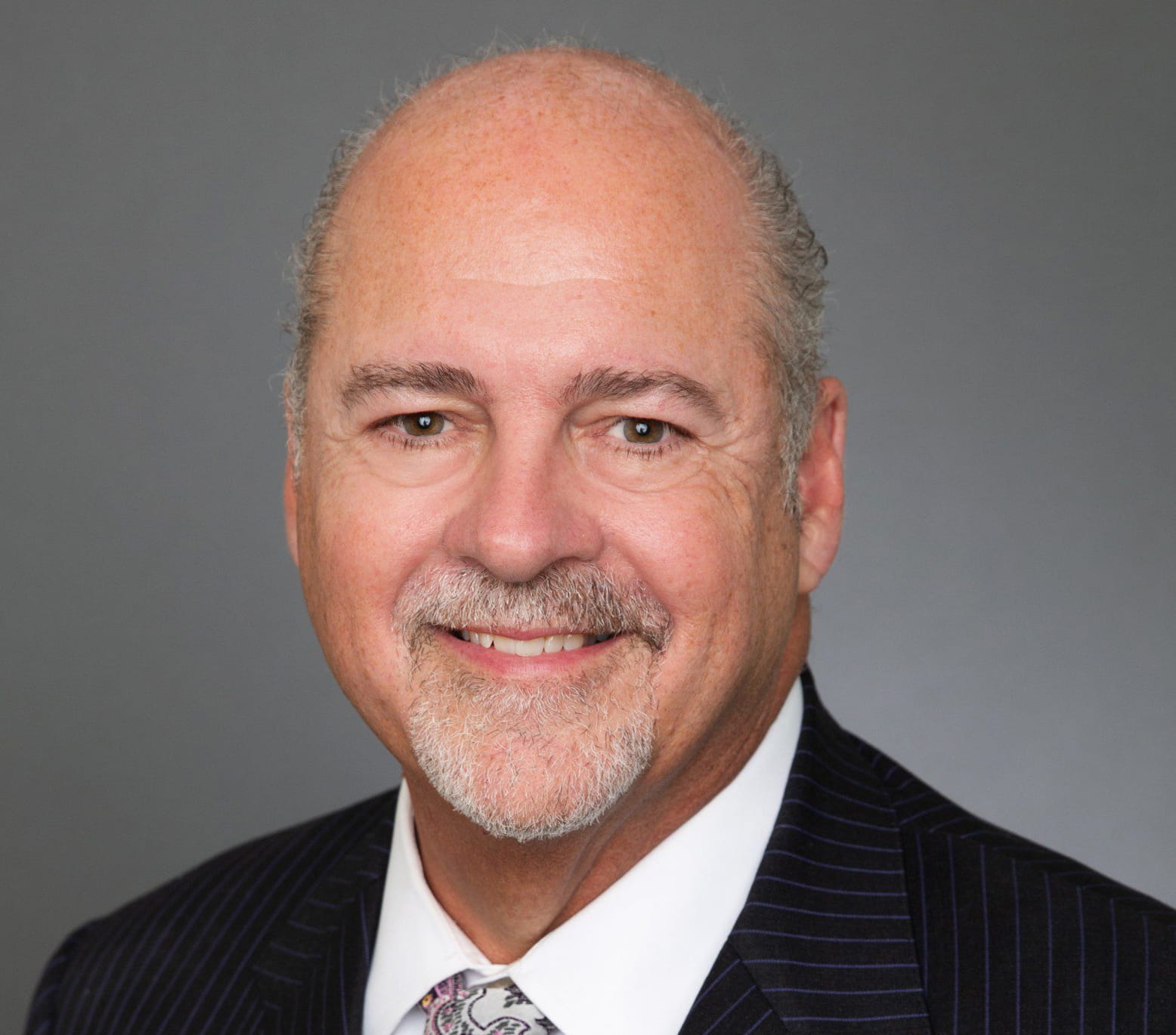

Host: Douglas Riddle
Curriculum Director, The Carol Emmott Foundation

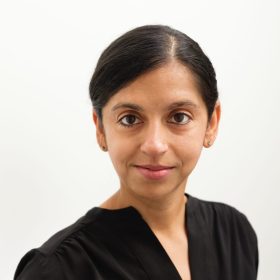
Host: Adia Ross
President of Atrium Health Wake Forest Baptist High Point Medical Center, Advocate Health

Guest: Bob Riney
President and CEO of Henry Ford Health
In this inspiring episode of The Treasure Hunt, Dr. Adia Ross, President of Atrium Health Wake Forest Baptist Highpoint Medical Center and Carol Emmott Fellow, sits in for host Douglas Riddle to talk with Bob Riney, President and CEO of Henry Ford Health.
As one of Dr. Ross’s mentors, Bob shares a candid and insightful look at his nearly five-decade journey with Henry Ford Health, exploring the values and motivations that have guided his leadership and left a lasting impact on Detroit and beyond.
Listeners will hear Bob reflect on the power of curiosity, the importance of staying true to one’s core values, and the unique opportunities that come from building a career within a single organization. The conversation explores Henry Ford Health’s commitment to serving diverse communities and addressing pressing issues like access to healthcare, education, and economic opportunity.
This episode is a testament to mission-driven leadership and the profound impact hope, courage, and collaboration can have on a community's health.
Listen Now
Available On


Connect with:
Bob Riney

Adia Ross
Douglas Riddle
Transcript
Douglas Riddle (00.03)
Hello and welcome to The Treasure Hunt, where healthcare leaders across the country share their stories and their hard-earned wisdom. In this recording, Dr. Adia Ross, Carol Emmott Fellow and president of Atrium Health Wake Forest Baptist Highpoint Medical Center, interviews Bob Riney, president and chief executive officer of Henry Ford Health. Bob was one of her mentors during her fellowship year, and you will enjoy their conversation.
Adia Ross (00:30)
Hi, and welcome to The Treasure Hunt with the Carol Emmott Foundation. My name is Adia Ross. I'm definitely not Doug, but I'm sitting in for him today and interviewing someone very special to us at Carol Emmott: Mr. Bob Riney, who is the CEO of Henry Ford Health. You guys are in for a treat. It's gonna be a great conversation about Bob, his legacy, and lessons. I'm really excited to interview you today, Bob. Welcome.
Bob Riney (00:55)
Thank you. I'm happy to be with you.
Adia Ross (00:57)
Yes. So first I wanna just give the listeners the reason, you know, we're doing this today. Bob has been a long-time supporter of the Carol Emmott Foundation and the fellows, and has also been a beacon in his leadership style and all the things he's done for the folks in Detroit. And so we thought it would be a really important conversation for us to hear a little bit about his lessons over his amazing career.
So we're just gonna jump in. One of my first questions for you, Bob, is, you know, as you look at your career, you've been at Henry Ford Health for almost five decades. What values have served as your compass, and how has that shaped you as the leader that you've become, and how do you think that's impacted the communities you serve?
Bob Riney (01:40)
Well, you know, that's a question that I think about a lot. So, to your point, I am in my forty-eighth year at Henry Ford Health and literally started here as a college student just looking for a job to help pay the bills. I never could have envisioned that I'd be leading this amazing organization after serving in about eighteen different roles throughout my journey. And I think the one thing that I always reflect on is that I wake up every day with a sense of curiosity. And, you know, that's easy to say, but actually hard to do because it means that, you know, you have to wake up every day knowing there's more to learn, knowing there's more to challenge you, knowing that maybe there are some things you have to unlearn.
And so it requires a little bit of humility, and I'm very grateful that I got that from my parents. But I wake up every day just saying, you know, what am I going to be exposed to today that's going to make me think a different way or have an aha moment? And so first and foremost is curiosity. And I think the second thing is, you know, don't get caught in stereotypes. If I had been caught in a stereotype, which was leave your, you know, employer every few years and move around, which there's nothing wrong with, by the way, I would have missed an incredible opportunity to be part of a company that kept doubling in size, doubling in size, doubling in size. So input from others is critically important along your journey. But remember, they're working their agenda, not yours. And that doesn't mean they're not trying to give you good advice, but they're responding through their filters.
And I say that because I had people along the way tell me, well, you know, you're gonna have to leave and get some external experience if you wanna advance here. And that's probably true from a statistical standpoint, but I proved it wrong. And I like to prove stereotypes wrong. It's kind of that fire in my belly.
Adia Ross (03:41)
That's cool. That's cool. You know, that's something else I want to talk to you about: longevity, and sometimes that lens where people do feel like you have to go to grow, but you've shown that you really don't necessarily have to do that. You know, and actually that takes us to the next question that I have about that. You know, tell us a little bit about, you know, that staying power and what you've learned by building your career in Detroit and really leaning into that community that you feel like if you would have maybe left, you wouldn't have gotten.
Bob Riney (04:10)
Yeah, it's a great question because I think about the holistic view of my career journey. And one of the things that's been really, really important to me along the way is that I wasn't just working on behalf of a company, but I was working on behalf of a community. And there's a big difference in sort of understanding that your ultimate responsibility is for the communities that you serve.
And, you know, on the longevity part, I would say there's no one roadmap. Everyone has to find theirs. In my case, because the company kept growing and changing and evolving, I was able to kind of leave the company without leaving the company because I moved all around the enterprise. So I don't think there's anything ill-advised about people having to leave in order to grow and then come back.
But it's not the only path. And unfortunately, it's being told these days as the only path. And so I want to make sure there's a balance to that. I think, to your broader question, one of the things that I've really found interesting is that when you stay in one organization for a very long time, you better be consistent in your values because there's no hitting the reset button when you go to some other organization.
You know, there's a history, a memorialization, if you will, of you from others that work at the organization. And so, you know, you better be a what you see is what you get kind of leader, or people will call it out. Because the, you know, beauty of leaving one company and going to another is we all learn, and you do get a chance to sort of hit the reset and present yourself in a way that sheds yourself of maybe some of the bad stuff you did, you know, just from a learning standpoint. But when you stay inside an organization, you own every aspect of who you are, and others see it through their eyes.
So one of the greatest compliments I get is when I run into a housekeeper, a dietitian, a nurse, a physician who's worked here a long time and I haven't seen them perhaps in years, and they'll say, You've never changed. And you know, the interesting part is I used to find hearing that really odd because I thought, my God, of course I've changed. I mean, I'm totally different in my decision-making and, you know, my comfort in certain things. But it took me a while. I was a little slow on the upside to realize that what they're saying is your values haven't changed. You know, of course you've changed in terms of the responsibilities and how you respond to them, but your values, you still are the same person, and you have the same heart that you always did. Then once I understood that, that's the greatest compliment I get now is when people say you haven't changed.
Adia Ross (07:03)
That's pretty awesome. There are so many nuggets there. You know, you're talking about working on behalf of the community and not a company, and that kind of is a central thing. You know, it sounds like you had a lot of opportunities to bloom where you're planted and grow within the organization, try different things, which I think is really interesting because I know you were in HR, then you did ops, you did a lot of different things. And that talking about that anchor and the importance of anchoring on who you are and knowing who you are. Yeah, I could see where that is a real, real compliment.
Now, just out of curiosity, you know, how is it that, when people say, okay, you haven't changed, when what they mean is probably your values, but how have you evolved with the organization so that you could maintain your outside eyes, be able to see new possibilities, and not be held captive by old assumptions? Because that's one of the things I think people that have been in organizations a while, sometimes people feel like that's something they're trying to balance.
Bob Riney (08:01)
Yeah, and it's a very legitimate concern. I think, first of all, I'm really fortunate that I work in an organization where innovation is in its DNA. You know, we were founded by Henry Ford himself, one of the greatest innovators in the world's history. And so, you know, we take that desire to be the first in the market to do X or be the first in the nation to try Y really seriously because we really believe we owe it to our founder to continue to be that beacon of innovation.
But having said that, which you know helps a lot, I think that I made it very purposeful as part of my career journey to get involved nationally very early on. And I had a mentor, former CEO of Henry Ford Health, Gail Warden, who really encouraged that. He encouraged me to go into other markets and sit on boards and really understand, because healthcare is local and the cultures are very different depending on what part of the country you're in, and the payer systems. And therefore the pressure points are very different. The demographics of the communities that you serve and the payer mix are drastically different. And so I was very fortunate to spend a lot of time with professionals from all over the country.
And then the second thing I was encouraged to do was go get on some boards that have nothing to do with healthcare. Sit with other business leaders from different industries because healthcare is a concern to all of them. They're customers of healthcare. And you'll see how the mind of a for-profit leader works, the mind of an investor-owned company works, the mind of a company that's in an industry that you might not think has anything in common with healthcare, but find the intersect.
So I was given some great advice, and I took advantage of that. And I tell people all the time that if you are in one organization or even if you move around, you have to find something to keep you fresh. You know, one of my favorite sayings is you don't see the whole picture when you're inside the frame. And it's such a powerful statement of getting outside of whatever bubble, you know, that you may find yourselves in. And some of my greatest challenging learning has come from sitting with now CEOs of other industries that have nothing to do with healthcare directly. You really learn a lot, and guess what? They learn from you as well.
Adia Ross (10:35)
I mean, there are so many wonderful things there. I also see that as, you know, you serving others, but then also gaining some additional skills and then just, you know, how can you be more intentional about your presence nationally and some of those activities, which I think helps both your organization and you continue to grow. That's really wise. Love that quote about you don’t see the whole picture when you're in the frame. That's so true. That is so true.
Bob Riney (11:00)
It is.
Adia Ross (11:01)
It's so true. And you can tell you kind of cultivated that intentionally, and I think that gives a lot of people hope because there's nothing wrong with dedicating your life to a community. And I think that's very, very laudable. And so it's just a matter of how do you still grow so you can do the things that the community needs and have the ideas that you need to be able to bring the people together and be a good contributor to help that community evolve? So I think that's amazing.
Bob Riney (11:28)
Well, you know, one thing I'd like to add is to know yourself. I mean, really know what motivates you at your inner core. And you mentioned that I'm very involved in the community of Detroit. And I don't even see a difference, quite frankly, anymore between my leading the health system and being a person of great influence in the city, because it comes to the core of what you believe health is. And I believe that I run a company that is responsible for elevating the health of a community. And I think we both know that physical and mental health, especially what takes place inside hospitals and clinics, is actually a relatively small piece of overall health, economic health, academic health, and access to healthy and safe environments.
You know, all those things go into making a community healthy. So we take, at Henry Ford, a very holistic view of our responsibilities. We know we can't do it all ourselves, but if we're really determined to elevate health, we have to be involved in other non-traditional aspects of health.
And the second thing I would share: when I said know your inner self, at my core, I like the underdog fight. And I discovered that along the way. And you know, Detroit has always been, since its heyday, an underdog city in the minds of the rest of the country. And we are collectively doing some of the best creative leading things in this city right now. But it took us all to have that fire in the belly of an underdog. Like we're not letting others define us. And so, that might not be at the core of a motivation for somebody else, but it is part of my core.
So my advice to people always is, you know, what really, really makes you get up every day and go that extra mile? And whatever it is, even if it's maximizing your income, I don't care. Whatever it is, own it and lean into it.
Adia Ross (13:32)
Yeah, you know, that is really cool. I mean, I think that's true about knowing who you are, what's important to you, and really leaning into that for your own leadership and courage.
Tell us a little bit, just going a little deeper about this question you just said, or the answer you said, about being responsible for elevating the health of the community. Tell our listeners a little bit more about that and how you see that and how you see the hospital or the health system involved in that.
Bob Riney (14:00)
Yeah, so you know, we've really held up a mirror in the community, like most communities have, to say, what is really keeping us back, you know, from being everything that we could be? What is keeping us from being as competitive as we need to be for the future? And so, you know, in the Detroit area, we've looked at a few things.
One is that absenteeism and truancy in our schools is a real problem. And it is such a determinant of whether people are going to read at a fourth-grade level at the appropriate time, which of course is a big determinant of success. So you start peeling back that onion, and you think, okay, what is really causing this absenteeism? And you know, you do research, and in our case, we found two things. One is transportation. As the city lost some of its density, schools are farther away from where certain people live in their communities. You know, the notion of just walking to your local school has changed as the density of the population changed and spread further out. And then medical and dental access, especially dental problems, is a leading cause of absenteeism in schools.
So you start looking at that, and you think, okay, we're gonna partner with the auto companies and the mobility companies that are here in town on transportation for students. And then we're putting mobile health clinics and clinics in schools and now adding dental care into those clinics so that we can get at this core reason people don't show up. And I will tell you that, you know, the dental piece of it was lost on me until, relatively recently, when we were providing mobile health clinics and on-site clinics, but didn't fully understand how much of it was oral hygiene and problems with hurt teeth and, you know, just bad things going on. So that's an example of us getting, you know, somewhat outside of our lane.
Another example I would give you is that we know that access to healthy foods is a great determinant. We know that very many vulnerable communities do not have access to healthy foods either from an affordability standpoint or just a convenience standpoint. And I drive through communities where the local liquor store is still the only place within a mile for them to go get stuff. And that’s not going to be something that's going to help them live a healthy life. So we've created a way to get food to people's homes to have food pickup, but we're not doing it alone; we're partnering with food banks. We're partnering with other companies in town.
And then the third example that I would give you is economic advancement. All of the companies in the Detroit area, including Henry Ford Health, have committed huge numbers to bring high school students in for internships and mentorships so that they can develop hope. They can see a pathway to great jobs. They can get with people who can role model, who also broke through challenging circumstances. They can actually get to spend time with people that might be very different than the people that they've spent time with in their daily lives. And so all of that is kind of a holistic view. And we're seeing great gains as a result of that.
Adia Ross (17:37)
That's just so heartwarming because I think that's really what it means, you know, for healthcare for us to be anchor institutions, and there are things that we have to carry, you know, obviously providing really good care within the walls, but then how do you elevate these problems and convene people and use the voices of the patients that we're seeing that are really struggling and thinking about as a community what that means and how do we kind of help fix some of these things that are intergenerational.
So there's just so many nuggets in there. I love what you said about helping people, kids develop hope, really thinking more broadly, not just about those mobile units, but the truancy and the literacy issues and how that leads to low health literacy and then they're not gonna have economic mobility. And so just a beautiful thing to imagine just, you know, the visual of you guys really being those community partners.
Bob Riney (18:27)
I think the thing that I'm most proud of is that our fifty-one thousand team members feel this way. I mean, they really believe that their role is to help people beyond just the job description. And that doesn't mean that we're perfect by any means. I say we're an imperfect organization trying to learn every day, but our culture is one of caring. And I think part of the reason for that is we have five hundred and fifty different clinic sites. As a result, every day we see and serve millionaires and billionaires who come here for very specific, specialized care they could get anywhere else. And we're also seeing people whose home address might be the viaduct under a freeway. You know, we see all extremes, and it gives you great power to look at the commonality of what people need as well as the unique things that certain populations need in place of others.
So I say it's the best learning lab you could ever have. And it humbles you, and it inspires you to give equally to all communities. And yes, you can do it under the same tent. People don't believe that. People think, no, you know, there are health systems that take care of lucrative markets, and there are health systems that take care of very vulnerable communities. I say BS to that. You know, the beauty is in serving all, because that's the enrichment that happens. And you can absolutely serve all communities as long as you're very purposeful about what the unique attributes communities need.
Adia Ross (20:11)
Awesome. You know, that kind of when I think about the leadership that's required of both you and your team and all of your teammates and the leadership they require, what can you say about hope and courage? Because I think, given, you know, all that Troy has been through, and we all hear about it in national news, and how you guys are working together, revitalizing the community and keeping it vibrant, I think that takes hope and courage. What gives you hope and what gives you courage?
Bob Riney (20:35)
You know, it's an interesting question in the time we're living in, right? Because between our ecosystems or echo chambers that we stay in, and between the impact of social media on so many things, and of course being such a politically divisive time in this country, it's really challenging. And I worry about hope, because it's such a powerful feeling, and people are down for a lot of different reasons, or they're just anxious for a lot of different reasons. And so we have a lot of conversations inside the organization about both. History tells us that we are more capable of evolution than we think at the moment.
And so you just sort of provide encouragement. We also tell people that, you know, it starts by role modeling. And if we don't like what we're seeing, then let's role model the right behavior. And the third thing I tell people is, let's focus on what we can control. And it's a lot more than you think because it's paralyzing to think about all the things that are happening that you may or may not agree with that are outside of your control. And that doesn't mean don't get active, or don't weigh in on those things, but don't get consumed by them. Really focus on: did you make a difference for this patient today? Did you help this person in a pathway to lead a better life? I mean, you know, in this industry, we have that power. Think about industries that don't have the ability to see that kind of direct and dramatic impact; how hard it must be for them to stay focused during challenging times. So I've been telling our team, turn inward. I mean, the energy source is what we get to do every day.
And so, you know, part of this is just reminding people. And by the way, I have to remind myself. There are times when you just get caught up in a sense of overwhelmingness. But I think storytelling is really a powerful, powerful way to help people provide and keep perspective. So we do, like I know a lot of organizations do, we do reflections, we do a lot of stories, but we do stories with a reminder of how much impact we have every day, and that doesn't really change no matter how we're feeling about what may be happening at a state level or at a national level.
Adia Ross (23:00)
That makes a lot of sense. There is a researcher, I think his name is C. R. Snyder, who talks about hope and it being an active thing. And what I hear you saying is just making sure everybody still feels they have agency, you know, and that keeps you motivated because if you can focus on the things that you can control, that keeps you motivated and flexible, right? And with the ambiguity, or with things to say, no, we still have agency, and there are still people that we can help. And that in and of itself is very powerful.
Bob Riney (23:22)
And you mentioned courage. And you know, I do look at Detroit since you talked about it as an example. You know, Detroit, like a lot of communities when they're struggling, you tend to turn your competition inward. It's almost a scarcity mentality. It's like, who's gonna win the fight for the scraps? And that is a really dangerous mindset to be in.
Collectively, when all the business leaders in the Detroit area came together and said, enough of this; we're gonna align and compete with other states, compete with other countries in the world because we have the talent, why we have the culture, why we have the capital to do something really relevant and exciting.
Alignment is hard to do, but it is a powerful thing when it happens. And so this motivation back to the underdog of, you know, let them trash talk all they want. Watch what happens. We're gonna prove what a great rebirth of an American city looks like. And we're doing it. And we're not doing it in a perfect way. We're not, you know, just slapping fresh paint on a building and calling it, you know, a redo. We're actually doing it the right way, and it's exciting. Getting people to rally around a cause everyone can get emotional about is key. And it keeps you going and keeps you energized when you have these just really hard, tiring days.
Adia Ross (25:05)
That's that's amazing. And it actually made me think about another question that, based on some, you know, doing a little research on you and understanding about your perspective about the difference between improvement and transformation, because I think sometimes if you think about whole cities, you can nibble at the edges, work on one little thing, but how do you transform? And so can you talk a little bit about how you distinguish between improvement and transformation, and what that looks like both for Henry Ford and then you think about even in your community and what you guys have done.
Bob Riney (25:33)
So he pledged 175 million dollars to us to bring the Shirley Ryan AbilityLab. And we've now added three floors to the tower, and they will have a hospital within a hospital. And then his son unfortunately passed away in his 20s after a lifelong battle with neurofibromatosis. And so the Gilbert Family Foundation said we want the cure for neurofibromatosis to be discovered in the great city of Detroit, so they funded two floors of what will be the nation's first neurofibromatosis research institute named after their son, Nick Gilbert.
So he pledged 175 million dollars to us to bring the Shirley Ryan AbilityLab. And we've now added three floors to the tower, and they will have a hospital within a hospital. And then his son unfortunately passed away in his 20s after a lifelong battle with neurofibromatosis. And so the Gilbert Family Foundation said we want the cure for neurofibromatosis to be discovered in the great city of Detroit, so they funded two floors of what will be the nation's first neurofibromatosis research institute named after their son, Nick Gilbert.
Then Dan Gilbert of Rock Financial, the Gilbert Family Foundation, said, I want to bring the Shirley Ryan AbilityLab from Chicago, the number one inpatient rehab hospital in the world for the last 33 years, to Detroit to be part of this Destination: Grand, which is what we're calling this whole transformation.
And so right now, under construction, right out my window, we have a new medical campus which includes a brand new 22-story bed tower with new ERs, new ORs, new procedure rooms, all private rooms, and then we're building a research building, the largest research building in the state of Michigan, in partnership with Michigan State University. And then, because this was big and exciting, we went to one of our dearest partners, the Detroit Pistons, an NBA team that just cares about community development in ways I've never seen anywhere else, and we said, we want to build multi-income housing all around this campus so people can work, live, play. Will you take the lead on building housing? And they will break ground later this year on building 800 housing units that are a combination of rehabbing old buildings that had become dilapidated, converting some office buildings to lofts, and new-build, multi-income housing. They're taking the lead on that.
Henry Ford Hospital, the initial hospital of our health system, sits in the city of Detroit, and it has been here for 113 years. And it served this community in incredible ways. It never left when others left. It always stayed, focusing on all communities. The physical plants have been modernized, but as you can imagine, there's only so much modernizing you can do with 113-year-old buildings, given the new demands and the new size of technology and everything. So we decided it was absolutely time to take on the task of building a whole new medical campus. But we wanted it to be more impactful than just a medical campus. And so we said, let's create something beyond that scale, and we can't do it ourselves. We don't have the financial means to do it ourselves. So let's make it so exciting that we bring the broader community along for the ride.
Yeah, so I, you know, I talk a lot about this with my team because you need both, right? You need to work on incremental changes. You need to have a culture of continuous process improvement, and you know, little things that you can discover every day, little changes in process, you know, a change in policy that makes a significant difference. But to me, you can't totally change by just incremental activity.
And so we had one last piece, and we said we want to have all-season green space that incorporates the great music history of Detroit, the art scene, and we want to have kind of parks dispersed along the buildings I just mentioned. And we went to our donor community, and they came in strong because they loved that concept. So we've got about four more years to get all phases of this complete, but things will start opening in ‘27.
But the real point I'm making is that if you make something, first of all, that's really needed, second of all, that is so big and exciting that people know it will be an impact that will last for generations; people line up. Everyone wants to support a winner. Everyone wants to get behind a winner. And so it's an example of, you know, doing incremental things, because that's what's going to make a difference for a patient tomorrow. But do legacy things that are for the next generation.
Adia Ross (30:48)
Man, it just gives me goosebumps. It's like it's so good, you know, the legacy for the next generation and those incremental things for those, and balancing those two things out, holding them both at the same time.
Bob Riney (31:00)
And getting partners and getting partners cause you cannot do this alone.
Adia Ross (31:06)
I know, and that's the thing I was just thinking is like because, in the beginning you talked about you really see, or and I say you but I mean you as a “big you”, your organization as really elevating health and really, you know, because you're seen as such a good community partner and really, you know, trying to enact that brand promise, you get people to come together because everybody wants to do that and that's something that's cross-cutting for all, right?
Bob Riney (31:32)
That's right.
Adia Ross (31:32)
And then thinking about, you know, how they can continue to rebuild and revitalize the community, and how they have this place of healing and people can go to work. It's just such a beautiful thing to think about that being part of, you know, someone 113 years from now talking about that, you know?
And so that's really awesome. As we close, I guess I just have one question, and you kind of alluded to it. When people, you know, when people look back at this chapter in Henry Ford Health and just the broader story around renewal, what do you hope they'll say was different because you and your colleagues chose to lead during this time?
Bob Riney (32:08)
You know, I have a two-word phrase that I think describes both my career here, but most importantly the organization, and it's called staying power. And I say that because, you know, both the organization and our entire leadership team, even in the worst of times, always knew that Henry Ford was a health system worth fighting for, that Detroit was a city worth fighting for, and that Michigan was a state worth fighting for. And so, channeling that competitive energy into work, I'm telling you, it helps you get through every day with a sense of broader purpose.
Adia Ross (32:51)
Awesome. I mean, I think we leave it at that unless you have anything else you want to add, Bob.
Bob Riney (32:56)
No, I'm great. Thanks.
Adia Ross (32:57)
Awesome. Well, thank you so much for spending a couple minutes with us today. All right, Doug, turn it over back over to you.