INTERVIEW SERIES
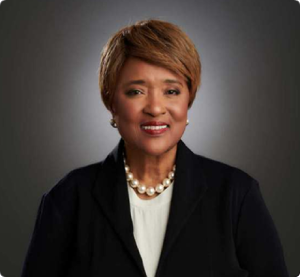
Meet Community Member
Carolyn Carpenter
President, National Capital Region
Johns Hopkins Health System


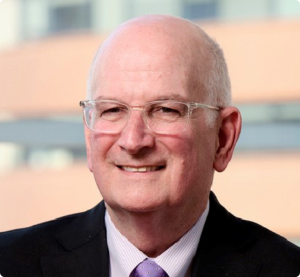
Host: Douglas Riddle
Curriculum Director, The Carol Emmott Foundation

Guest: Carolyn Carpenter
President, National Capital Region
Johns Hopkins Health System
In this episode of The Treasure Hunt, host Douglas Riddle sits down with Carolyn Carpenter, a trailblazing leader and one of the inaugural Carol Emmott Fellows. Carolyn shares knowledge gleaned throughout her journey from Duke University to her current role as president of the National Capital Region at Johns Hopkins. With helpful professional insights, she delves into the significance of community and connection among women leaders, emphasizing how the Carol Emmott Fellowship has enhanced her approach to leadership and mentorship.
Throughout their conversation, Carolyn reflects on the evolution of the Fellowship program, highlighting the importance of self-exploration and personal growth. She shares how her cohort, despite being from the first class in 2017, maintains strong connections and continues to support one another in both professional and personal realms. Listeners will appreciate Carolyn's candidness about the challenges and joys of leadership as she discusses the necessity of fostering genuinely caring, trusting relationships in today's fast-paced environment.
In addition, we invite you to watch Carolyn speak at the 2024 Carol Emmott Foundation Symposium.
Listen Now
Available On


Connect with:
Carolyn Carpenter

Douglas Riddle
Transcript
Douglas Riddle (00:01)
Carolyn Carpenter was one of the first Carol Emmott Fellows, and I have followed her career from Duke to Sentara to Johns Hopkins, where she is currently president of the National Capital Region and responsible for all Johns Hopkins delivery of care in the Washington D.C. region.
We've frequently, in the community of the Foundation, called on you for inspiration and insight because of your remarkable ability to integrate the personal and professional in your leadership.
Now, you've been a Carol Emmott Fellow and member of the Fellows Network since the beginning. In fact, before the beginning, as I think about the kind of bumpy road of getting the Fellows Network off the ground. And now you've joined the Leadership Council. You're a mentor for Fellows. What keeps you contributing to the Carol Emmott community?
Carolyn Carpenter (00:55)
A host of things. When I think of the priority items, number one, it meets a need. Number two, I think it matches my talents and interests. Number three, it really reinforces my growth. And number four, critically important, it's fun. So if I go in that order from a need perspective, there's just no doubt that the concept of community and connections and support for women leaders is as important, if not more important, than when I started my career 30 years ago. So that need is there.
Carolyn Carpenter (01:31)
I do think it matches my talents in that I like to think of myself as a relationship and connection person. And Carol Emmott is such a wonderful scale. You know, I've had the privilege to go to conferences and other events where there are thousands of people, and it's not the same. I mean, to have such an intimate opportunity to get to know other colleagues and their talents is just tremendous. And so that's a great match for me, I would say. And then I think it reinforces my own growth.
These events, I come back with new insights about myself, which I think is the whole point. And then it's fun. I have 14 colleagues in my cohort who forever make me laugh and pull me up when things aren't so fun, and remind me of what's good in life, and take good care of each other. We take good care of each other.
Douglas Riddle (02:22)
Well, that's wonderful.
I mean, we've started our ninth class at the time of this interview, but you're saying that your cohort, the very first cohort, 15 amazing women, still connect with each other?
Carolyn Carpenter (02:39)
Absolutely. Just yesterday, one of our colleagues, she had a proposal for marriage over the past weekend, and we got the video. We got to be part of it and it's really crossed the boundaries from our professional lives to our personal lives. I had another colleague tell me about three years ago, at Carol Emmott who did not go through the fellowship, and she looked at me - and I'll never forget that because she said to me, you know, there aren't a lot of environments where you truly believe people care about you.
And I'd forgotten that because I was, I was trained in an era that was a little bit more apprenticeship intense, the relationships were more close. And so there was a stronger sense, I think, whether people cared or not, you knew, but there were people who care. One thing about the Carol Emmott colleagues is we all care.
Douglas Riddle
It is so wonderful. So the Fellowship year has continued to evolve every year. The curriculum is modified. We do different things. We try to be responsive to what's happening with each new cohort. Are you finding that your mentees' experiences significantly differ from yours?
Carolyn Carpenter (03:50)
I think they're remarkably similar. Where they differ is where the environment has changed. So I know I benefited from more, well, maybe didn't benefit, but at least I understood more discrete career paths.
Right now, I would say career paths are much more varied and harder to identify. So I think that gives some of our colleagues a bit of a different experience. The flip side of that in my opinion is one of the greatest benefits, if not the greatest benefit, of the Fellowship is the self-exploration and the reflection time and the ability to really understand where you are in your own self-awareness scale.
And I don't think that's changed at all through the years.
Douglas Riddle (04:36)
What kinds of things do you think contributed to that focus on self-awareness for you? How did that happen?
Carolyn Carpenter (04:46)
It's forced reflection time that we actually get together for these convergences. I think the pace of the convergence is actually intentionally intense from an immersive perspective. I think isolation from some of your other stressors is helpful as well, to be honest with you. And then the material itself. Certainly, we had, I mean, a vast amount of material during the Fellowship where you could figure out what resonated with you personally, where you were in your own timeline and progress that you could really latch onto and get something from.
I was doing informatics. I was part of deploying the electronic medical record. I was managing physicians and nurse practitioners. I was rolling out new programs and initiatives. I was thinking about substance use disorder and behavioral health integration. I mean, it was just sort of this hodgepodge of things that you were doing. For me, it didn't feel like that. It was all just about how do you serve the person in front of you and the way that they are asking to be served in an equitable way? But the truth was it was a ton of different skill building.
Douglas Riddle (05:22)
That's helpful. Women still face prejudice and marginalizing structures, but you've drawn attention, interestingly enough, to the ways that leaders can limit their own potential as well. I sometimes call it cooperating with your oppressors. But what do you mean by the importance of recognizing patterns of opportunity?
Carolyn Carpenter (05:45)
Yeah, early on in my career, it was shared with me this concept of our unconscious beliefs that are our limiting beliefs. And I found that to be absolutely true. And the depths of those are pretty impressive. So over the years, as I have learned my own limiting beliefs, and they tend to be, I'm not enough blank- fill in the blank. Whether it's not smart enough, not networking enough, not outgoing enough, extroverted enough, whatever those things are, I think those limiting beliefs are truly our greatest constraints.
We, as women, in my opinion, seem to be pretty good at holding on to those and being perhaps a little bit more fearful for a variety of reasons that really help us, unfortunately, hold on to those limiting beliefs. So from my perspective, it's really about how do you create the concepts of possibility and solutioning and potential instead of the constraints?
And healthcare is probably more constraining than it's been in the past. And so I think it's even more important to, one of my other mentors years ago said, look up. And it's true, that's the idea. Get the landscape and stop doing the tunnel. And that's all about seeing where the possibilities are that you can navigate through.
Douglas Riddle (06:55)
Do you have some examples or any ideas of places where you were able to make that shift for yourself, or maybe advice for us on how we can actually find that mental shift? We're all familiar, I'll just say, with kind of encouragement to think more positively, but you seem to be describing an actual practice of looking at your environment and your circumstances differently.
Carolyn Carpenter (07:36)
Yes, the first one I recall was probably, and maybe it's the first one that is the most memorable because it was such a seismic shift for me. And it was trying to understand why a certain set of opportunities in my career I kept shying away from.
And they were really around what I would call being the person who was a bit more in the performance or presence role. The one who has to stand on that stage, whatever that stage is. And I found myself very comfortable putting other people on the stage and helping them be very successful there, and enjoying that.
I was asked to do some front-line, front-facing, very public-facing activities. And I had to sit down and say, why do I not want to do this? I'm right in the middle of introversion and extroversion, so I don't have that excuse. It's not like I get exhausted every time I'm with two people. That's not the case. So what is it? And I spent some time really reflecting on what are the things in my, probably growing up, in my environment that created that boundary for me.
And what I learned was I really created a boundary because one of the most hurtful things that could ever be said to me by one of my parents was, "Don't be dumb". And "Don't be dumb", I translated over time to "You're not smart enough".
Carolyn Carpenter (09:06)
And I have lived in an academic medical center world for most of my career and there are brilliant people. So it's really easy to feel like you're not smart enough. And one wonders whether I went to this environment because of that, but that said, to face the fact that I actually thought I wasn't smart enough to be the person on the stage.
And I remember having that moment of just digging and digging of what is this? Why is this? What is the limiting belief here? And the limiting belief was there are so many smarter people around me, let's put them out there.
Douglas Riddle (09:37)
So, how did you figure out you were smart enough?
Carolyn Carpenter (09:44)
Well, honestly, I think there's some empirical evidence: success, measures, I have been successful in competitive, difficult environments. And honestly, plenty of people have assessed my intellectual capabilities, not near the bottom quartile at least.
Douglas Riddle (09:48)
Yes, so success, the success of doing things. I think that's safe to say. I mean, that's a key principle to actually pay attention to. The evidence is kind of what you're saying. Once you see that, in fact, that your inner voice that's saying, "How can that person be saying that?" Actually there's a kind of a correlation, which is I actually have something useful to say here.
Carolyn Carpenter (10:14)
Yes, and I think many of us, who, at least for me, who value humility, sometimes take that too far. You know, humility for me is being very conscious of listening to other voices now, not, "I am not enough blank?"
Douglas Riddle (10:49)
Yes/ Well, I suspect you were very good at school. So this evidence goes back quite a way.
Carolyn Carpenter (10:55)
Yes, I was. I knew how to take the test.
Douglas Riddle (11:05)
So talk to us a little bit, though, about preparation for delivery. Because I think one of the things I've really noticed is you seem like you're always able to hear the four points, hear the six points. You're able just to kind of do that. But I also have a feeling that you do your homework, and it's important to you to have that preparation. Can you talk a little bit about this polarity between just confidence in your ability to stay present and do what's natural, and really respond in the moment, and the value of preparing? What do you say about that?
Carolyn Carpenter (11:41)
I would say that what I have learned is the difference between fueling creativity, and that is much more spontaneous, much more relevant to certain environments, much more what one of my mentors used to say, building the bridge as you walk on it. And there are moments that are moments of creativity and define them, value them, and make that bridge, walk off that cliff.
And then there are moments that you need to articulate with clarity. You need to make a case, need to persuade. Maybe you need to be an expert depending on the topic. And those are the preparedness.
And learning how to navigate those, I think, is something with experience and confidence. Because there are some times when I would much rather have a really good checklist. But what it is is a moment of, no, no, I don't know the answer. We need to brainstorm, or we need to create, or we need to figure out how to create an environment that allows for people to really solution in a different way. And then there are times where, no, I need to persuade, I need to help make a decision, I need to move forward an agenda. Those are all prep, prep, prep, prep. And I'm not sure I've ever been too prepared on those.
Douglas Riddle (12:59)
If it's possible, kind of the point.
Carolyn Carpenter (13:01)
I don't think it is.
Douglas Riddle (13:03)
I was thinking about how this fits with, from the beginning, one of the things I valued about you is you're very straightforward and not afraid to call people to account, having been called to account by you myself on occasion. And I wonder, is this just something that was built into you from the beginning? Does it come from your family? Or is this just a value that you hold? And I will add to that, you're very often in politically sensitive circumstances as a leader in healthcare.
And I think a challenge for many of our Fellows, frankly, is having confidence enough to be bold and brave without worrying too much about messing it up and saying the wrong thing. What are your thoughts about those issues?
Carolyn Carpenter (13:52)
Yes, well, first I benefited in my growing up in my home household with consistent debate and constant debate. We used to, and we still kind of joke that you can't pick the movie or the TV show or the book without a Socratic defense.
So in my dinner table conversations, you had to hold your own. So that's one piece of it. I would say later in life, you know, late teenage into twenties, I learned how to be kind with confrontation because there was an awful lot of lack of kindness in my environments around confrontation. And that's where that value piece came in. So I think I was trained and lucky to be trained to some degree, and then really noted that my value of kindness really needed to be superimposed on that. And then the other value is for me, integrity and honesty in very complex environments, I have found to be able to live my own sense of that and put my head on the pillow and sleep at night with a lot of transparency.
And some people don't feel that way or see that, but I have found over and over that that level of transparency allows for better solutions, allows for trust to be built. And one thing I think we all recognize more and more in our environments is teams and relationships are all about trust.
So that kind of transparency has really encouraged and nourished trust. Then I would say, you know, if I live in different environments, I've been in a very confrontational work environment, and I've been in a very confrontational, adverse environment. And I find that the adverse environment is equally unproductive and takes an awful lot of time to get to a decision, and the brightest ideas are harder to pull out.
So I've seen the benefits. I was trained and I think I've superimposed my values or have tried to.
Douglas Riddle (15:42)
Yeah, wonderful. Now that's what I've seen. So you've tackled a lot of circumstances, both in your personal and professional life, that anyone would consider stressful. You've shared some of those, particularly with your own family and your children with us in our symposium. And What have you learned about resilience through this, Carolyn?
Carolyn Carpenter (16:27)
What I've learned about resilience is that very little of my resilience has to do with what's going on outside of me. And almost all of it has to do with what's going on inside of me. So my own ability to have self-awareness, to learn, to productively explore, to evolve, to grow.
That's where resilience I have found over and over. And I will tell you right now, in the chaos of our current environment, I've been reminded of that more and more, and have had to be more intentional about finding those spaces where I can listen to myself.
Douglas Riddle (17:11)
Yes, what do you say to your people about the chaotic environment? I mean, so much uncertainty about everything for everyone. So there's just a huge amount of anxiety that's pervading our world. What do you say to your teams?
Carolyn Carpenter (17:30)
Well, mostly what I say is, you know, the noise is not news, and the noise is a purposeful strategy to distract and reorient and reprioritize, and let's persevere. So as a matter of fact, I have the opportunity to have a retreat this week with my team, and we're going to go through our vision and our values and how it reflects in our performance and where we are leading from that. And it's really a very purposeful, intentional conversation about not allowing the chaos to take us off course and off purpose.
Douglas Riddle (18:09)
Yes, it fits with what we were talking about with honesty. Truth is an antidote to a lot of things, but in particular, I'm kind of hearing that getting your team to focus on what actually is within our purview, what we can actually do something about, seems to be fundamental to that. And you call the rest of it noise, I guess, is that correct?
Carolyn Carpenter (18:33)
Yes, yes, that's one of our phrases now. You know, leave the noise aside and don't pretend it's news.
Douglas Riddle (18:40)
That's a good one. I really like that. Talk more about your teams and how you create a healthy climate.
So I'm hearing that fundamentally, I mean, we have all these buzzwords like transparency and so on, but you're really just saying, telling the truth to people and being clear about what is actually going on is really fundamental to trust. If you can't trust your leaders to tell you the truth, you're not going to have trust. So that's key. What else do you do to build a kind of climate that leads to productive, healthy workplaces?
Carolyn Carpenter (19:11)
For me, it's getting to know people as people. I don't impose upon what's personal or private, but really trying to understand who's coming to work every day. And there are a variety of different ways to do that, but at the end of the day, you have to spend time, you have to listen, you have to figure out connections, you have to understand the difference between acceptance and actually helping push people to grow in terms of their skills and abilities.
Carolyn Carpenter (19:42)
And my favorite thing is really identifying people's strengths and then highlighting those strengths to other people on the team.
I'm often privileged later in my career to actually hire to the team, and then that lets you create those diverse strengths which make for great teams. But even when you inherit individuals, finding what those strengths are and advertising them. And I literally tell people that, you know, when a certain problem will come up, the whole team should look at just a few and say, these are the best people to answer that question.
I'm often privileged later in my career to actually hire to the team, and then that lets you create those diverse strengths which make for great teams. But even when you inherit individuals, finding what those strengths are and advertising them. And I literally tell people that, you know, when a certain problem will come up, the whole team should look at just a few and say, these are the best people to answer that question.
Douglas Riddle (20:33)
Yes, key. Well, you know, this phrase, DEI, has taken a lot of hits in the political environment of right now. But I'm hearing you say, if we could get beyond some of the slogans, diversity is just richness of difference., I mean, people bringing different things to the table. Am I hearing you properly?
Carolyn Carpenter (20:40)
Sure.
That's exactly right. And it's so fun when people's abilities, skills, interests are different because that's when creativity actually hits and the best solutions happen.
Douglas Riddle (21:05)
Well, and obviously, people have to feel like you care about that. So that's the function of the leader, I think, probably more than anything else. Do you see your role as the leader of teams? Maybe let me back up. What is the leader of a team supposed to be doing here? What do you think they contribute to the team? You've emphasized quite neatly, you know, everybody has stuff to contribute. What's the leader supposed to contribute?
Carolyn Carpenter (21:35)
My opinion is that the leader needs to help the group identify the core and common values of the team and then collectively reinforce what the vision is for that team's success and connect those values with that plan, which is what that vision is for success.
I know it was Deepak Chopra who, I don't know how many years ago, decades ago, probably said, "You know, relationships are the four A's." it's all about appreciation, acceptance, affection, and attention. And some version of that in a professional way is exactly what a leader's job is. To really understand through attention, through affection.
Acceptance to me is a little bit more, it's a little harder because that's really acceptance of the strengths, but helping people continue to build on those strengths and be successful. And then, really, you know, affection is a celebration, celebrating those successes.
Douglas Riddle (22:34)
Would you say that there are transferable skills from being a mother to being a senior vice president of a complex organization? I'm kind of hearing that, so that's what I thought I'd pursue. What would you say?
Carolyn Carpenter (22:54)
Well, absolutely. I think we all have different things in our lives where we grow the most. I grow and have grown the most as a parent. I have found that a lot of those challenging, limiting beliefs, a lot of the fear, many times many of us who are successful see control as an avenue to success.
And parenthood will teach you immediately that that is inaccurate. So a lot of my personal growth has come through being a parent, and it absolutely translates back to that whole resilience and learning. It's what's within, what is outside of us, that creates the greatest opportunities to lead.
Carolyn Carpenter (23:42)
And for me, certainly being a parent has been that one over and over again.
Douglas Riddle (23:47)
That's wonderful. So you're much more than a leader at Johns Hopkins and in healthcare generally, and you're also a mom, but there are other interests I'm sure you have. Are there things that you kind of wish people would get into conversation with you when we've done enough on leadership?
Carolyn Carpenter (24:06)
That's a great question. I think reading.That's a great question. I think reading.
And I don't mean just reading for work. I have explored so much more in my last decade. Reading for resilience, reading for entertainment, reading for relaxation. And I hear an awful lot about the good workbooks, the books that can help you learn in your career. But I usually have to find from non-work colleagues, okay, what's the latest detective series I should be reading about? Or lately, I've watched some TV, which I haven't much before, but asking folks about, what are some good streaming series, things like that. I'm a little behind. I think most of my colleagues have been doing this for years.
Douglas Riddle (24:48)
Well, I wish that were true, but I think unfortunately that's not true. They're not doing it either because I talked to an awful lot of colleagues, but I think it's rich.
Douglas Riddle (25:04)
Again, to maintain your humanity, you have to have some connection with something besides your specific job responsibilities. And I think you actually manifest that quite nicely.
It's been a delight, Carolyn. Thank you so much for joining us. And we look forward to sharing this conversation with others as we go forward. So have a great day. And thank you for being with us on The Treasure Hunt.
Carolyn Carpenter (25:28)
It was great. Thanks, Doug.