INTERVIEW SERIES
Meet Community Member
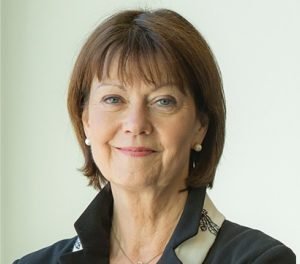
Cynthia Barginere, DNP, RN, FACHE
Chief Operating Officer
UMass Memorial Health
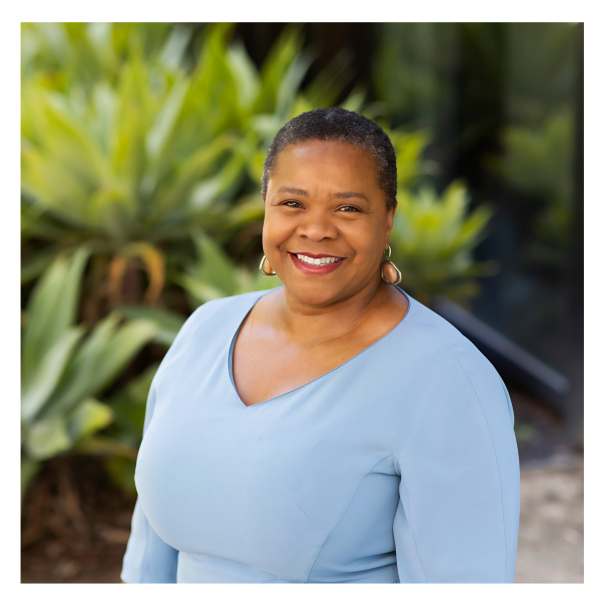

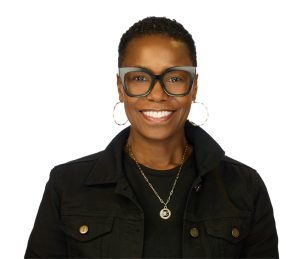
Host: Douglas Riddle
Curriculum Director, The Carol Emmott Foundation
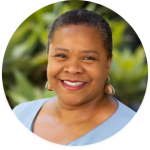
Guest: Cynthia Barginere, DNP, RN, FACHE
Chief Operating Officer
UMass Memorial Health
Cynthia Barginere joins this week’s episode of The Treasure Hunt. Currently, Cynthia serves as the System Chief Operating Officer at UMass Memorial Health and as President of UMass Memorial Health Community Entities. With more than two decades of experience in healthcare leadership, Cynthia shares insights from her journey, from her early days as a nurse at the University of Alabama Hospital to her transformative roles at organizations such as Rush University System for Health and the Institute for Healthcare Improvement.
Cynthia discusses the principles that have guided her career, including the importance of servant leadership, the power of building lasting professional relationships, and the necessity of clarity and accountability in leading large teams. Hear her philosophy that “love is a verb” as she reflects on her commitment to mentoring the next generation of leaders, with a special focus on supporting women and people of color within healthcare.
Listen Now
Available On


Connect with:
Cynthia Barginere

Douglas Riddle
Transcript
Dough Riddle: (0:03)
Cynthia Barginere is a member of the Carol Emmott Leadership Council and a longtime mentor for Carol Emmott Fellows. She holds master's and doctoral degrees in nursing practice and has over two decades of experience in healthcare leadership.
Cynthia began her career at the University of Alabama Hospital, where she rose to become Chief Nursing Officer, but she's had a significant leadership impact at other institutions, including the Institute for Healthcare Improvement as Chief Transformation Officer, and at Rush University System for Health as Senior Vice President and Chief Transformation Officer. Now she's System Chief Operating Officer at UMass Memorial Health and President of UMass Memorial Health Community Entities.
Welcome to the Treasure Hunt, Cynthia.
Cynthia Barginere (00:52)
Thank you, thank you. Nice to be here, Doug. Good to see you.
Doug Riddle (00:56)
It's just good to see you. I've enjoyed sitting with you at Leadership Council meetings over the years, and I always find it fun to talk with you. Very stimulating.
Now, you've kept the same executive assistant for over 20 years. That makes huge sense to me. But tell me how that has been helpful to your leadership.
Cynthia Barginere (01:18)
Well, you know, when she and I started working together, she was actually working as a customer service patient experience leader in our organization, which means she is really, really good at problem-solving and very, very patient with people, including me. And so we have gotten to know one another. We know each other's style. We work really, really well together.
It's really important in these roles and when moving from one organization to the next to have a trusted ear you can talk to and confide in, someone you can be your authentic, transparent self whenever you need to be, but also someone who can anticipate your needs because they know your style. They can help ease the transition, even as she transitions herself.
She has helped to ease my transitions. She gets to know everyone in the organization because she's very much a people person, which also helps me with my transition. So yes, she and I have been together for almost 20 years, and I don't think she's going anywhere, even if I tried. And vice versa.
Doug Riddle (02:41)
That's a good thing.
That's a good thing. Well, you know, I've been consulting for many years on leadership. What I taught my interns and the people on my teams is that, yes, we'll have meetings with big shots, but the people who know what's really going on are the people sitting at the desks out front, or back in a corner. And if you're serious about helping an organization, you need to get to know them and make sure they love you. That's key.
Cynthia Barginere (03:03)
Yes, yes.
Well, I also use her as a bellwether for people, because it matters how you treat the administrative and executive staff. And it says a lot about people when you see how they treat your executive assistant, whether it's an interview candidate or a coworker. So she's really good. She's a good bellwether for that as well.
Doug Riddle (03:36)
I know that both you and your brother have been involved in public service. Is this something that was a part of your upbringing? Was your family at large involved in this before?
Cynthia Barginere (04:27)
Well, I think I believe that our role is to care for others. As a nurse, I care for our patients. As co-workers, we care for one another. And early in my career, I would say to my nursing team, love is a verb and it is specific behaviors. It's how you make people feel when they engage with you. And no patient is ever coming into the hospital and saying, I wonder if that nurse knows how to start an IV, or I wonder if that nurse knows how to give me my medication. That is an expectation. What they don't expect is to feel loved.
And that's how you actually exceed their expectations. I feel like if you are a servant, that love, that verb, extends to your patients; it extends to your coworkers; it extends to your peers, and to your bosses. It is the behavior that you extend. And part of that is serving one another and making sure that people have what they need in order to do their best work.
And so that's just always been a philosophy for me: love is a verb, and servant leadership is one way to demonstrate that.
Cynthia Barginere (06:19)
How has that changed over the years? I remember looking at that question and thinking, how has my leadership changed? And I think about the time when I was a baby nurse manager, when I used to talk to my nurses about love as a verb, and I still say that today. I want to know how much smarter I am today than I was back then, or how much has changed. Maybe one of the things that has changed over time is my understanding of how important it is to be clear about expectations, because that is also a way of serving your team.
I think at some point I may have thought, well, people, of course, people know what's expected of them. Of course, people know what I want them to do. I say it all the time. Maybe they know, but I have learned that having a clear accountability structure and being really clear about goals and expectations is really important.
It's important to me as a way to keep me on track and not lose focus. And it's important for your teams as a way to keep them on track and to make sure we're all aligned on what is necessary. When you write your nursing care plan, you always end it with "as evidenced by," because there's evidence for your performance and what you expect from your patients.
So when we write our goals, when I write my goals with my team, it always ends with "as evidenced by," so that we're all clear on what we are focused on and what the outcome should be. I think it took me a little bit of time to get that it's clear, and to make that a part of my operating model, just because I did end up sometimes saying, how did we get so misaligned? How did you think I wanted you to go right, and you went left? And I thought you were going to go left. So I think that's been an evolution for me, for sure.
Doug Riddle (08:31)
Well, I think the thing that's interesting to me is that you're kind of describing how, as you get to be more senior, love looks different in its activities.
When you just have your one little team, if you're charge nurse for one unit of an evening, then love's pretty direct. You can do it. You can make people feel safe mostly through your interactions with each one. But I think part of what you're showing us is, which is really important, that as you become responsible for multiple groups, so many divisions that you're responsible for the whole operation.
In so many ways, there's so much diversity and divergence within that. Creating safety for people because they know where they stand and what they need is a way of showing love. Do you think that's part of it, is learning different ways to show love when you have a bigger responsibility?
Cynthia Barginere (09:28)
Absolutely.
I think that is absolutely great. I hadn't thought of it that way.
That is a perfect analogy. As I say, it's a verb. It's an action. I do think it is only fair to people to be clear about what your expectations are. You can't expect people to read your mind. No device helps people to read your mind. If you're not clear, you can easily end up going in different directions.
Cynthia Barginere (10:10)
That is actually a great analogy. I'm gonna use that.
Doug Riddle (10:14)
I wonder sometimes, especially for nurses who are part of the kind of American nursing culture at its best.
The idea of a climate, of an environment, like the emotional environment, is something that you pay attention to from the beginning all the way through. As you know, I've done leadership development and coaching with senior leaders for decades, but one of the things that I find gets hard for a lot of people who are not nurses, let's put it that way, as they move into more senior roles, is to understand that their real impact is in creating a kind of an emotional environment for their organization.
It's not just the tasks. But I kind of hear part of what you're saying. I don't mean to put words in your mouth, but I'm kind of hearing you say, "No, this is a consistent piece. I've known that I have to create an emotional environment of acceptance and safety for people, no matter how many people I'm responsible for." Is that right or not?
Cynthia Barginere (11:00)
Yes.
I agree with you, and I think it is an important element. People want to know who they work for. Like they want to have some sense that they know you, and so it is harder to do the larger your group becomes.
I remember when I used to talk to my nursing staff at UAB. Whenever I do town halls or orientation, I say my biggest challenge is to have a personal relationship with 2000 nurses.
That's my goal: for people to actually know who I am, which means I have to be visible, transparent, and out there. And so that is still important to me. It's more difficult to do, the larger your organization is, but you have to find those key people within your organization that can help you to understand the organization and can be kind of your ambassador for your goals, your values, what's important to you.
And so I spend a lot of time talking to people. I'll have meetings with people to come together once a month just to talk about what's important to them. Even if we don't have an agenda, we're going to keep this time because it can't always be transactional.
Doug Riddle (12:28)
I love that. That's brilliantly put. The focus on tasks makes people too busy, too fast, and not very helpful. The focus on relationships makes a difference because you actually have the strength to do what you need to do.
I think that you said that beautifully. Women of color are still vastly underrepresented in healthcare leadership. Do you feel like there are hopeful signs in the work toward parity that you can point to?
This is a tough time. This moment in history is kind of a tough time. So, that's why I'm asking you now.
Cynthia Barginere (13:17)
Wow. Yeah.
So I will say that I don't know how to answer that except to say that I try to do my own part. So I will tell you that when I was at Rush, we had a small group of leaders within the healthcare organization who were African American women. And we knew there were other African American women within the organization who were mid-career and looking for something. I mean, it's easy to look and say, well, Cynthia did it. Maybe I can do it. It's a whole other thing for Cynthia to sit down with you and say, this is how I did it.
Maybe I can help you with what you're struggling with. And so we started bringing women together one by one to have these informal conversations. And then we brought the Black mid-career men into the fold and started having a conversation. And then we created a little village that we called the Paula Brown Village Mentoring Group.
I will continue to look for opportunities to mentor people, mentor anyone who is interested in growing and developing, but in particular, Black women and men who are really looking for someone who can say, yeah, I understand. I understand what you're going through. I understand what that challenge is. Let's talk about how you might be able to overcome those challenges in order to get to be able to do what you want to do, to be able to lead in the way that you want to lead.
I can say that there are brilliant leaders out there at the mid-career level who are really looking for someone to support them. It's one of the reasons I do the Carol Emmott mentoring, and I love it.
And before COVID, we were coming together on a pretty regular basis in person. And then after COVID, we started doing it via Zoom. And we still have a really strong core group of people, and we have a core group of mentors who come together with us to give encouragement, to give support, to give advice, just to be an ear for these really brilliant leaders that just want to have access.
Doug Riddle (15:58)
I could see that. I do think anyone who feels excluded in some way or different, it takes sufficient confidence to put yourself out, to keep stepping up, you know, when you do get overlooked, if you're not what the mainstream is.
I think we built the Carol Emmott Fellowship year on that as one of our principles that if we want to see people advancing, they have to have a sense that they are in a safe fold, I guess I should put it. It's kind of consistent with what you were saying about your leadership.
Cynthia Barginere (16:26)
Right.
Doug Riddle (16:37)
Overall, I thought that was really important.
Cynthia Barginere (16:39)
Well, sometimes you just want to crumble in order to pull yourself back up, right? And when you want to crumble, you want to be someplace safe, where it's not going to be held against you later. Nobody's going to come back and say, well, I don't know if you can do this because you know that time you crumbled.
So you just need a safe space to feel all of that, but then to get right back in there.
Doug Riddle (16:46)
Good point. Yes. That's right.
That really speaks to me. When I feel like I really need to melt, I want to make sure I have a friend with a mop. You know?
Cynthia Barginere (17:16)
Exactly.
Doug Riddle (17:20)
Otherwise, I'm doing without, and it's not that much fun.
You mentioned mentoring the Carol Emmott Fellows. What are the things that benefited you? I know from the Fellows how grateful they are and how much you've really benefited some of our Fellows. But what do you get out of this?
Cynthia Barginere (17:40)
I learned something from every one of the fellows that I work with. I mean, they are brilliant women. And so they are doing amazing things. They have their own approach to the work and the world. And so I learned something every time I work with one of them. And so to me, it's a give and take. It's a give and take. And of course, for me personally, I feel completely fortunate that I have found so many mentors throughout my career. I've had people say, "You should try this," when I didn't even think I had the skills to try it.
And so being able to give back in that way and to be able to help people to seize a life that they had not really paid attention to. Also, that gives me a lot of satisfaction. So both of those things.
Doug Riddle (18:47)
That's great. Well, you've made a huge impact for us, and I know our whole community is grateful for what you contribute. And you bring a wealth of experience.
Cynthia Barginere (19:21)
I have to say, the wide range of experiences and different systems that you have experienced is really helpful, so that people can have a little broader picture of that.
I understand on a more personal note that you've seen the musical Hamilton more than once. I'm guessing you love theater, but what about Hamilton really grabs you?
It's such a good question. Because I've seen that multiple times. I've seen a few multiple times, probably Hamilton and Wicked. I've seen both of them more times than just about anything else. But the thing about Hamilton is that it is relatable today: the political environment, the personalities, the leadership lessons.
I love George Washington in that play because he is the ultimate leader, and he has all these complex personalities and big egos that he's trying to deal with, and he does it brilliantly. So, you know, there are leadership lessons there. There's emotion. I literally cry every time his son dies. I hope that's not a spoiler alert for anybody who hadn't seen it.
Doug Riddle (20:18)
By now, that's their fault. That's their problem, not yours.
Cynthia Barginere (20:20)
Right? But I cry every time I see it.
Doug Riddle (20:27)
I hear ya.
Cynthia Barginere (20:27)
So the emotion that they are able to elicit. And then I love the music because a lot of people love the rap music, but it's every type of music. It's every genre of music that he has melded there to create something beautiful that I also love because I love music. So it has everything.
Doug Riddle (20:49)
It does. But I have to say, that's the first thing I really became aware of, Lin-Manuel Miranda was with Hamilton, but boy, that opened up a world to see all the other things that, of course, he's done. City Heights and some other things are just remarkable. Really, a whole world opened up, I think, in theater that has been needed. So I really like that a lot.
Cynthia, you do a lot of interviews. I've seen you on stage. You have lots of opportunities where people ask you a lot of questions. I'm just curious, is there something you wish people would ask you about that you never get to talk about in interviews?
Let's talk about that. Anything of interest to you that hasn't come up recently?
Cynthia Barginere (21:40)
Well, you asked me about my theater interest, which is really interesting because, you know, whenever anybody asks me about my hobbies, I always say, I don't really have any hobbies.
But I think, you know, my boss and I were talking about this the other day, and he said, well, theater is a hobby; it's kind of a hobby.
What people would ask me, what I wish people would ask me, I don't know. If you want to get me talking for a really long time, ask me about my kids.
I could talk all day about my sons, who are 18 months apart, and they live in Los Angeles. They have lived together for the last 12 years, up until a couple of months ago. They have similar interests. They make music together. They do entertainment together, and it's just one of my proudest moments because they love each other, they take care of each other, and that has just always been my dream. So nobody ever asked me about my kids.
Doug Riddle (22:50)
Do you get to see them much? I mean, because you're on the other side of this platter.
Cynthia Barginere (23:01)
Yeah, but we usually see each other two or three times a year. So it is nice. They're supposed to come for Thanksgiving, so that'll be nice. Yeah, I don't have anything else interesting about me.
Doug Riddle (23:05)
I can't really allow people to lie in that way, but nonetheless, I do know that you've demonstrated excellence in leadership and healthcare, making a difference for people, for the people who work for you, for your patients, for communities that you're involved with.
UMass has really done a lot in terms of partnering with community organizations and trying to make a difference beyond what's happening in hospitals.
You're responsible for Community Entities you know at UMass. That should be a whole other interview for us when we get some time, because we'd love to hear more about that.
Cynthia Barginere (23:54)
Yes, it's been a great transition for me, UMass, the values that they have are so aligned with my own, and it's a great place and a great place for me right now. So I'm loving it.
Doug Riddle (24:17)
Well, it's a flagship health system in our country, and they're lucky to have your leadership. And we've been lucky, Cynthia, to have you here in the studio today.
So thank you so much for spending this time, and I hope you have a great rest of your day. Bye now.
Cynthia Barginere (24:24)
No, thank you, Doug. Good to see you.