INTERVIEW SERIES
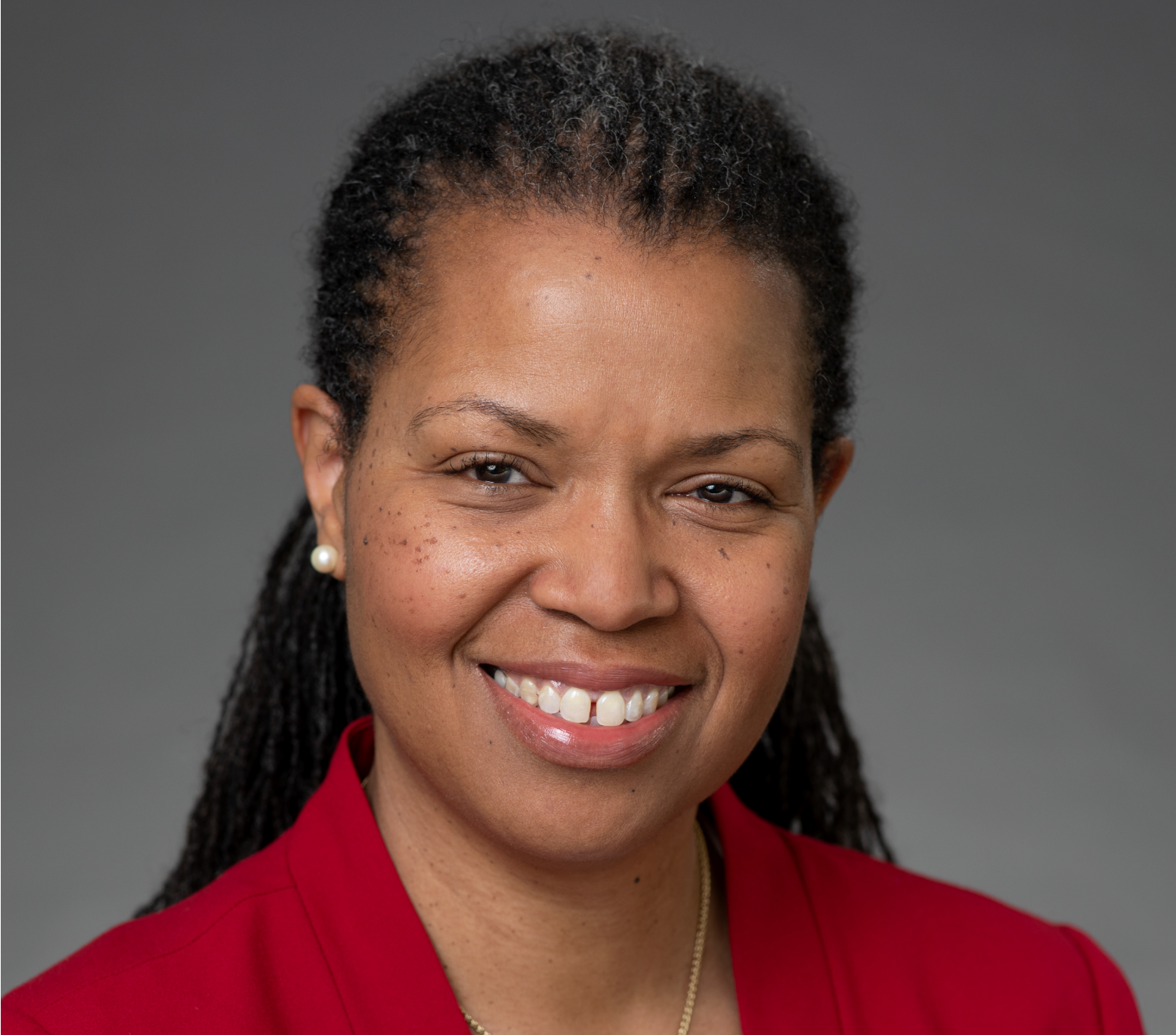
Meet Community Member
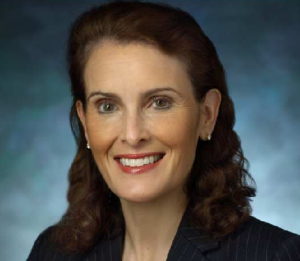
Darcey Lynn Cobbs-Lomax
Executive Director of Health Equity
and Community Impact,
Yale New Haven Health

Host: Douglas Riddle
Curriculum Director, The Carol Emmott Foundation

Guest: Darcey Lynn Cobbs-Lomax
Executive Director of Health Equity
and Community Impact,
Yale New Haven Health
In this episode of The Treasure Hunt, The Carol Emmott Foundation welcomes Darcey Lynn Cobbs-Lomax, Executive Director of the Office of Health Equity and Community Impact at Yale New Haven Health. With over 13 years of experience at Yale New Haven Health, Darcey shares her compelling journey, highlighting her commitment to ensuring equitable healthcare access.
Drawing from her personal history as a Black woman growing up directly following the Civil Rights Era, Darcey emphasizes how her familial experiences shaped her view on health access, education, and the broader community impact.
Throughout the discussion, Darcey reflects on her early career working in a clinic in the South Bronx, where she witnessed firsthand the inefficiencies and challenges faced by patients, particularly those who were non-English speakers.
This eye-opening experience ignited her passion for understanding the healthcare system and advocating for meaningful change. Listen in as Darcey shares the inspirations behind her work, the importance of lifelong learning, and her sense of obligation to continue fighting for equity in healthcare for all.
Listen Now
Available On


Connect with:
Darcey Lynn Cobbs-Lomax

Douglas Riddle
Transcript
Douglas Riddle (00:01)
I'm here with Darcey Cobbs-Lomax, who is the Executive Director of the Office of Health Equity and Community Impact for Yale New Haven Health, and a member of The Carol Emmott Foundation's Collaborative. And that's where I first heard Darcey tell her story about focusing attention at Yale on health access and community impact. We pull Darcey in every year to tell her story to the Carol Emmott Fellows.
She's also been a fellow of the Connecticut Health Foundation, has shared her expertise with several universities in Connecticut, and has been a leader at Yale New Haven Health for 13 years. Welcome to The Treasure Hunt, Darcey.
Darcey Lynn Cobbs-Lomax (00:44)
Great, thank you for having me. Excited to be here.
Douglas Riddle (00:46)
You know, your professional history, as I've heard a number of times, has been shaped by a determination to make healthcare fair for everyone. Share with us a little bit about the experiences that helped develop that determination.
Darcey Lynn Cobbs-Lomax (01:03)
I don't think I can point to any one experience or event that happened in my life. But as a Black woman who was born in the early 70s, just kind of coming out of the Civil Rights Era, if you will, in the country, my youth and childhood were shaped by the impressions that my parents and grandparents had and experienced in this country. While I did not go to segregated schools, my father did for a period of his life, and my grandparents absolutely did.
I had a perspective on what access meant globally. So not just access to healthcare, but access to education, access to spaces, access to the communities we lived in or could not live in was shared with me throughout my childhood. So I knew that I was of a generation that was overcoming some pretty big hurdles. And while I never felt I had the weight of any world on my shoulders, I felt like there was an expectation that I would do something unique with the opportunities that were in front of me because my parents didn't have those same opportunities and absolutely not my grandparents who were born in this country under Jim Crow law in Southwest Georgia.
Education was really stressed a lot in my childhood, and I went to college in the Southeast in graduate school, but I can name a particular place that I worked that helped me think about what I wanted to learn about the business of healthcare.
And my very first job post-graduate school, after I'd gotten an MBA, I didn't really know what I wanted to do, but I took a job with a clinic in the South Bronx in New York. And I would go to this clinic every day. And truthfully, I was working as an interpreter. I was a French major as an undergrad. I had a one-year contract at a WIC program. And I would observe what appeared to be, in my opinion, extreme inefficiency in how the clinic was run.
I saw many, many patients who didn't speak English sit and wait for hours to be seen. And I just thought this can't possibly be healthcare in America.
I watched, you know, children would be there crying, they'd be having lunch, they'd be leaving and coming back, and still not be seen. It was really just a puzzling experience for me. And I decided from that that I wanted to learn the business of healthcare.
So that probably matched alongside my experiences of growing up in the 70s and 80s. My grandmother, my paternal grandmother, once shared that she had never seen a doctor in America until she was about to give birth to my father in Connecticut. She was born in rural Georgia, where there were no doctors for Black people. So kind of all of those experiences came together, and I thought, there is somewhere where I could do something meaningful in life. And things sort of took off from that experience working in the Bronx.
Douglas Riddle (03:54)
Well, it sounds like your awareness of this history gave you a real sense of obligation to build on that, not to take it for granted. Is that what you experienced?
Darcey Lynn Cobbs-Lomax (04:07)
Absolutely. I just told my son this over the weekend, I said, "You know, education is something no one can take from you." And when I was a child, my family members would tell me this, and I didn't really understand it. I thought, you can forget things, but the ability or the opportunity to educate yourself and be a lifelong learner, whether formally or informally, was not something that my family members had. So I realized today, as an adult woman, that a lot of what they shared was because of a lack of access or opportunity.
So, you know, we'll talk a little bit, I think, about some other things that I do to continue being a lifelong learner, but the things that I could learn in school and then apply to the world really mattered. And that was sort of indirectly instilled in me without anyone ever saying, "Go out and do great work in the world, Darcy, that's meaningful." It certainly started at home with my parents and grandparents, kind of supporting me and nudging me in their own way in that direction.
Douglas Riddle (05:05)
That makes a lot of sense. Of course, growing up as a white guy in America, Orange County, California, I think I was definitely one of those people who took it all for granted. When my parents would tell me stuff about the importance of education, I was like, yeah, but I knew it was essential.
And, it kind of underlies something. My mother always said, "You know, you've been given a lot, you owe a lot." She was trying to tell me, we didn't get here automatically. It's not a given. And certainly for a Black woman, I think that's very clearly so. I still remember hearing you talk at the Collaborative, several years ago now.
And I was so struck, taken with the story of what you had done in terms of building this work at Yale New Haven to increase real fairness in healthcare delivery access, building on a lot of other things that you'd done. And that's led us, of course, to say, this is such a great story. I want to make sure that at least a few classes of our Carol Emmott Fellows get a chance to hear you. And I was so pleased you came back again this year, and thankful that you got rave reviews for what you had to share about that.
So I'd like to hear about where you are now with this, what you've created at Yale New Haven, and a little bit about what it took to create it, to create the initiative that you're leading at the health system.
Darcey Lynn Cobbs-Lomax (06:42)
Sure. So, as you shared, my title is executive director for the Office of Health Equity and Community Impact for Yale New Haven Health System. So I lead our health equity strategy and implementation efforts in the quality and safety space, along with a medical director and our chief quality officer, and also oversee our community health needs assessment work and what equity shows up and looks like in the communities where our five hospitals are.
And you know, if someone had said to me when I was a kid growing up in Bridgeport, Connecticut, that one day you'll be a health equity leader or you'll work in healthcare, my brain would have gone to, well, will I be a doctor or a nurse? I didn't really love the sciences as a child, so I could have never imagined this for myself today, but it's work that I really get a tremendous amount of joy out of doing. Now, that being said, I'll tell the truth, it's hard, right?
So the way that this work came to be was I was asked what I often say is the question of a lifetime. And a leader in our health system asked a group of us, "What's your pie in the sky dream for our health system?" And my response was that we would make every decision from an equity lens, right down to who we buy our Band-Aids from. And as you know, Doug, I've shared the story that nobody responded to that. Nobody thought that was a great idea. And this was in the summer of 2020.
So, remember we're in the middle of the COVID-19 pandemic. And so that idea sort of sat with me. I remember where I was the day it kind of floated across my brain in my house, that you should really push to work on this. And I took it back to that same leader who said, "Yeah, tell me what you’ve got. What can you put together?" And I put together a proposal. He gave some feedback, and we took it to our chief clinical officer, who poked a lot of holes in it and said, "Now, if you really want to do this, you'll come back with these questions answered." And I did.
And from there, he helped me form a steering committee. We did a lot of foundational work, but I was a one-woman show for about nine months, and then I proposed to our executives that we should have an office of health equity. And they said yes, and they let me start it. And they gave me a few dollars to hire some staff. So there are a lot more details to it than that. But what I would say is that relationships really matter in this work.
I got to know a lot of new people in the hospital, people I didn't know, but I knew enough along the way to kind of get my foot in the door. I had an idea, and I thought, well, what do I have to lose? The worst they could say is no. And I have historically not been a risk-taker in my career. I've been kind of safe, sort of, I can do this job. I know I can check all the boxes. Well, here's a job that had no job description.
I created it myself. I used friends and colleagues and information from other health systems, who certainly were already doing this work, and helped me sort of put that blueprint together. But what I often remind myself is that startups are hard. Right? And this is a startup.
Still, after almost five years, it's still a startup, and a lot has changed in America since 2020. But I would say, when I look back over the five years, that I'm glad I spoke up that day because I could have taken the usual Darcy approach of, you know, I could have just said the norm. And I don't know what the norm would have been, but what really was in my head and in my heart that day was to mention equity and health equity. And as a result, I get to come to work every day, sometimes from home, sometimes in the office, and I get to do things that I really love and bring me a lot of joy.
Douglas Riddle (10:28)
And I love that story, obviously, because I've promoted it quite a lot. But I promote it because I think very often we prevent ourselves from taking these risks. And you went against the grain, as you say, I'm not a risk taker generally, but you cared about something enough to do it. And then you put the energy, you know, initiative, and stick to it, and make that work, but didn't try to do it all by yourself.
The story shows that you gathered people, you connected, you had conversations with people. It's a powerful illustration of what an individual can do when she's focused on that. So thanks so much for sharing that. I know you're a hard worker, but I heard some years ago that you had an insight into yourself. I don't know if you remember what you said about that, but about what makes you happy and how that insight about what makes you happy changed, to some extent, the focus of your own efforts.
Darcey Lynn Cobbs-Lomax (11:27)
Sure, so I'm a wife and a mom of four children that I've given birth to, have a bonus daughter also, and we have a dog. We have a dog, Ruby.
We often hear a lot about work-life balance. And I think it's different for women, right? I think it's different for women for a number of reasons, because we get pregnant, we give birth to the children, and we are natural caregivers. And not that husbands aren't, my husband is a very hands-on father with our children and has been extraordinarily supportive of me and my career. But I felt like I always wanted to make sure I could be present for my children.
And something that I don't remember when I first thought this, but I've shared it with a lot of people, is that I get one chance to raise my children. I get one shot at this, right? There's no do-overs, it's not a dress rehearsal. I get one chance to show up for their dance recitals, their PTO meetings, or the school play. And I really wanted to be and want to continue to be present for them in those spaces and in those ways. And in the whole scheme of how long we work in America, if you work to a retirement age of 67 or whatever, maybe it's going to be 70 soon, probably 80, who knows. But if you work a body of 40 years or so, that's a lot of time to do a lot of different things. And that's what I had to remind myself.
So when I think of, you know, maybe where some friends or colleagues are who I went to business school with, who really had a clear trajectory of wanting to be the CFO of, you know, of a Fortune 500 company. Those were not things that were in my brain when I finished business school.
I decided it was okay. And as a result, I feel like I don't always get it right. Yesterday, my daughter didn't have school, and I sent her to the bus stop. So I miss things. She came back home. But I feel good about how I've been able to balance and navigate the time that I really want to pour into my children while they're young. I'm going to have a career and kind of develop and build things at my own pace.
So that's one insight that comes to mind that I feel good about. And I don't always get it right. Like I said, my daughter, I sent her to school, but there was no school yesterday. So we have those sorts of hiccups. We laugh about them. But I've tried really hard to balance the two.
Douglas Riddle (13:56)
So how does that conviction actually affect your day-to-day decisions?
Darcey Lynn Cobbs-Lomax (14:04)
Well, I'm very intentional about how I use my time at work. So I've availed myself of many tools and trainings that Yale New Haven has about just how to organize your day, right? There are lots of leadership trainings I can do, but I recently took a class called Getting Things Done that has really helped me figure out how to use the eight hours in my day well. So I'm very intentional about the time my day starts, the time my day ends.
It doesn't mean that I don't do work in the evening sometimes, but I'm really disciplined about when I read email, what I do at the dinner table, and what I don't do at the dinner table, where my phone is. Because there's just some sacred time that we have as a family. My husband works overnight, so dinner is really special for us because it's the one time in the day when everybody is sort of on the same sleep schedule. So we're around the table together. We really try to talk about our days, the highs, the lows, et cetera. So for that 30, 45 minutes, or an hour,
I try to be very, very present. And there is work that bleeds into the evening sometimes or even the early mornings. But I try to make sure I can really carve out moments, like this morning, just walking to the bus stop with my daughter and our dog on the right day to go to school. She had school today. Just those moments, I don't want to miss them because just hearing what's in her head or her heart as a 10-year-old and watching her skip down the street with not a care in the world, that reminds me to find the joy in the surroundings as I'm walking back home to get my day started.
Douglas Riddle (15:38)
Does it change though, as, I mean, because some of them are older, and so as they become more independent, how does that affect the kind of choices you make?
Darcey Lynn Cobbs-Lomax (15:42)
It does. So my oldest son is 24. He's an engineer. He's out interviewing for a new job. He went to a job interview this morning, right? He's in a suit and tie. He drives. He's on his own. I have a 17-year-old who's a senior in high school who's getting ready to leave our home to go to college in North Carolina. I have a daughter in boarding school - that I never saw coming - but she's off in Massachusetts in boarding school. So, you know, my teenagers and my young adult child, it's a different kind of time that I want to be able to spend with them.
I do have that mom instinct to want to hold on, you know, for everything, or be present maybe a little more in their lives sometimes than they would like. But I enjoy seeing who they're becoming. They're so different. None of them is leaning towards healthcare at this time. And it's just a joy to watch them navigate the world in a very different world than I navigated as a high school student. There was no internet. The phone was on the wall in the kitchen with a long cord you stretched around the house. We watched TV around one television. It seems like my husband and I are the only two who watch the big flat screen that we just bought. But it's a little bittersweet, I would say. But still, as I watch them just becoming really great young adults with opinions of their own, it makes me feel like I think we got a few things right.
Douglas Riddle (16:59)
That's so excellent. You mentioned the pandemic, and I saw that in the early days, actually, which we didn't know were the early days of the pandemic, the middle of 2020, I saw that National Geographic featured you and your sister, and you lost your father, Morgan, and your grandmother, Evelyn, as a part of that pandemic within a week of each other, I think, that you said. How did that affect your professional life and your own kind of healthcare leadership role?
Darcey Lynn Cobbs-Lomax (17:45)
Yeah, so as you mentioned, my father and grandmother both died during the pandemic, and both died from COVID at Yale New Haven Hospital, where I work. It was actually five years and two days ago today that my grandmother died, and the 27th of this month will be the five-year anniversary of my father's death.
It's interesting because as an adult, there are things you do as an adult. Like, when you get out of college, if you go to college, you may purchase a home, your first car, maybe build a house. Having to bury my father made me feel like an adult. I don't know how to explain it other than that. It felt like it's sort of one of those life seasons that it's not if it happens, it's when it happens.
And even in the best of circumstances, when all of the end-of-life plans are laid out far in advance, as was the case for my grandmother, it is still extraordinarily hard. It was hard because it was the pandemic. I couldn't see them. It was the early, early days of the pandemic. My grandmother was 95 years old. She had just moved in with my father. He was her caregiver.
My dad, in my opinion, was a healthy 73-year-old man who had just vacationed with me in Georgia not long prior to that, and had a vacation plan that summer to the Caribbean. So the loss was sudden and certainly not a way that I'd ever imagined. We couldn't bury them. You know, the world was closed, essentially. So we had a memorial for them that fall in October of 2020. But still, we were social distancing. So only 26 people could be present for their memorial service.
I think one of the things it did was it made me really stop and think about what I need to do as an individual. I've been someone who's worked hard. It taught me to ask for what I need. And by that I mean, and I sort of got some coaching even from my former boss, who would say, "You don't have to work today." He's like, "I'm not telling you not to work, but (he really pushed for) take the time that you need."
And I shared a story in his weekly newsletter that I was driving one day, and I was at a stop sign by my house. And I felt like I was having a heart attack. So, I remember going through all the things I've learned, like it's not signs of a stroke. I don't really think I'm having a heart attack, but it really hit me with this sort of pain in my chest that I need to take some time off from work. And I remember calling in to tell him, and he was, you know, like, take the time you need. The work will still be here, right? But you know, we want you to be here too.
I learned that therapy is okay. And I think I always knew that, but you know, our health system had all kinds of support for people who were managing the pandemic in different ways. So I really sought out therapy in a very intentional way for myself. I recommended it to team members and colleagues for years, but now I was like, you know, I really need this help. So I think from just how I'm going to show up every day, I learned to take care of myself differently and to ask for the days off that I needed, the time that I needed to say, can't be here for this conversation. There were some things that were very triggering to me because I've just lost two people who are extraordinarily important in my life. And we're talking about the pandemic at work every day. And we were talking about it sometimes from the success angle of the patients who are being discharged, the patients who were surviving.
And I wrote a letter to a very senior leader at that time and shared with this individual that, you know, I really love that we are able to care for these patients and that they're going home, but please remember those that didn't, that came in and will never walk out. And this person called me and wrote me a really heartfelt letter and thanked me for that. And then followed up in a later communication to staff kind of acknowledging that, not only have we lost our colleagues, but there are people here who have lost their loved ones as well. So one of the biggest things from this time five years ago was just really learning how to take care of myself and advocating for what I need so that I can show up to be the best version of Darcy I can be in the workplace.
Douglas Riddle (21:58)
Thank you. You also date 2020 as the year you begin sewing officially. I don't know exactly what that means, but I know you're learning. Are you still active in growing your sewing skills?
Darcey Lynn Cobbs-Lomax (22:13)
So yes and no. What's interesting is I had a sewing space set up in our - we've since moved a couple of years ago from our previous house - so I had a space set up in the downstairs of our house where I would sew. And then when we all started working from home, that became my sewing and work-from-home space. So I do still sew, not as much as I would like, but what I do that's a little different is, I do take time to read sewing patterns, to really try to, I watch a lot of YouTube videos.
And I'm a lot more intentional now about what I will choose to sew for myself. So I do enjoy sewing clothes for myself. I'm taller than most women. I'm about six feet tall, so it's nice to create new things. It's part of my being a lifelong learner. My mother sewed when I was a child and is probably still a great seamstress. And so was my maternal grandmother as well. So I grew up around that.
But I have a new potential hobby. So my husband and I are considering beekeeping. And that's really kind of like something we've been exploring. We just met with a beekeeper last weekend. So we're going to take the next year to see if bees are something we'd like to have on our property. And I'm intrigued by it. So I don't know for sure if we'll get there. But at a minimum, we're doing a lot of landscaping and planting of some pollinator plants to at least help the environment. But I'm really leaning towards maybe having a beehive.
Douglas Riddle (23:37)
Excellent. Did you think of sewing also as part of your grief process and healing? Is it more than just that they were similar in dates?
Darcey Lynn Cobbs-Lomax (23:46)
You're right. Sure. Well, one, you know, we were at home. Now, I was not new to sewing, but I was new to sewing consistently. So, you know, I'd had a sewing machine for quite some time. But, you know, I found myself with pockets of time because my children weren't running to any activities.
So I'm now home, I'm not driving them anywhere. So I found myself with pockets of time, and I thought, you know, I want to use this time wisely and not just to fill it in with just any old anything. And so I really enjoy sewing. I don't know which part of my brain I'm using. It's kind of the mathematics, sort of geometry kind of skills that I learned in school, but also the ability to be creative and, you know, put things together that sometimes look great and I have a few things that will never come out of the closet, but they're mine and I made them and I have a pride in being able to create things.
It just gave me a little bit of, it was a time where nobody bothered me, not that my children bothered me, but nobody really would kind of come and hang around mom during that time. So it gave me time to, I think, think and reflect. It gave me quiet time where my hands were still kind of busy.
And I think back on that, I needed that, right? I needed that as opposed to just sitting in sorrow. I was able to kind of sit and sort of channel maybe some of that sadness into projects or just my brain into other areas. So I'm really grateful that I had some of that skill to sort of resurrect during that time because I think without it, I don't know what I would have done, but this was absolutely therapeutic in its own way.
Douglas Riddle (25:23)
It makes a lot of sense. I know your faith and your church are important to you. I saw recently photos of you and your husband, Ray, at a gala celebration for your church. What was that like?
Darcey Lynn Cobbs-Lomax (25:43)
It was fabulous. Our church is in Bridgeport, Connecticut. It's called New Vision International Ministries, and it's a newer church. So it's 25 years old. We just celebrated our 25th anniversary with a gala. So it was nice. We got dressed up. My husband put on his tuxedo, which still fits, and I bought a new gown, which was nice. And so we went out, we ate, we danced, and had a nice time.
Douglas Riddle (26:03)
You guys looked fabulous.
Darcey Lynn Cobbs-Lomax (26:09)
There were 350 or so folks who came, so lots of community members as well. And my faith is very important to me. I think you've heard me say that I really believe the Office of Health Equity was a God assignment for me. I remember very clearly sitting at my sewing desk, you know, when I will say God, I believe, told me this is the work to do, because I don't think I would have had the courage without God nudging me to say, hey, we should be working on equity.
Even as I said it, I remember thinking like, that's not normally me to come out with anything that, I mean, the innovative idea might've sat in my brain, but you know, really to bring those words forth, I really believe that the work that I'm doing is a God assignment. I don't know how to describe it other than that. So even days when it's really hard and there are hard days, like I've shared with you and the Fellows that I've cried in my office about the stress or things not going as planned and I like to be as real as I can about that; that's a real emotion I've had with the work.
But I'm reminded, too, you know, to keep at it. I know there's more to be done, even in the climate today, that's not what I had ever hoped for. From all of the changes coming out of DC, this work matters. It matters for all people. For everyone in this country, regardless of race, ethnicity, or preferred written or spoken language. I mean, those are the demographics that we go to a lot, but our definition is that we want everyone to be as healthy as possible. Like that's what equity means for us at Yale New Haven Health. And in order to do that, we've got to keep working on it. So I'm going to continue to kind of prayerfully beat the drum of health equity, of community impact, of the role that we play as the biggest citizen in any of our communities to do the most that we can with the resources that we have and to build those relationships and partnerships that can make everyone as healthy as possible.
Douglas Riddle (28:18)
Wonderful. Darcey, thank you so much for spending this time with us, and I look forward to our next conversations as well. Bye now.
Darcey Lynn Cobbs-Lomax (28:22)
Thank you. Bye.