INTERVIEW SERIES
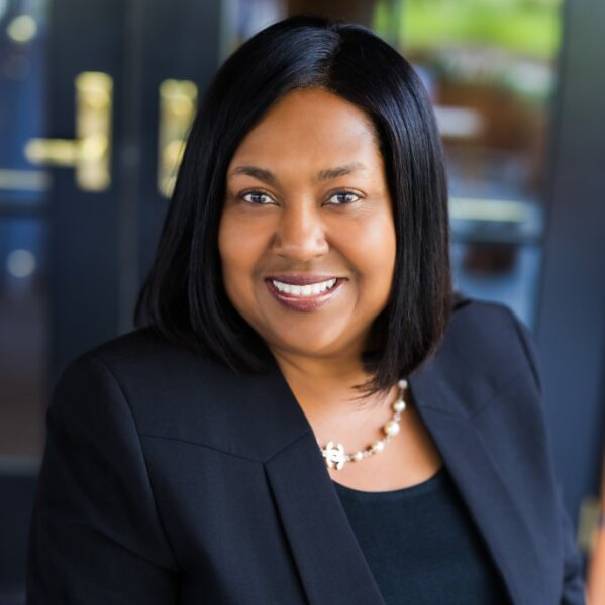
Meet Community Member
Denise Brooks-Williams
Executive Vice President and Chief Operating Officer
Henry Ford Health System

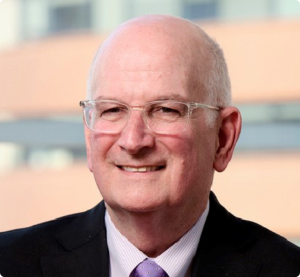
Host: Douglas Riddle
Curriculum Director, The Carol Emmott Foundation

Guest: Denise Brooks-Williams
Executive Vice President and Chief Operating Officer
Henry Ford Health System
In this episode of The Treasure Hunt, Doug Riddle talks with Denise Brooks-Williams, an esteemed leader and mentor on the Carol Emmott Leadership Council.
Denise shares her journey from growing up in Detroit to becoming the Executive Vice President and Chief Operating Officer of the Henry Ford Health System. With over 30 years of service in healthcare, Denise discusses her extensive experience leading diverse divisions within the health system and her ongoing commitment to community service.
Listen as Denise reflects on her educational journey, her experiences in a diverse high school and university, and the significant role these experiences have played in shaping her mission in healthcare. She also highlights the importance of community, mentorship, and the continuous fight for equality and representation in all fields. Enjoy this insightful conversation celebrating the power of diversity and leadership in the community.
Listen Now
Available On


Connect with:
Denise Brooks-Williams

Douglas Riddle
Transcript
Douglas Riddle (00:45)
Hello, I'm Doug Riddle here in The Treasure Hunt studio, and I'm here with Denise Brooks-Williams. Denise is a member of the Carol Emmott Leadership Council and has been a mentor for several of our fellows so far, and is in high demand.
I expect that, as long as you're able, we'll have you mentor more of our fellows. Last year, she continued her 30 years of service through the Henry Ford Health System. Then she added the roles of executive vice president and chief operating officer of the system.
Denise, you lead a dizzying array of divisions and programs within the health system. In addition, you continue a long history of community service through a variety of nonprofit and for-profit boards. I'm really thrilled to have the opportunity to have our listeners get a chance to get to know you more and hear about your relationship with and your work within our community, in particular.
Let's start with your own history.
Of course, part of the fun of getting this gig here with Carol Emmott is that I get to stalk all the folks that we're interviewing and do a lot of history. It's so fascinating. You are really the woman of Detroit, Michigan. You grew up there and went to school.
The city, as we've noted, is majority Black or African American, but your high school, college, and healthcare in general are not. Can you talk a little bit about what that's like and how that's shaped your sense of mission?
Denise Brooks-Williams (02:20)
So I would say, growing up in Detroit, as you said, I've been a Michigander my entire life. Part of why my high school was a little bit more integrated is that it was a citywide high school, and so it still was probably easily 70% African-American, but even within that, there was a tremendous amount of diversity in terms of the part of town that someone may have come from--the affluence they may have had.
Quite honestly, if their parents were someone pursuing beyond high school, because I went to high school in the 80s, and so it wasn't uncommon that you could have people finish high school and go right to work and have very meaningful careers in the automotive industry.
But Cass Tech, where I went, was very much a college preparatory high school, and as I said, we came from all across the city into downtown Detroit. It was a tremendous exposure and experience for me because most of us are coming from our homogeneous neighborhood, and so that was kind of the start of this idea of diversity and thought.
We were in our college prep, able to actually pick curricula as high school students, so I focused on at that time what would have been chemistry and biology.
So, chem bio was my area. But you have people in the performing arts. Diana Ross graduated from my high school. Lily Tomlin. I mean, so you had these amazing icons that came through Detroit in the arts, but you also had people who are icons in engineering, people who are icons in science, and medicine.
So, a pretty prestigious, awesome institution. From there, I went to the University of Michigan. And at the time that I was there, they probably had like an eight percent Black student population, but being such a massive and dispersed campus, that immediately made you feel a little small because you could really see that there was such diversity in your residence hall, which is the first place that you experience it.
But I will say those gaps were closed quickly because we found things in common. So you may find that first you lived in your residence hall, so maybe you connected with people there. Certainly, you would maybe connect in your field to study. I studied psychology, and I also studied African and Afro-American studies as an undergraduate student.
So you met people through that cadre. I will also say, though, my time at the university was one that had what was at that time Black Action Movement is what it was called. It was around equality for students. And one of the main things that we were focused on was Martin Luther King's birthday and being able to have that as a celebration and a holiday that the university would honor. And, that was not a Black student initiative.
There were lots of affirming relationships across all different types of students to all different types of backgrounds that kind of had that common purpose around having an interest in how we lift someone who was so significant in the civil rights movement.
We had several other initiatives as a part of that movement, but there were subsequently similar ones during the days that my daughters were at the university. So I don't know if that's good or bad, but anyhow, that was a characterization of my time at Michigan.
I went straight into my master's program, where again it was another slice of what diversity looks like. Not only was race a part of it, but also gender. As you were saying, healthcare has certainly evolved to have more gender balance in the executive suite. But at the time that I was going to graduate school, not a lot. There wasn't even any diversity in our professors. So they were all male, with the exception of one associate professor who was a female. So, although my class was greater than 50 % females, we had a tough time seeing ourselves in the industry and understanding what our careers look like.
So I think moving into that graduate space is very aligned with The Carol Emmott Foundation and this concept of women leaders being empowered, creating community, and being able to really see ourselves in the roles that we aspire to.
Graduate school was that demarcation, quite honestly, where it crossed from seeing myself maybe as Black or from an urban city to being a female, Black female.
Of course, right, but the female became kind of dominant for the next several years of my career development.
Douglas Riddle (05:58)
Yeah, you raise a really important point as we think about, especially for those of us who are grown up, I'm much older than you are, but nonetheless. I think back through the decades, what we use as indicators of fairness and justice in our system seems like it changes. How do we measure that? And because many people, whether they have a lot or not so much, still often feel like things are unfair. I think it is a challenging kind of circumstance. How is your own sense of how you evaluate whether a system is working fairly or not? How has that evolved for you?
Denise Brooks-Williams (06:43)
Yeah, I think fairness to your point certainly can be in the eye of the beholder, but it does really, I think, for me, boil down to opportunity. So, fair means if I want to pursue something, do I have the tools, the capability, and the ability to pursue it? You know, so in our early part of this conversation, right, education, I could go to that magnet high school, which had a phenomenal success rate of young people being able to go to college, and build a strong network. So had I not had that opportunity, I think that would have been unfair.
You know, what allowed me to have it right was that they had an open process. I could compete based on my intelligence, quite honestly, because you had to test to be able to go to the school. To feel indiscriminate in that regard, you just had to be, quote unquote, smart enough to be able to go there. But the fair part was that I could pursue that as a female, as a Black female. There weren't restrictions based on who I was or where I was coming from. I really just competed based on being someone who had those grades and those test scores.
Douglas Riddle (07:48)
Really important points, thank you so much for that. You've been a very popular mentor, national mentor for Carol Emmott Fellows, and I understand that one of the messages you very often share with your mentees is to trust yourself.
I know that's the basis for confidence and the willingness to step up as you've demonstrated. Are there other themes, or maybe you wanna talk about trusting yourself, but are there other themes that you see come up regularly in your own mentoring relationships?
Denise Brooks-Williams (08:18)
Yes, well, definitely trust yourself. I'll just step back on that for a hot second to say that.
Typically, my mentoring can be in lots of categories, but it does typically center around people trying to go to the next level, whatever that is, from an administrative fellow to a job, from a level of profession, i.e., director, vice president, to whatever that next level is. And when you're making those transitions, the trust yourself concept is that we can sometimes talk ourselves out of it, right? Like maybe never. Why?
Because we don't think we have the capacity or capability, but I really try to help people to understand trust your gut if you feel you're prepared, if you think that this is something that you want then go ahead and pursue it. Usually I'm gonna say with vigor, like be aggressive about what it is that you're seeking and often right, of course I get the call back to say, my gosh, you were right, you know, when I had the confidence to pursue what it was that I wanted professionally then it was successful. But of course, I mentor beyond that.
So another theme is self-care and balance.
And you'd be amazed that's at every level. So again, I go back to if someone is newer in their career, they can just have a thirst for doing it all in a couple of years. And so I am often trying to understand, Are you turning off your phone? Are you taking a break? Are you, you know, taking time to just think and reflect and be able to be present for what it is that you're doing? And of course, that, you know, relates to every stage of our career. But certainly those that are in, I would call it kind of that sandwich space where they're still raising their children.
They might be supporting older adults and their family, parents, aunts, uncles, whatever. So my mentoring is definitely around you've got to have a full cup and be present and available to do sometimes these amazingly large jobs. But most of us also feel right; our centering is with the people we love and our family. You create that balance to be able to do that.
Douglas Riddle (10:16)
Wow, that's key. Are there some tricks you use for yourself mentally to make sure you do take care of yourself? I mean, nobody's perfect, right? So I assume that it's up and down, but what do you do to kind of keep track of that care for yourself in your own practice?
Denise Brooks-Williams (10:29)
Part of it is trying to schedule it in, so they will sound like very baby steps, but just making sure that just from an annual health and wellness you will find many healthcare leaders - and we are totally surrounded by the health system- but we're delayed right in terms of our own basic routine annual care.
So just like having that, and I kind of try to do mine around the start of the year, some people do their birthday, but kind of picking a time of year that you're just going to kind of say, hey, here's my self-check-up. Did I get my tune-up for the year?
It's incredibly important because then if I know what I need to address or deal with, you know, I kind of have a line of sight of what that is and what I need to do.
Another nugget is one that was imparted to me by Nancy Schlichting , one of our past presidents and CEOs of the health system, was to take all of your vacation. That is like the best self-care gift you can give to yourself because some of us are martyrs about how we don't take it. You know what I'm saying? It's like a badge of courage that I haven't taken a day off and,
string along however many months or whatever, you would be proud of, but trying to reverse that for people.
So, role modeling that we give vacation for a reason, it's a renewal, and we want people to be able to take that time away. So, trying to be purposeful in doing that, really trying to take the vacation that you've earned.
Douglas Riddle (11:58)
Lovely. I'll take that under advisement.
So, Denise, one of the things I've seen in reviewing your CV and newspaper articles about you is that you have continued and have been throughout your career extremely involved in community action. In particular, I've noticed that you're really involved in a number of community boards for issues that really matter to you.
Can you talk to us a little bit? Do you see that as really important for particularly younger leaders to get involved with community boards, and maybe talk a little bit about how that's good for the leader in the healthcare system and also for the community?
Denise Brooks-Williams (16:04)
Yeah, I think that service in general is extremely important for leaders at all levels. Clearly, you have to taper it, right? So it has to be within bounds to allow you to do your day job.
But I think it's helpful in multiple ways, right? To your point, sometimes they are your personal passion. So I love the arts, right? So sometimes I'm doing things that are my own personal passion. But other times it's related to representing the health system. So being on Gift of Life board, the Gift of Life of Michigan, which is our organ donation and procurement center.
And so I think when we serve, we help to lift those messages that we want in the community, sometimes about our actual health system, but we often are also lifting the community. So you're able to be a part of making sure that the ecosystem that you have is strong, and you're contributing your skills and your talents. I definitely encourage leaders as they're growing in their career to identify one or two places that they want to volunteer.
Sometimes it might just be an event or something that's situational, but definitely having a mind towards being a servant leader and being an anchored part of the community that you're serving in.
Douglas Riddle (17:16)
Excellent, thanks so much for that. Henry Ford Health has expanded its footprint in a lot of ways. But one of the things that struck me in particular, especially because of concerns in the last decade or two, is that affordable housing is a part of your healthcare strategy. Can you tell us a little bit about that thinking and how that works?
Denise Brooks-Williams (17:24)
Well, absolutely. So, most of the listeners, I'm sure, have heard of social determinants now evolving to social drivers of health and health outcomes. And when you look at that, that's looking now at our communities holistically. So, what are the things that they need to be healthy and thrive? And health is not about the care we deliver in the health system, right? We know that's not really it. That's one intervention. We really want healthy communities. So that's people really only needing, as an example, hospital care towards the older years in their life and being able to live healthier, productive lives, and maybe using our ambulatory care or no care as the case may be, right? Because they're able to live good quality lives. Well, part of quality of life, of course, is housing.
So being able to have a secure environment where you can live and raise your family and be able to contribute is huge. So we are situated, our health system is anchored in Detroit. Detroit, as you mentioned earlier, by demographic perspective, is an incredibly diverse city. It's a diverse region that we're in.
It's southeast Michigan, and that diversity is also in socioeconomics. So what we can see is that the people that are in our footprint, they can have housing insecurity, not because of their lack of desire, you know, wanting to be there, but because of the affordability. It's a city that has had this amazing rebirth. Think now, if you pick up magazines, you see that Detroit is an amazing place to come and visit. We had like the world record NFL draft, you know, that occurred here. So, it's a huge economic engine that's going on, and unfortunately, you can find that some people get left behind in that.
So, we're making a significant investment in the community, three billion dollars. That includes a replacement hospital, which will allow us to have all private rooms, but also as a part of that project is affordable housing, and it's occurring through partnership with the Detroit Pistons, and they are going to repurpose some space.
So, where I'm sitting is our current office for administration, and we're going to basically leave and go to a new space elsewhere, and this building will be repurposed. And they are also taking a couple of other lots of land nearby, and when we're done, there will be over 660 apartments that will be built, and in those, you'll have affordability at 50% of what we consider the level of affordability. So significant to us, and we wanted that, I mean, this project also had many thoughts about economic development. We've met with small businesses in the area to talk to them about how they can be a part of the ecosystem. So we really believe a healthy community is what's going to have us have healthy outcomes.
Douglas Riddle (20:24)
That's really great. Is this a concern for your employees as well, as we see this? I mean, it's not all gentrification, but it's an advancement socio-economically in the city. And it's got to have an impact on you in terms of your larger employee force.
Denise Brooks-Williams (20:42)
Well, definitely. I mean, and this isn't new for Henry Ford. We participated. There was a kind of live Detroit initiative that went on between the city of Detroit, the health care org, as we know that a lot of times in communities, health care organizations are anchoring organizations, and there is a health care anchor network that we participate in because we employ large numbers of people, in addition to that, education. So some of those core organizations came together and created funding. So we've been at this for a while, which was targeted specifically at our employees, gave them funds to either have a down payment on a home, repairs on a home, or support for, you know, apartment living if renting was what they wanted to do.
So this is kind of just a continuation of that idea that clearly our employees would have access, you know, to those units if they wanted to, would put them very close to work because our whole campus is being built out. We also have a research center that's being built as a part of it. So it's kind of connecting the dots. So when we're done in 2029, you'll see this amazing sprawling campus, and it would be awesome if we had employees who wanted to live in that footprint. So, definitely they are part of the vision.
Douglas Riddle (21:51)
So important. You mentioned in another interview that Rosa Parks has been a source of inspiration to you. Talk to us a little bit about that.
Denise Brooks-Williams (21:59)
Being, as I said, someone who grew up here, I was born in the late sixties in Detroit, which unfortunately was characterized by the riots. So my birthday celebration is always typically around this concept of anniversaries of the riots. But that's so characteristic of the civil rights movement, right? Rosa Parks, as an older adult, lived in Detroit. So I had the opportunity to meet her. She was a huge proponent of mentoring.
I supported one of the programs that she had, which was a mentoring program here in Detroit, where young people would come and they were able to see that we have an African American museum here. There's been a bus replica there, but we have another museum where the actual bus that it's believed that she would have been on, has been there. So I think just taking it in in that way. It's not just that I read about her as a young person, I understood, I think, the disruptor to use today's terms, that she was, because she was a very educated woman, she clearly knew where her place perhaps was on the bus, but to try to be a part of the movement to change that seat for many, many other people besides herself.
She took a sacrifice and kind of said, hey, I'm going to put myself out here as a part of this movement, and I can do it, right? Because I kind of look the part a little differently. I have the intellect and the means. And then to come full circle for her to pick Detroit as her home and to really have an opportunity to get to know her was pretty profound.
So I definitely have her at the top of the list of people who inspire, and I think in times, you know, where we're trying to say, where do you find the energy, how do you have the courage to do things, you know, she's someone who exudes courage.
Douglas Riddle (23:41)
What a dynamic leader. In a way, it's almost a shame that she's mostly known just for the stuff that led to the boycott. When you read her history, she is such a remarkable and dynamic leader in so many ways throughout her whole life.
So a great model for all of us. Denise, what do you do for fun? When you're not being in charge of stuff and making it work, what do you do to play?
Denise Brooks-Williams (24:12)
Well, local fun for me is an evening that is filled with some form of entertainment, as I said. I kind of like the arts. I like entertainment. So going to a nice concert.
Last week, my husband and I went to a comedy. We saw Tina Fey and Amy Poehler. That was cool. I love it when I'm local, it's some kind of concerts or some sort of entertainment activity. And when I take that vacation time that I talked about, it's travel. So my other hobby is to be able to try to travel to places we haven't been. So we went to Greece last year. This year we're trying to make it back to Europe. So travel and then just kind of entertainment and being with family and friends.
Douglas Riddle (24:59)
Yeah. Have you maintained your interest in biology, chemistry, and science in general? I mean, you have an arm's length relationship with it, obviously, through the work of the institution. But how about your personal interest? I mean, are there things that you still like to read in that area?
Denise Brooks-Williams (25:16)
That's a good question. Other than WebMD, probably not. And my physician colleagues would be like, my god, Denise, stop it.
But I will say that having an appreciation right for the scientific mind. So I would think that it still is how I think, right? It's not what I apply every day, but I absolutely use it as the framework for how I think and how I approach things. And it comes in, of course, very valuable in the work that I do. I don't use it directly, but absolutely it is part of the framework of how I think.
Douglas Riddle (25:32)
Yes, it gives you eyes to look at things in a different way that I think is really important. Well, Denise Brooks-Williams, we appreciate your leadership so much. You're a significant part of our community. I hope that listeners will get a fuller picture of you.
We do this so that the community members feel more comfortable reaching out to each other about areas of expertise and support. And you and Henry Ford, frankly, the system have been such great partners in leadership development and expanding the opportunities and removing roadblocks together with The Carol Emmott Foundation.
We appreciate your continued involvement very much. And thank you for spending this time with us.
Denise Brooks-Williams (26:37)
Thank you, Doug. It's been fun.