INTERVIEW SERIES
Meet Community Member
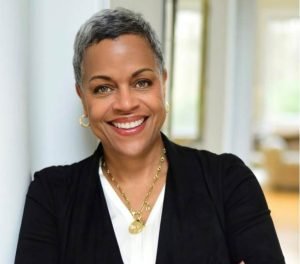
Eve Higginbotham, SM, MD, ML
Former Vice Dean for Inclusion and Diversity, Sr. Fellow, Leonard Davis Institute, Professor of Ophthalmology
University of Pennsylvania
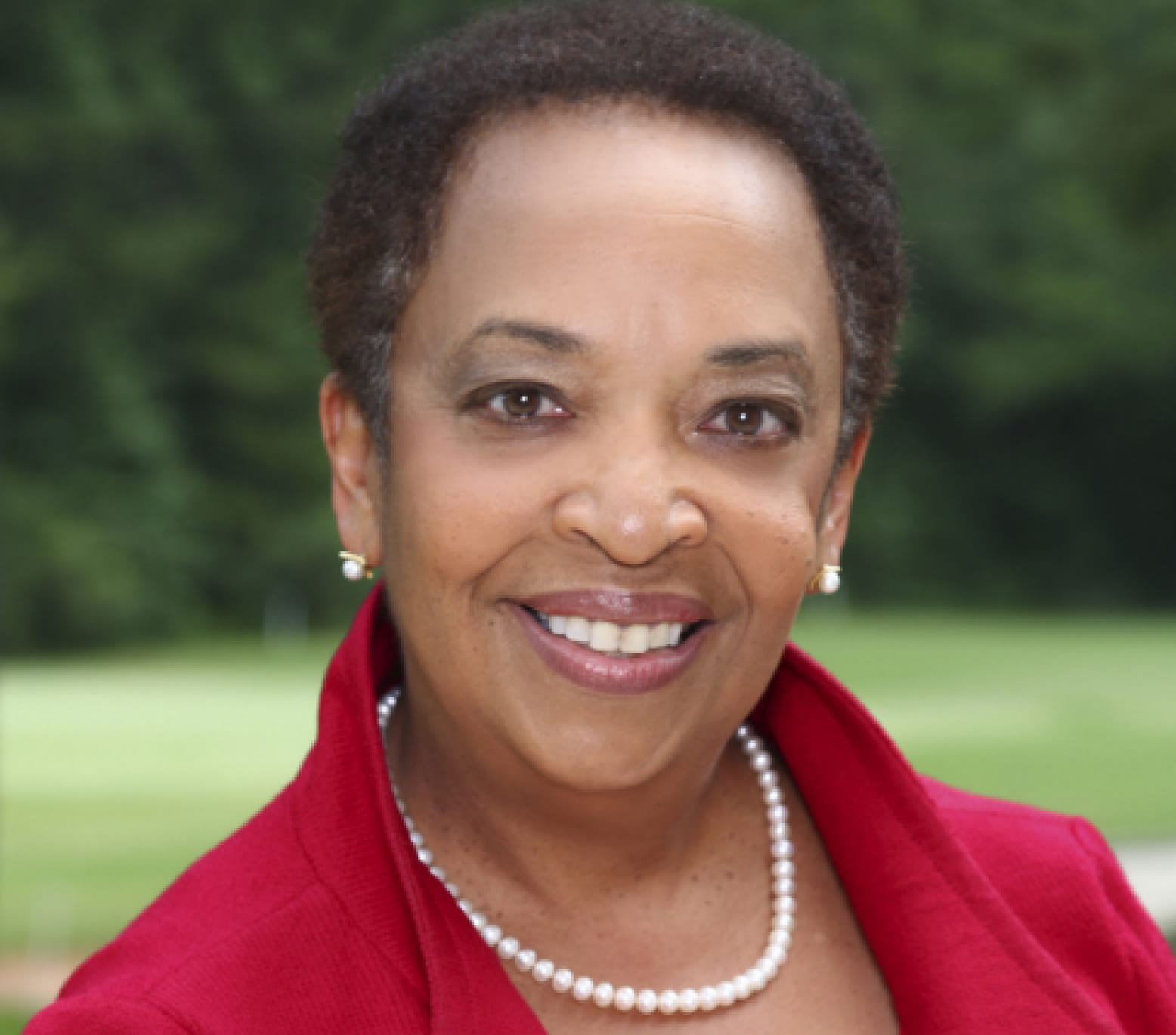

Host: Douglas Riddle
Curriculum Director, The Carol Emmott Foundation
Guest: Eve Higginbotham, SM, MD, ML
Former Vice Dean for Inclusion and Diversity, Sr. Fellow, Leonard Davis Institute, Professor of Ophthalmology
University of Pennsylvania
This episode of The Treasure Hunt features Dr. Eve Juliet Higginbotham, a distinguished professor of ophthalmology at Emory University School of Medicine and a leader in academic medicine, health equity, and glaucoma research. In an inspiring conversation, Dr. Higginbotham reflects on her personal and professional journey, from attending elementary school in the Jim Crow-era South to holding prominent roles at leading academic institutions across the country.
Dr. Higginbotham discusses her decision to pursue medicine over engineering, the challenges and opportunities of leadership as a woman of color, and her commitment to fostering supportive environments where others can thrive.
Listeners will also hear Dr. Higginbotham’s insights on the significance of board governance, the evolving representation of women in leadership roles, and the powerful network of support offered by The Carol Emmott Foundation.
Listen Now
Available On


Connect with:
Eve Higginbotham

Douglas Riddle
Transcript
Doug Riddle (00:02)
Hello, welcome to The Treasure Hunt.
I'm here with Dr. Eve Juliet Higginbotham, who is a professor of ophthalmology at Emory University School of Medicine and a clinician-scientist whose career spans academic medicine leadership, glaucoma research, and health equity. An elected member of the National Academy of Medicine and the American Academy of Arts and Sciences, she served as the inaugural vice dean for inclusion, diversity, and equity at the Perelman School of Medicine at the University of Pennsylvania.
Before that, at the University of Maryland, Eve was the first woman to chair an academic ophthalmology department at a major U.S. Academic Medical Center. She's also held major leadership roles as Dean of Morehouse School of Medicine and Senior Vice President of Health Sciences at Howard University. She currently sees patients at Grady Hospital, serving Atlanta's most vulnerable communities. Dr. Higanbotham is the author of more than 195 peer-reviewed publications and co-editor of four textbooks, with numerous special reports completed under the auspices of the National Academy of Sciences, Engineering and Medicine, and the Department of Defense. She's a leading researcher in glaucoma and health equity. She is also, we are pleased to say, a member of the Carol Emmott Foundation Leadership Council and a mentor for Carol Emmott Fellows. Eve, welcome to The Treasure Hunt.
Eve Higginbotham (01:32)
Well, thank you so much for asking me to do this. I'm happy to be here.
Doug Riddle (01:36)
I understand that you knew Carol Emmott.
Eve Higginbotham (01:40)
I did. For years, I've been a member of the Health Alliance, which actually included Carol Emmott, and she was a wonderful role model for many of us who joined that organization, and I know that she is looking down very positively on how the Foundation has really grown and really fostered the careers of so many wonderful women in health administration as well as academia. So I'm happy to be a part of it. Knowing Carol makes me realize just how meaningful this project has been.
Doug Riddle (02:27)
Well, you're greatly appreciated in this community, and I really appreciate you taking the time with us. Let's go way back in your history to elementary school. Your parents drew a lesson or drew a message from the fact that at school, your shoes were never dusty. When you got home from the Catholic elementary school, you and two friends were the first to integrate. What was the message that they got from that?
Eve Higginbotham (02:55)
Well, they realized at the time that no one was playing with me at this elementary school. I was nine years old, and although I didn't come home and complain about it, they just noticed that my shoes weren't dusty. And as any person knows, when you're nine years old, you should be running around at recess. And you know, that was an experience that taught me the importance of believing in yourself and not actually allowing yourself to let others shape who you are. And actually, one of the things that my parents did was create an opportunity for me to define myself by using a craft. I ended up at recess making flowers, and a lot of the other children at the time were so curious that they then came to me. I wasn't running around, but I created my own space.
Doug Riddle (04:04)
Wow, wow, that's remarkable.
What a great story. Moving a little later in your career, you were accepted at both UC Berkeley for graduate work in thermodynamics and Harvard Medical School.
Can you say a little bit about why each of those seemed like a reasonable direction for you?
Eve Higginbotham (04:25)
Well, that's a great question. But if I might actually back up a little bit and just.
Let me just share with you how I actually ended up in Boston coming from New Orleans, Louisiana. You know, when I was at that elementary school that I mentioned earlier, that was before the Civil Rights Act. It was just before it was passed by Congress. So the Jim Crow laws were still very fresh in the city of New Orleans, and my parents always said, and they were both Orleans Parish school teachers, you have to leave Louisiana to have some opportunity bestowed upon you. And so I knew from the very beginning that I was going to have to leave home when I finished high school.
I chose MIT in Boston because I loved science. I just loved research. I loved science. Plus, that was just about the time of The Love Story. The movie was out, and I just fell in love with Boston from a romantic perspective, if you will. And so going to MIT was extraordinary. There were only a hundred women out of a class of a thousand. We had many people in our class. The current Prime Minister of Israel, Netanyahu, was in my class, and others who are notable. So it was a great experience to really become immersed in this new world of not only science, but also global influence and impact. And I would say that that's one of the takeaways that I treasure from my education at MIT is the importance of using one's mind and skills to create impact.
And so when I was applying to graduate school, it was either going to medical school or going to graduate school. I never really considered myself pre-med, but going to MIT, you always had, by the time you were in your junior year, you had all the requirements to apply to medical school anyway. And so I said, well, why not? I'll apply to med school, but I was also interested in thermodynamics in graduate school. I received both my bachelor's and master's in chemical engineering from MIT in four years. And so I really thought, okay, maybe being a PhD in Chem E would be my next step. Because I love thermodynamics, I took a graduate course in thermal, and I said, let me consider that path.
But then on the other side of it was this other path that I wasn't really sure of: going to medical school. My sister, Edith Higginbotham, had already actually forged that path ahead of me, and she became a nuclear medicine specialist in radiology. So she was already practicing, but I didn't really have much experience in terms of knowing what a life as a doctor really was. Nevertheless, I applied to both, and I had to make the difficult decision. UC Berkeley was an excellent program in chemical engineering at the time. It was one of the top programs in the country.
On the other hand, I had the opportunity to consider Harvard Medical School. And it too was one of the top medical schools in the country. So it was a wonderful dilemma to have. I would say what really moved me to make the decision toward medicine, getting back to your question, was whether or not I could make an impact.That was a big question for me: could I make a greater impact on society in my community if I had gone to med school versus graduate school? The other question was more of a practical question, recognizing that as a PhD, I would often have to survive by getting grants. Well, what happens if you don't get your grant? What are you going to do? And so the pragmatic part of me said medicine had more options.
At the end of the day, I would have the skills to see and take care of patients, even though I didn't know what that experience would be like or whether I would actually enjoy it. Because if anyone knows anything about engineering culture, as engineers, we're not the most social, generally. I know that's a big statement to say, but MIT really fostered individual merit and achievement as opposed to bringing people together as a community. And so I decided to stay in Boston for another four years at least and go to Harvard Medical School.
Doug Riddle (10:02)
Wow, very interesting. Thanks.
Eve Higginbotham (10:03)
Yeah. Yeah.
Doug Riddle (10:05)
Yeah, and it is such a different path. So many of the folks who have gone into medicine had early experiences, you know, working in healthcare settings, so they had the flavor of that, not the other way. And of course, your career has given you plenty of opportunities to continue down the science path with your publications.
Your first peer-reviewed scientific paper was while you were in the laboratory of your mentor, Dr. Mathea Allensmith. Can you share a little bit about your relationship with Dr. Allensmith and how that relationship inspired you to begin what has been a remarkable career in scientific writing?
Eve Higginbotham (10:47)
Well, thank you for that, Doug. Certainly, Dr. Allensmith was one of my many mentors and sponsors that I have encountered throughout my entire career trajectory. In medical school, for those of you in the audience who have been, you're really submerged in a new culture immediately as you enter this new space. And there are just so many different paths that you could go. You could be a general surgeon, internal medicine, dermatologist, and there were just so many different paths. It was only by a process of exclusion that I came to ophthalmology, and ophthalmology is not one of the core electives or core subject areas, I would say, of medical schools.
So I had to go out of my way to seek it out. But I did know, and this is the engineer that is coming forward in my thinking, I wanted to be able to apply skills to help patients. And so I really wanted to be a surgeon, or at least to have a procedure that I could actually utilize, so becoming a surgeon was an aspiration. However, as I looked at culture, and culture was very important, I mean, going back to my days when I was at that elementary school, I knew that there would be environments that were not fully supportive. And I knew that there would be environments that would be somewhat toxic at times. So I sought out environments within the disciplines that I was exposed to in medical school that I thought were the most supportive. And most importantly, that the individuals who were involved in that discipline or specific disciplines enjoyed what they were doing. At the time, there was a survey that showed that ophthalmologists were the happiest of physicians.
Doug Riddle (13:07)
Yeah. (Laughs)
Eve Higginbotham (13:08)
Who doesn't want to be happy? And I discovered why when I met Dr. Mathea Allensmith; she was one of the few women faculty at Harvard Medical School. One of the few. And certainly, that was a positive because she had already demonstrated her resilience in overcoming barriers. She had a thriving laboratory.
I think at the time she had five kids. She was playing tennis. She had her own research lab. She also had her own practice at Beth Israel. She seemed to be really everywhere, and she enjoyed everything that she was doing. So number one, she aligned with my prediction that, at least my observation, ophthalmologists were among the happiest physicians, and she was able to manage a work-life integration that I hadn't seen in other disciplines. In fact, notably, you know, I remember at least there was one faculty member that I had interfaced with who passed away. I believe it was suicide. That eliminated a whole set of disciplines for me because I witnessed how general surgeons, for instance, were always in the hospital.
I didn't want to have that kind of experience. And I also recognized that there were non-surgeons who sometimes felt very frustrated when they couldn't actually do more for their patients, and so that led me to ophthalmology. And it certainly has been a field that I've enjoyed for more than 40 years, and certainly has led me on paths that I wouldn't have experienced otherwise.
It's also more of a meritocracy, I think, compared to other disciplines, in the sense that you can either do a procedure or not, so that's one thing. And research was highly appreciated in this field as well. And we had an infusion of technology such as lasers that other disciplines didn't really have. So there were so many positives; that's what led me to ophthalmology, and Mathea Allensmith just really confirmed that this was the right place to be.
Doug Riddle (16:09)
That's so interesting. And I learned a lot now about the practice of ophthalmology that I didn't know.
Let's look at another one of your mentors. You've mentioned in a variety of places your experience with Dr. Martin Goldberg, who was, as I understand it, your mentor at your first job after your fellowship.
Eve Higginbotham (16:28)
Yes.
Doug Riddle (16:29)
And I'm wondering if there were lessons that you learned from him about leadership, because you went from there pretty rapidly into significant leadership roles in your career.
Eve Higginbotham (16:40)
Indeed. Dr. Goldberg is certainly one of the most inclusive leaders that I've come across. Certainly, he gave me a job in a city that I really loved to live in, Chicago. He had a very supportive environment for writing textbooks and research endeavors, so the environment was very supportive and positive. We had editors who could help us with our papers, so it was very supportive. He gave me the opportunity to have a major role in our strategic planning process for the department. So I learned a lot about strategic planning at the time, and that really was very positive, and he just made people feel valued. Everyone felt that they had an important role in the department. So he was very important in my life as a role model as an inclusive leader.
Doug Riddle (17:54)
Really important. Let's turn to your own leadership roles. I wonder, you seem willing, and I'm hearing a little bit from what you said, even from elementary school. It helps me understand why you're willing to tackle roles that you couldn't have had any real preparation for going into that.
You know, I mean, you just took it and figured it out. But at the University of Maryland, you were the first, as we mentioned in the introduction, the first university-based woman chair of ophthalmology for an academic medical center. At the time, the department was not in great shape; it was having real difficulties: loss of faculty, financial challenges, and other things. You stepped into that without much experience turning around departments. So tell us about what you were able to do there, and I guess I'm wondering how you figured it all out.
Eve Higginbotham (18:53)
Well, that's a great question. And I guess it goes back to some of the things that we started talking about in our conversation, and that's really being in situations where you feel that you're being tolerated as opposed to supported. And I think many of us, particularly women and people of color, often feel that in some of these environments we're tolerated but not supported. And so I believe that my destiny to be a chair was really secured once I went to the University of Michigan. I was recruited to go to the University of Michigan once Dr. Goldberg, whom I mentioned earlier, was recruited away to chair the Wilmer Eye Institute at Johns Hopkins. And so that left the department in some chaos, at least momentarily, before a new chair was actually declared. And so the University of Michigan was really focused on recruiting women there. And so I said, well, this sounds like it's a supportive environment. Let me go there and see what this place is all about.
Actually, by that time my husband and I had married, and I actually didn't know that much about the University of Michigan, but my husband did. He had worked for the College Board, and so he was in academic administrative roles, and he said, my god, University of Michigan, that's Big Ten.
And so I went to the University of Michigan, and it was an important stepping stone because while there I was recruited to the dean's office. I became assistant dean for faculty affairs. Michigan was also supportive of women and others institutionally, so there were courses that I took there as well. That's where I learned about quality management, process management, and the administrative role that I had in the dean's office gave me a perspective for really seeing all of the departments. And again, I was still very focused on culture.
It goes back to those days when I was not playing on the schoolyard in New Orleans; culture is very important. And I could really determine at this point how important leadership is in driving culture. And so when Dean Donald Wilson at the University of Maryland suggested that I come to Maryland to chair the department, it gave me some pause because, number one, there were no women who chaired departments of ophthalmology in academic medical centers anywhere in the country. And I thought, do I really want to take another first and add it to my list? And then there was, I think, the question of my research trajectory as well, because Michigan is such a strong research enterprise and I had many opportunities to collaborate on research projects there, so interrupting that was another concern. And then my husband was in the president's office and led strategic planning for the university.
I knew that was a job that he enjoyed after getting his MBA from the University of Chicago, so it gave me some pause. But at the end of the day, with the encouragement of my husband as well as my family, and and just there was something that Don Wilson told me, and that's where I'm getting back to the University of Maryland piece. He said, well, at Michigan you'll be tolerated, but here you'll lead the department.
So, since I was never one to actually avoid a challenge, I said, okay. And of course, as you alluded to, before I came, many of the senior ophthalmologists left and brought with them to an external practice that they built the commercially insured patients, and that was the best insurance, of course, so financially that was a challenge, as well as the number of patients that we had. At the same time, the Balanced Budget Act was passed in Congress, so cataract surgery, which is the bread and butter of ophthalmology in our field, or at least at that time it was, reimbursement for it dropped significantly and has continued to drop since.
So here I was leading a department that was really a strong skeleton crew of faculty members with mostly federally funded and state-funded patients, Medicare and Medicaid, and I was expected to build this department. It was a challenge. It was a challenge.
So how did I do it? I had a small cabinet, so you never want to make these decisions on your own. You want to have at least a number of people who will give you some guidance. I also really leaned into my experience doing quality management. You know, just process improvement was at the core of it. You know, always actually being metric-driven in terms of what I was aiming to do.
Strategic planning was also very important, and building a culture that was supportive. You know, certainly I had strategic planning with the faculty. I included them in the selection of faculty and even did personality sessions where we actually did a Myers-Briggs on every faculty member and figured out our strengths and weaknesses, and how best to actually work together. That was another teaching from the University of Michigan. So I really leaned into how do I build an inclusive culture? How do I build an esprit de corp? How do I actually build a set of metrics that was guided by a strategic plan that would be evidence that we were on a path of progress? That was important to do for the powers that be. I had to demonstrate that we were on a path for progress and actually ultimately making some financial stability or achieving some financial stability. So I think that answered your question.
Doug Riddle (27:13)
Yeah, brilliant. Brilliantly. I think several things occur to me. One is you really did take lessons from everything you'd taken before. It's really remarkable how you were able to generalize to the new situation. I think the other thing is you continuously, in our conversation, have emphasized the importance, both for you as a person who belongs to a culture, and for the culture and climate of a space, that it can either give you a platform from which you can blossom or it can really put the damper on your own ability to use yourself and use your abilities.
And so you're now at this point in your career, you're telling us the story in a place where you're responsible for engendering that culture and climate, as well as keeping an eye on the metrics of performance, delivering the results.
I think it's a great story. I think it's really clear. Thank you for that. I think it's lovely. Let's turn to your own research interest, because that stayed with you throughout, as I've mentioned. You've authored or co-authored; the number I got was more than 195 peer-reviewed articles in your field, as well as in health policy, equity, and inclusion. So obviously, this is important to you. How does research and communicating results fit into your own identity, your sense of who you are as a scientist, practitioner, and leader?
Eve Higginbotham (28:46)
Well, that's a great question. I would say it aligns more with my passion. I mean, that's why I chose a college such as Massachusetts Institute of Technology, where science is king. And queen, I should say. And it's a matter of actually building evidence to prove a hypothesis or disprove a hypothesis. And so I've always had that as a passion.
Also, the currency of academic life is publication, peer-reviewed publication. So I needed to continue on that path if I was going to have a successful career. And also, as I transcended these various faces in administration, it was apparent that I needed to be a good role model for others. If I wanted others to actually come into the environment and achieve their academic goals, I needed to actually model those goals myself. So those are some of the thoughts that I had. And it's a matter of actually, you know, finding your passion and really aligning with institutional priorities as well as building an environment that is supportive of those goals, both institutional goals as well as your own goals. The best way to do that is to be a leader in those spaces. That's one of the drivers that really propelled me into these spaces that I never really dreamed of going into, to be honest.
Doug Riddle (30:39)
Well, you know, I look at the complexity of your professional career, and it can be a little overwhelming, as I've mentioned to you before, but the thing that I love that stands out for me is that, as you describe it, it's both very simple, very practical, and just that you're aware of the forces at work and you make your choice in the most practical way possible, which I think is a fabulous model.
It would be great if more of us could do that. But it's not always easy. In retrospect, it sounds easy, but I'm sure it wasn't the least bit easy as you were doing it.
Eve Higginbotham (31:20)
Yeah, it's not always easy.
Doug Riddle (31:27)
Let's turn to your governance roles because I think this is an interesting area, and particularly for the Carol Emmott Foundation, a concern and a focus for us. You've served as a member of the Harvard Board of Overseers, the MIT Corporation, the Defense Health Board, Ascension Health, as well as the Board of the Massachusetts Eye and Ear Infirmary. So these are all important roles and quite diverse within themselves. Talk about, if you would, how important it is for women, and particularly women of color, to seek these kinds of roles because that's really above and beyond all the other demands that you have.
Eve Higginbotham (32:06)
Yes. I'm glad you asked that because it also drove me to add to my degrees, and so when I was at the University of Pennsylvania I did actually receive a master in law degree from the Penn Carey Law School. And so that gave me, from a governance perspective, solid anchoring in the principles of good governance.
This was at a time when I had already been on the Ascension Board for many years. And of course, I'd already had the experience of being on the MIT Corporation and the Harvard Board of Overseers. One of my observations was that many of these boards there are lawyers. And so understanding the legal mind was one of the drivers, as well as really anchoring my knowledge in the principles of governance. And so that's why I ended up doing the master's. Really important for more women to be on boards. As mentioned earlier, it's the leadership that drives culture. It's the leadership that drives, you know, where institutions will place support for specific programs. It was really evident to me when I was dean at Morehouse School of Medicine how important the board role was. It was an important lesson knowing that the president really couldn't make decisions without aligning with board objectives. And it was really at that stage of my life that the aspiration of being on the board became evident and really meaningful.
I had also by that time served on the advisory council for the National Eye Institute. And so there again, being on the board actually gave me, or the council gave me, an understanding of the broader principles of governance. I had also, by that time, served on the American Academy of Authority Board as well, which is the board governing our primary professional society for our field. So all of these roles, including the ones that you mentioned, really drove me to savor how important board involvement is, as well as just the power of those boards.
We recently looked at the number of women, or the proportion of women associated with the American College of Ophthalmology Business Council, which is a number of industry representatives associated with that field. And five years ago, when we looked at the numbers, it was really very few boards that had women on them. And now, most recently, we're planning to present this at our upcoming meeting in New Orleans, the American County Ophthalmology meeting; there's been an increase. And so there is a positive trend that's occurring.
I like to think that the Carol Emmott Foundation program has contributed to that trend, really preparing women for boards, but nowadays when I talk to faculty in faculty development programs and other women who are on their career paths, I actually reinforce the importance of putting board membership as an aspiration because that's where the power is and that's where the opportunities reside.
Doug Riddle (36:31)
Very important, very important. Well, this has been so much fun, Eve, and I've enjoyed sitting in many meetings with you as well. I'm curious, you mentioned Carol Emmott when we first began. Can you talk a little bit about what you find valuable in the Carol Emmott community for you at this stage in your own career?
Eve Higginbotham (36:53)
I love interfacing with the next generation of women leaders. Yeah, I think that is where we need to invest our time as well as our resources to prepare them for this next round of opportunities that will hopefully present themselves either locally or nationally. I think having the network is very important, and so whatever I can do to contribute to bolstering that network is critically important because it's word of mouth that really can get people to move up in their careers. And in my own case, you know, just before our meeting, I did a just-in-time consultation with one of the current mentees, and it was a very positive experience for both of us because I could see opportunities where I could provide advice based on my lived experience. And so, having this portal of entry into a world where you can impart the wisdom of the years that you've spent building your own career is very gratifying. It's also recognizing that we live in a new environment. You know, the powers that be nationally are really actively turning the clock back in so many ways.
And so my journey relevant to where I started 40 years ago is appropriate now to share because it's not only demonstrating your talent, but it's being strategically smart about how you achieve your goals and recognizing that you are your best cheerleader. You're the one that has to make it happen. And if one strategy doesn't work, there must be another strategy that you could try. That's where mentorship and sponsorship come in. But nowhere should any person feel that they don't have the skills and the talent. And that's why I'm not a big supporter of imposter syndrome at all. Because when you come into a space and you're not the most commonly seen individual in that space, you need to really affirm your own talent and skills and not allow others to tell you otherwise or shape you otherwise. It's not you, it's the environment. That's why I've been such an advocate for fostering a positive work environment for everyone. It helps everyone. It doesn't help just a few; it helps everyone when we have a positive, supportive environment.
Doug Riddle (40:27)
Well, Dr. Eve Juliet Higginbotham, we've certainly found treasure here in our heads in this conversation. I appreciate so much the wisdom that you've shared. And I hope you have a great day. I'm looking forward to our next set of meetings with this.
Eve Higginbotham (40:43)
Well, thank you for the chance to chat with you today. It's been a pleasure.
Doug Riddle (40:48)
Bye now.