INTERVIEW SERIES
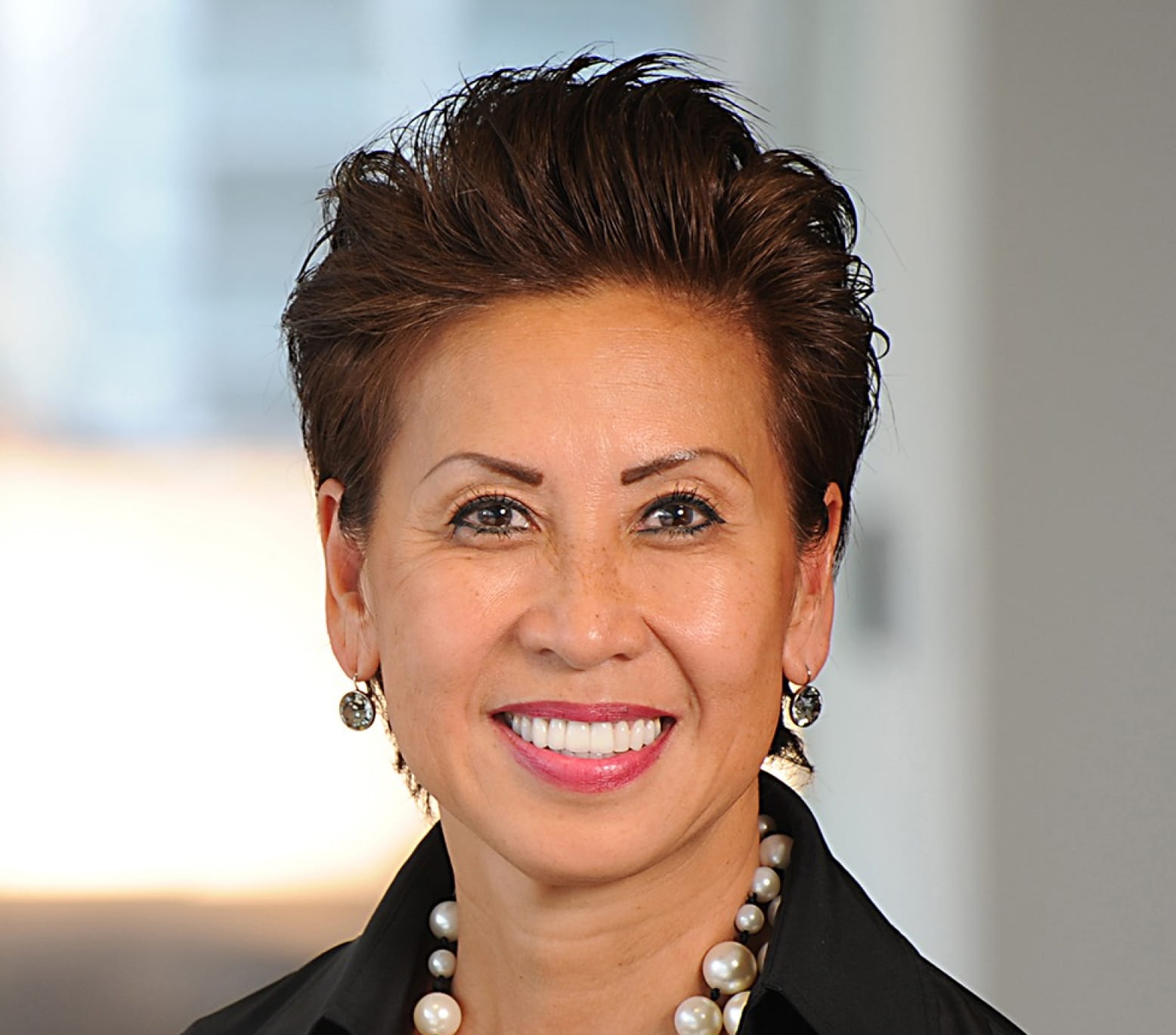
Meet Community Member
Fawn Lopez
Publisher Emeritus of Modern Healthcare

Host: Douglas Riddle
Curriculum Director, The Carol Emmott Foundation

Guest: Fawn Lopez
Publisher Emeritus of Modern Healthcare
In this episode of The Treasure Hunt, Fawn Lopez, Publisher Emeritus of Modern Healthcare and a longtime supporter of the Carol Emmott Foundation, joins host Doug Riddle. The conversation offers a look at Fawn’s remarkable journey, from her experiences as a refugee coming to the United States after the fall of Saigon in 1975, to her decades-long career in healthcare publishing and her ongoing dedication to mentorship and community service.
Fawn discusses how her sense of identity has evolved, shifting from professional titles to a focus on relationships, mentoring, and giving back. Fawn credits her parents for instilling resilience, gratitude, and a refusal to be defined by prejudice and touts these as values that have guided her through challenges as a woman and immigrant leader in a male-dominated industry.
Her insights into leadership and the power of supporting the next generation resonate throughout the conversation.
Listen Now
Available On


Connect with:
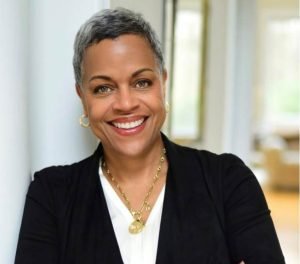
Fawn Lopez

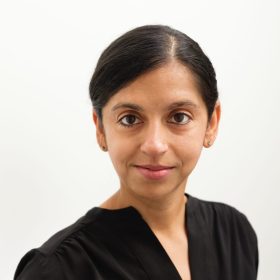
Douglas Riddle
Transcript
Doug Riddle (00:01.902)
Fawn Lopez has been a longtime supporter of the Carol Emmott Foundation and its work. In 2023, she became Publisher Emeritus of Modern Healthcare, where she formerly held the position of vice president and publisher from 2005 to 2022. Quite a time. She's active on a variety of boards, including the American Heart Association in Chicago and the Dean's Advisory Board for DePaul University School of Communication. She's also been honored by a variety of organizations, including the Association of Business Information and Media Companies, the Asian Healthcare Leaders Association, and, of course, the Carol Emmott Foundation.
She devoted the profits from her book, Unstoppable, to scholarships that are administered by the Carol Emmott Foundation. Welcome, Fawn, to The Treasure Hunt.
Fawn Lopez (00:57.409)
Thank you, Doug, for that kind introduction. It's a pleasure and an honor.
Doug Riddle (01:00.75)
It's so much fun to get to have another conversation with you today.
As a person who's theoretically retired myself, I've been thinking about that word a bit. I know the word retirement started as a military word and then later became a word to describe, you know, private seclusion, like going off on an away retreat or something like that, before being applied to leaving a job. You did leave a job, which is, you know, one we just mentioned, that was the culmination of decades devoted to publishing, but I don't really see how the way people say retirement today actually applies to you and how you live your life today. How do you make sense of that word? What is retirement for you?
Fawn Lopez (01:49.176)
Thank you. First of all, I didn't know that the word retirement came from the military. So I learn every day. This is new learning. Anyway, regarding what I'm doing and how I identify with the word retirement—really, I have never really identified with the word retirement. To me, retirement sounds like backing away, right? Stepping back. And I am not stepping back at all, except for perhaps not having a formal full-time position.
I've heard friends and colleagues use terms like deferment, because many of them, like myself and like you, are not really ready to retire in the true sense of the word. We still want to contribute; we still want to stay engaged, and we still want to do meaningful work. We just don't necessarily want a full-time job, so you know, leaving Modern Healthcare was one of the hardest decisions that I've had to make. And it was the end of an incredible chapter in my life. I loved my job, and I absolutely feel so fortunate to have spent so many years there at Modern Healthcare and in the healthcare industry.
Leaving Modern Healthcare after 22 years was not easy. It was such an extraordinary career where I was part of an industry that has such an incredible mission, right? What industry is there that the focus is to save lives and to mend broken bones and hearts and minds and to care for people during some of the most vulnerable moments in their lives? And I've had the privilege of meeting incredible people in healthcare and in the media business. The smartest people, the most amazingly driven and mission-driven people, people like yourself. And I learned so much from them and have built incredible relationships. So those were the, I think that was something that I appreciate and treasure most about my years in healthcare and at Modern Healthcare.
So now I'm serving on boards and working with companies and mentoring people and then spending time on causes that are meaningful, that are important to me. And you know, the only difference really is that I now have the freedom to do what I want to do, spend the time on things that I really want to spend my time on. And spend time with the people that I want to spend the time with. And that's the only difference really.
Doug Riddle (05:33.223)
Absolutely. Yeah, one way that I think about it is, you know, we all carry many hats; we wear many hats, carry many roles, have multiple identities. I think more so for women than men, honestly. And one of the things I've noticed since I, you know, officially retired from a full-time job, which was in 2000, was that other identities than just workerbee became more important, you know. So, you know, grandpa is a big one for me at this point. But also, you know, I feel like I'm learning to be a better spouse and so on too, because we have more time to do that.
Have you found that you've kind of shifted the emphasis of your different identities too?
Fawn Lopez (06:19.799)
Absolutely. And you know, for years my identity was tied to being the publisher of Modern Healthcare, right? I loved my role, and I was, you know, proud of the work we did and the impact we made. But you know, when you leave a position that you've held for so long, you really quickly realize that your title, that identity, is only one part of who you are, right? And my father, I have to just bring this back to my dad, taught me something many years ago that I understand and appreciate more now than ever: Titles, fame, identity, ties to a job, money will come and go. What really matters is your integrity, how the relationships you build, how you treat people, and the difference that you make in their lives. And today I think my identity as a mentor and as someone who can help others is more important to me. Much, much more important.
I find a great deal of pleasure and meaning in sharing what I've learned, opening doors when I can, and helping others to succeed. And like you said personally, my role as a wife, as a sister, as an aunt, as a friend, has become more important to me and more meaningful to me now. I now have, like you we just talked about it, have more time to spend with the people I love, and that is something I don't take for granted.
Doug Riddle (08:35.383)
Very well put.
That's for sure important. Well, you mentioned your dad. One of the things I was thinking about in your book, Unstoppable, you tell your own story about coming to the US as a refugee with your family in 1975, upon the fall of Saigon.
You and your family experience the prejudices against immigrants that have dominated the news so much today as well, and against minorities. Yet your parents, as you put it in the book, say, never let us see ourselves as victims. What did your parents communicate to you about prejudice and exclusion that you have used, and you've converted it really into a highly successful career path?
Fawn Lopez (09:23.131)
Thank you. Yes, you know, my parents in the book I wrote a little bit about our journey to America. So my parents lost virtually everything when we left Vietnam in nineteen seventy-five. And we came to America as refugees, and we had to start over. So we experienced prejudice and discrimination. But what they taught us was that they never allowed us to see ourselves as victims; they taught us to focus on the things that we could control. Hard work, education, integrity, and, more importantly, what we did with the opportunities that we were given.
And that was an incredible gift because I think it shaped not only how I deal with prejudice, but how I saw myself. You know, I'll give you a quick example. It's simple. I'm five feet tall. So you can say that I'm small, but for all of my adult life, I never saw myself as being small, only when I had to get alterations for every single new piece of clothing that I ever purchased. I still am surprised when someone tells me that I'm little. I think that my approach to that is the same way as my approach to being a woman and being an Asian. I don't walk into the room thinking I am smaller than a lot of the people in the room. I walk into the room being myself, and I, you know, that doesn't mean prejudice and discrimination didn't happen. I just refused to allow it, and my parents taught me this: do not allow those things the power to determine how you should feel and how you should act.
And certainly there have been times in my career where I was the only woman or the only Asian or both in the room. But I never spent the time really thinking about whether I should be in the room. I focused on what I could do best and how I could contribute and prove that I belong in that room. So it is not easy. That doesn't mean it didn't happen; you just don't let those things control or determine what you can do, what you should feel, and how you should feel about yourself or what you believe you could achieve.
I think one of the most important lessons my parents gave me was that you can't always control what happens to you or how people think about you or what they think about you, but you can control how you see yourself and how you respond. And so I may have been one of the smallest people in the room, but I never thought I needed to make myself feel small.
Doug Riddle (13:42.665)
I love that. I think that's a really important insight that you can make the decision about your own self view. And that there are implications that follow from that. I think that's really important.
Fawn Lopez (13:54.678)
And you know, you just prove to people that if they behave a certain way and you react to it, then then you're just a part of it. Don't play into it.
Doug Riddle (14:05.099)
Right. I'm often troubled by the ways that we kind of collaborate with the people who want to dismiss us by buying into their view.
Or taking it too seriously or amplifying it in some way. I mean you're kind of saying frankly they can have whatever views they want, but I have my view, I have my past, I have who I am that I'm bringing to it. Is that right?
Fawn Lopez (14:34.825)
Yes, and you know, another example is when I became the publisher of Modern Healthcare in 2005, right? Back then, it was hard to step into a visible leadership role in an industry that was primarily dominated by men, right? Led by men, and I was also following a man who had deeply been entrenched in the healthcare industry and was very well known and highly respected. So some people questioned whether or not I had the experience or the stature or, frankly, if I was strong enough to lead Modern Healthcare.
And I was very well aware of those questions, but I try not to let them consume me, right? And that was something my dad would always remind us of: Don't waste your time and energy feeling sorry for yourself or focusing on what people, other people, think about you or thought you could do. Focus on what you can control, work hard, be prepared, and treat people well, regardless, and let your performance speak for itself. So I decided that I didn't want to become the person who preceded me, and I didn't try to lead like a man. I had to learn to trust who I was and lead in my own way.
Doug Riddle (16:26.721)
I think that's why, particularly for those of us who have been working with leaders who have not been in the mainstream are really focused so much on the authenticity of you as a person, your uniqueness. You're gonna do it your way. And actually, what we see in the research is pretty clear and and in fact going back decades with work that was done at my former employer, the Center for Creative Leadership, is that for women leaders, authenticity, that unique characteristic, doing it your own particular way and bringing your personality, your approaches, seems to be a prerequisite for success in areas where you're the only or the first, something like that. And that sounds like that's your experience as well.
Fawn Lopez (17:17.057)
Absolutely.
Doug Riddle (17:21.759)
One of the things that I notice in your life is that you've always been committed to the communities where you've lived. And you've had an amazing array, actually, of community service roles, boards, and charities. You're continuing to do even more of that, it sounds like, influencing their missions, raising gobs of money for their projects. What drives you to invest so much in this way? I mean, you certainly had plenty of other stuff to do without kind of, you're responsible for a national publication, international in many respects, but you're investing quite a lot in the local communities where you've lived as well.
Fawn Lopez (18:05.525)
Yes, thank you for that kind acknowledgement. It means a lot. So, you know, I think a lot of that goes back to my parents. You know, as refugees from the Vietnam War, we came with nothing, right? We had to start over. And my parents always reminded us that we didn't get where we were by ourselves. When we came here, there were people, organizations, churches, and communities that helped us when we needed them the most. My parents never wanted us to forget that.
And in fact, they insisted that we pay it forward. They taught us that if you are fortunate enough to succeed, you have a responsibility to give back to the people, the community, and the country that helped make that success possible. So my dad, we came here and he was the only person in the family that spoke English. He worked odd jobs to get, you know, put food on the table. And for years and years and years he worked two jobs.
When he did well enough in his seventies that he could just stop working, he didn't. He went to work as an English teacher to teach English as a second language to immigrant children because he wanted to help those children learn and have the opportunities that his children were given. So that lesson has stayed with me all my entire life. You know, I didn't just get here by myself, right? Throughout my life and career people opened doors for me. They mentored me. They encouraged me. They believed in me. And sometimes before I even believed in myself. So I feel an enormous sense of gratitude for that. And as a result, community service has always been a part, a way for me to turn that gratitude into action and to pay it forward.
And I love it. I love doing it too. You know, whether it's serving on boards, helping an organization raise money like the American Heart, mentoring someone, or simply making an introduction that might open a door for somebody, I find that incredibly rewarding.
And as I get older, I think this has become even more important to me.
Success to me isn't just about what you accomplish personally. It is about what you do with the opportunities you've been given, and whether you use them to create opportunities for someone else.
Doug Riddle (21:36.492)
Well put, thank you so much. Turning a little bit to more personal stuff, in my own life I've found that, you know, you never get over loss. It accumulates. It doesn't necessarily get in the way of how you function or what you can get done, but the losses I've experienced in my life are a big part of who I am and have certainly softened my heart and affected the way I do relationships. I'm curious, in your book particularly, you mentioned you've had quite a few really significant losses in your life. How does that inform the way you live and work now?
Fawn Lopez (22:18.103)
You know, loss, I hope I don't get emotional. Loss definitely changes you, right? I've lost people I loved dearly, including my grandfather, my parents, my sister, my dear friend Ilana Klein. And those losses stay with you. You just don't get over them. You learn to carry them differently.
I've heard it said, you know, that when your grief is deep, it's because your love was deep. And I find a lot of comfort in that. So the depth of the loss is really a reflection of how much that person meant to you and how fortunate it was that you were to have that love in your life. So those losses have made me much more aware of how precious time is. And that's the reason I really decided to retire when I did. I think I'm quicker now to tell people I love them, to express gratitude, and just to let go. Try not to hold on to things that ultimately aren't that important.
And I think it also made me a better leader. We often don't know what someone else is going through. You know, people come to work carrying all sorts of things that we may never see, right? Issues, problems they have at home. So it has reminded me that accomplishments are wonderful, but at the end of the day, the people in our lives and the relationships we have, we build, are really what matters. So times for me, I mean, to me, life is short. We don't know if we're gonna live tomorrow. So live your best self today.
Doug Riddle (24:44.161)
That's a good word. I'll close with this. You were an early encourager for the Carol Emmott Fellowship first and later the Foundation. As you look forward, what are your hopes for this community going forward?
Fawn Lopez (25:02.315)
You know, I hope that the community continues to flourish.To be able to have the opportunity to help talented young female leaders in healthcare to become even stronger leaders and to create a community there where they could support one another, it's such a privilege, right? When I was growing up or in the business, you know, there weren't that many women back then, and we all had to, many of us had to, figure it out, everything on our own as we went as we went along, and we didn't necessarily have the networks or mentors that exist today with organizations like the Carol Emmott Foundation. So I hope that the community, the Carol Emmott Foundation scholars, and the community of leaders are really embracing and should embrace the opportunity to be part of the organization and just leverage the opportunities that are available to them and continue to help one another and do what they can to advance healthcare and advance their own leadership career.
I think one of the best measures of leadership is whether you're creating opportunities for the next generation. And that I think it is fundamentally the most important thing that we as leaders can do. And I hope organizations are supporting the Carol Emmott Foundation wholeheartedly, and I know times are tough, but nothing is more important than creating, building the next generation, giving the next generation of leaders the opportunity to grow and develop and succeed as leaders.
Doug Riddle (27:42.86)
Well, we're incredibly grateful for your ongoing encouragement. It's been important to us all along, and we're just so grateful to continue this relationship with you. And I've been so pleased to have this conversation with Fawn Lopez in The Treasure Hunt. Have a great day.