INTERVIEW SERIES
Meet Community Member
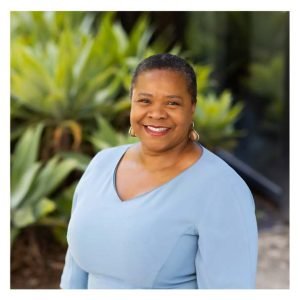
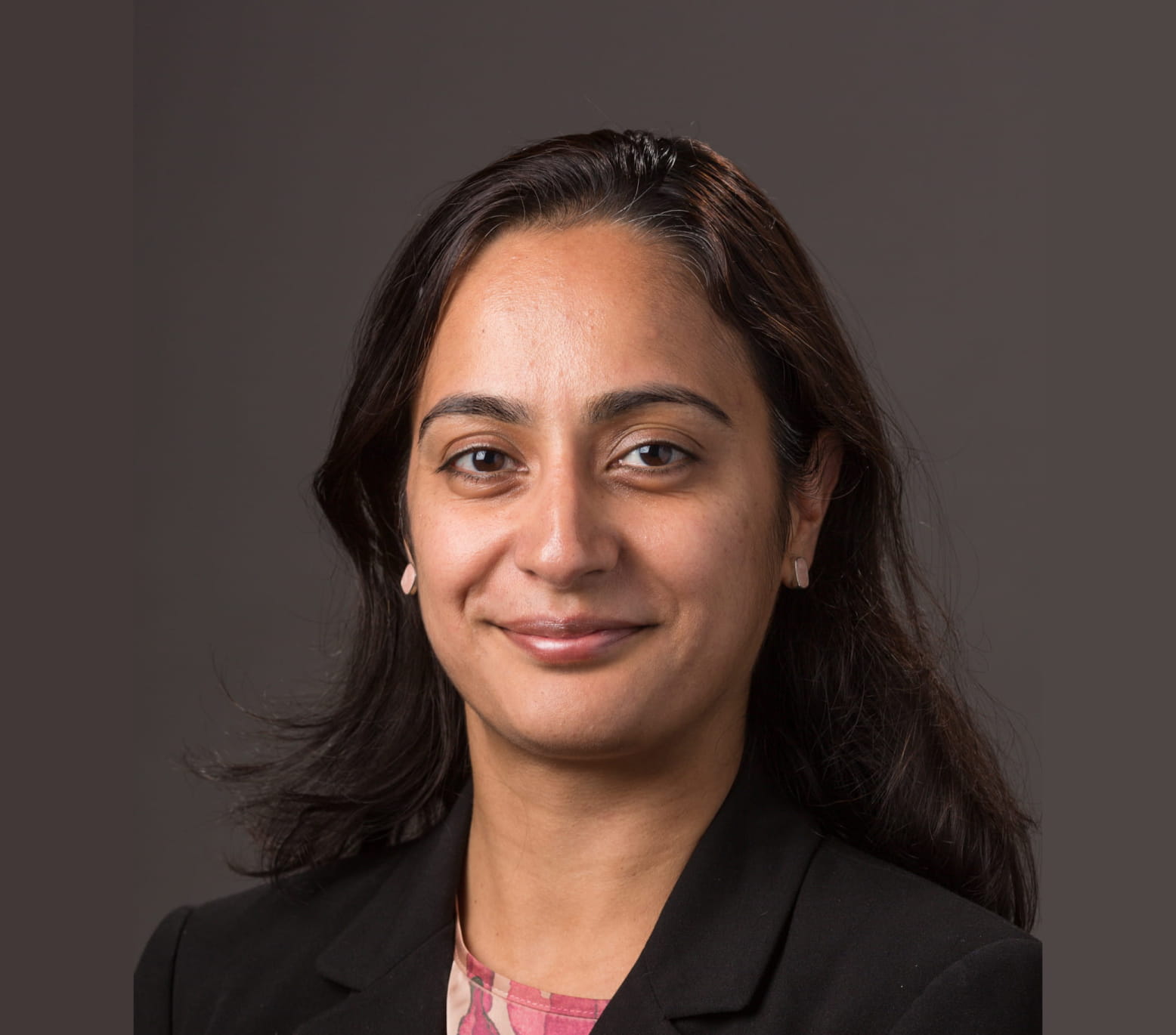
Jaspreet Loyal, MD, MS
Chief of Pediatric Hospital Medicine, Yale New Haven Children’s Hospital; Associate Professor in Pediatrics, Yale School of Medicine
Yale New Haven Health

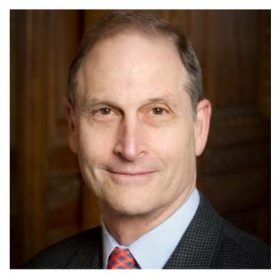
Host: Douglas Riddle
Curriculum Director, The Carol Emmott Foundation

Guest: Jaspreet Loyal, MD, MS
Chief of Pediatric Hospital Medicine, Yale New Haven Children’s Hospital; Associate Professor in Pediatrics, Yale School of Medicine
Yale New Haven Health
In this episode of The Treasure Hunt podcast, enjoy an engaging and thoughtful conversation with Dr. Jaspreet Loyal, Section Chief for Pediatric Hospital Medicine and Associate Professor of Pediatrics at Yale. Dr. Loyal, who also serves as Medical Director for Inpatient Pediatrics at Yale New Haven Hospital, shares her experiences balancing roles as both a clinician and hospital administrator.
Learn about Dr. Loyal's transition from clinical medicine to leadership as she recounts her experiences as an immigrant and working mother in medicine, her unexpected entry into administrative roles, and the importance of being tapped for leadership by trusted mentors.
A significant focus of the episode is Dr. Loyal's research on medical communication with families, particularly regarding the complex and sensitive topic of newborn vitamin K refusal and vaccine hesitancy. She explains the public health importance of interventions such as vitamin K and hepatitis B vaccination, and shares insights into the root causes of mistrust within families and communities.
Also hear reflections on her experience with the Carol Emmott Fellowship, particularly regarding the unique challenges and deep, lasting bonds forged with her cohort, Fellowship Class of 2020, during the pandemic-era.
Listen Now
Available On


Connect with:
Jaspreet Loyal

Douglas Riddle
Transcript
Dough Riddle: (0:02)
Hello, welcome to The Treasure Hunt. I'm here with Jaspreet Loyal, the Section Chief for Pediatric Hospital Medicine and Associate Professor of Pediatrics at Yale. She is also the Medical Director for Inpatient Pediatrics at Yale New Haven Hospital. Her research interests are in medical education, faculty development, and communication with families around refusals, a very hot topic for us, particularly in this case, around vitamin K refusal in the newborn nursery.
She is a Carol Emmott Fellow from our fourth cohort, and I'm pleased to welcome you, Jespreet, to The Treasure Hunt. I'd like to hear, just to get started, how you manage. Well, I'd like to hear about all the roles, but let's just pick two professional roles that you manage. You're both a clinician and a hospital administrator. Those don't neatly go together, as has been my experience.
Jaspreet Loyal (01:01)
Doug, I'm so happy to be here. Thank you for having me and giving me the opportunity to share a little bit about what I do and what I care about. I think you hit the nail on the head with your first question because those two roles that I have are very interesting.
So just to tell you a little bit more, my first role as a division chief is a medical school department of pediatrics role where I have a team of 30 or so clinicians spread across four hospitals across Connecticut and the Yale New Haven Health System. We take care of hospitalized children as well as well-newborns, and perform about 10,000 deliveries a year. My role there is serving the chair of pediatrics, supporting faculty development, onboarding, and building programs.
And then, in parallel, is this system-level medical director role that I have, which is a hospital-based role where I support medical directors for individual units across the children's hospital. I help move policies and procedures forward and support health system initiatives such as patient throughput, quality and safety, and patient experience. And so I have these two roles that are based in different places but are very integrated.
At the bedside is one of the places where I find the most joy when these two roles come together. For example, when I'm at the bedside, I'm able to bring up issues that need attention much faster because of my roles. I'm also able to help the teams at the bedside understand the why. So sort of like Simon Sinek, right? A lot of things we do at the higher level often don't effectively reach the people at the bedside.
So I'll give you an example of that. For most hospitals, throughput is a major issue—discharging patients so you can bring in patients from other locations. At Yale, at the hospital, the expectation is for patients to be discharged before 11 A.M., and we are a children's hospital within a large health system. So we're all sort of held to the same standard. When you are trying to tell a physician that you need to get your patient out by 11 A.M., it's a very frustrating thing to be told what to do by someone who doesn't necessarily understand the nuances of medicine and getting a child finally home.
What I really like is the fact that I have a seat at the table and understand the why, bringing it to the physicians. And the why is that we know that our admissions happen mostly in the afternoon, patients are coming out of the ICU, the emergency department, our recovery rooms, and there is harm from sitting in an emergency room as well.
So when people understand the why, it really helps them see the bigger picture. I've really been grateful that I've been able to understand—been able to play that role. And then I think the last thing I'll say is on the flip side, I can bring issues that we care about to the hospital leadership who aren't necessarily seeing what's happening. Things like nursing education or issues affecting families that don't necessarily make a lot of financial sense in terms of investment, but are important to us.
Doug Riddle (04:49)
Well, I want to pursue that a little bit. I think one of the things that I've noticed in my own coaching and work, obviously with the Fellows and the institution I work with, is that for many of you who started out as clinicians, the move to administration has been, there's been ambivalence, let's say, at best, as people recognize your skill, your competence, and they want to give you more administrative responsibilities.
How was that for you as you began? You started as a clinician, but moving into these more significant policy and administrative roles that affect the whole set of practices. Were you eager to take on more? Did you have some concerns about losing some of your clinical opportunities? What was it like for you? What were you thinking about as you moved more toward incorporating administration?
Jaspreet Loyal (05:49)
It's such a great question. And honestly, the truth is, I wasn't thinking. I was in survival mode as a pediatric resident. I did my training at New York Presbyterian at Weill Cornell. I had two young children at the time while I was a resident, and it was all about getting through a very rigorous schedule. Plus, I'm an immigrant. I was born and raised in Nairobi, Kenya, and I moved here when I was 18 years old, did college, and so forth. So there's this immigrant mentality that I've always carried with me, which is like, just do your best; it's a privilege to be in this country, to be able to be a doctor. I'm gonna keep my head down and do the best work that I can.
So the first time that I was ever exposed to a hospital administrative role was when our class was nearing its end. A lot of programs have chief residents who do an extra year after finishing their training, and it's a leadership role where you get to supervise trainees, help with the recruitment of new trainees, and then act as a liaison between trainees and other people in the department.
At Weill Cornell, what was really interesting is that the pediatric chief residents were selected, whereas at Yale, you apply and there's a process and interviews, and then people are selected. So I remember when Sue Bostwick came to me, as well as Jen DiPace and Erika Abramson from Weill Cornell, to say, "We think we'd really like you to be one of our pediatric chief residents." There were two positions at the time. I was sort of like, what? I had never considered the role. I didn't think that I could do it. And of course, now I'm telling you this, as I was reflecting on preparing for this conversation, I'm surprised that I was surprised, given the years of experience I have, but that is sort of where I started, where I was surprised that someone said, “I see that you are capable and you should do this.”
That's why I'm so struck by this idea, because I've experienced it myself when someone taps you on the shoulder and says, " You should do this”, because many of us don't. And this goes to the study we were talking about earlier, where I interviewed division chiefs at Yale in the medical school who are all women and asked them about their journey in leadership and why they chose to become a division chief. Many of these women, incredible, incredible leaders, and of course, have self-awareness of their own leadership capabilities. But when someone else said they should apply, that was really the catalyst for them putting their name in the hat.
The same thing happened to me to some degree when I was at Yale, when Cynthia Sparer came to me and said, “I'd like to sponsor you to do the Carol Emmott Fellowship.” Again, I paused and thought, wow, this incredible leader at the children's hospital recognized me as someone who could do this. I immediately Googled Carol Emmott Foundation. But the pediatric chief resident role is what really opened my eyes to hospital operations, looking under the hood, seeing how this giant enterprise actually runs. And it was just fascinating to me. But I really think that the roles I took on after really started off with somebody seeing potential in me.
Doug Riddle (10:01)
Do you think—do you give advice to residents and others about this very issue, about the leadership opportunities in addition to their clinical, which is, for many people, where they get the greatest joy, obviously, is at the bedside. What kind of advice do you give to younger medical students or early-career folks?
Jaspreet Loyal (10:30)
All the time, Doug, all the time. When I'm on clinical service, I think one of the things that the trainees see is that here is someone who is a clinician and has these leadership roles. And when a problem arises at the bedside, here's someone who can take it to another level and make something happen. And I've had so many people come and ask me, how did I get into these roles? How does one do that as a clinician?
I'm just lucky that I've been in a position to be able to be a role model that. And as a division chief, what I do a lot of now is, after having learned so much about what sponsorship is, being a part of Carol Emmott, I do that a lot for my junior faculty. Whenever any interesting position comes up, the first thing I do is say, " Hey, this is really interesting. I want you to think about it. Let's talk if it's interesting to you.” Because just bringing awareness to people about opportunities, and then again, by someone whom they trust, is so simple, but so powerful.
Doug Riddle (11:42)
Do you find yourself giving advice, particularly to earlier-career women, that they don't need to wait to be asked?
Jaspreet Loyal (11:51)
Yes, so much more now, given my own experience. Yet still to this day, I've been doing this now for over a decade, but women still hold themselves back, and I get so many questions from the men in our group or in other sections of the department that I often think—another woman wouldn't ask me this and why not?
Doug Riddle (12:26)
Yeah, great question. Well, let's look at another one of the hats you wear, which is the research hat. Your first graduate degree was from Stanford University in epidemiology. I'm curious how that's informed the research you've undertaken on medical communications and, in particular, the choices parents make about vaccinations.
Jaspreet Loyal (12:49)
Thank you. Yes, I had a bit of a meandering journey because I wasn't entirely clear on medicine right after finishing my undergraduate training. So I was really lucky that I got to live that life in the Bay Area, first of all, which is such a beautiful part of the country. After I finished my graduate degree, I had the opportunity to work as an epidemiologist in the Department of Health for the County of San Mateo. And I got to see firsthand how a county health department functions and runs.
We had several foodborne outbreaks that I was involved in, sort of getting down to the weeds. I don't know if you saw, but one of my papers was about discovering spinach in a nursing home foodborne outbreak, which is terrible. I also worked there during the emergence of the West Nile virus in California, the first round of the SARS virus. I remember driving around checking on quarantined people from flights arriving in San Francisco, because San Mateo County oversaw the airport. And it was the first time that I got to work with county medical officers, which really got me interested in medicine.
So now, as a clinician with that public health training, the expectation is also, as someone in academia, to publish and conduct research. So one of the things that a mentor actually told me early on in my career was that you should study something that bothers you.
When I was in the newborn nursery as a relatively new attending, I encountered parents who refused a very common newborn intervention: a vitamin K injection. And just for your listeners, newborns are deficient in vitamin K in their gut microbiome, and it takes them a few months to generate that vitamin. Since the 1960s, the American Academy of Pediatrics has recommended this one-time injection of vitamin K, and the reason why it's important is that vitamin K is part of the coagulation or the clotting cascade. So in the absence of vitamin K, the body can bleed, and in babies, this shows up as either mucosal bleeding from the gums or their belly button, and the worst case is intracranial, which is in the brain.
Unfortunately, last year, I took care of a baby who had what we call vitamin K deficiency bleeding of the newborn because the family had refused this very common intervention. Fortunately, the baby survived but was in the hospital for many weeks, including the ICU. So when I first encountered vitamin K refusal, I was sort of very intrigued by why anybody would refuse this, and so that's where I sort of embarked on my first set of studies, where I became a qualitative researcher and started off by asking parents about why they were choosing to refuse it. And honestly, I feel like it's made me a much better clinician because there's no way we can really communicate with families if we don't fully understand where they're coming from.
So here we have an antibody, which is not a vaccine, that provides incredible protection against hospitalization, which can be very serious. These babies can be in the ICU—there’s a lot of stress obviously, and a lot of cost associated with hospitalization, but yet there's also so much mistrust. I mean, it keeps me in a job, but it also makes me very worried about what's coming.
What I realized over the period of research—I did qualitative studies of parents, I did some qualitative studies of midwives, and some quantitative studies in our research network of newborn nurseries—was that families who refuse vitamin K tend to also refuse vaccinations. For us in the newborn nursery, the hepatitis B vaccine is the one that, again, the AAP recommends be given within the first 24 hours of birth. So now in recent times, there's been conflicting information from professional organizations about whether or not the hepatitis B vaccine should be given in the newborn period. So you already have some parents with a little bit of a questioning attitude. Now you have not great communication between major entities. And then we had COVID, which really sort of also planted seeds of doubt, and then there's all this information that families have access to, and you can find information that will support really anything you believe.
I find this whole decision-making process really intriguing, and how do we as clinicians partner with families, because the more you walk into the room and say, “You're making a mistake,” the more a family is going to shut down and not even talk to you. So what we have to do as clinicians is really channel our curiosity and do it without judgment, because these families think they're doing the right thing for their child. We're on the same team, we just might think about it differently.
I've been thinking about refusals a lot and tying it back to public health, right? So the reason we give the newborn hepatitis B vaccine is that if a newborn were to acquire hepatitis B in the newborn period, it's a chronic illness with long-term, serious consequences. So a lot of families will think, well, there's no way my baby will be exposed to any blood and I don't have hepatitis B myself. But if you look at it from a public health perspective, it's those few that can fall through the cracks that we don't want to miss. The challenge is how to provide personalized, customized, individualized care to families while keeping the broader public health safe.
And the one other thing I'll share with you is that recently we were very fortunate in acquiring the ability to prevent RSV infection. Now, RSV is a very common virus that, in my world as a pediatric hospitalist, is the number one cause of hospitalizations in children under age two. For the longest time, we had RSV immunoprophylaxis, which was an antibody that you could only give to preemies. As of 2023, the antibody injection is available for healthy newborns up to 8 months old during the RSV season, which runs from March through April. The antibody is 90%+ effective in preventing RSV, yet the uptake in our health system is anywhere between 60 and 80 percent, and in most places, less than 60 percent across the country.
Doug Riddle (20:51)
What kind of things, when you listen to their concerns, have you found that are actually helpful to help them be a little better informed and make choices that are based on the best science that we have?
What have you found in your explorations that, in fact, can open families who, as you say, have the same goal as you do? You know, they want a healthy baby. They want to avoid any problems with that. But they have a lot of doubt because there's doubt everywhere, a lot of concern. I just interviewed David Blumenthal recently, and that'll be coming out, I think, pretty soon. He and a colleague have published a book titled From Obamacare to the War on Science. And the big theme of that is just the pervasive doubting and skepticism about practices that have demonstrated benefits.
So I'm curious for you, I mean, you're there by the bedside. You're talking to a family as they arrive at the hospital. They're panicky, they're quite anxious. They're freaked out, whatever the reason, they either have a healthy baby or because there's some illness, either way. So they're not necessarily in the most calm and relaxed mindset, no matter what. At least I remember from my own days doing that.
Jaspreet Loyal (22:11)
It's such a great question, Doug, and there has been plenty of research in this space around decision-making with parents. And the number one critical factor is trust. Trust is one of those things that takes time to develop, right? And as we become more siloed in medicine, I'm meeting families for the first time with their new baby, and for most families, they're in the hospital for 24, maybe 48 hours. So I have maybe one or two opportunities to form a relationship and help them understand why what I'm saying is important. So how do you develop trust? It starts with listening. It starts with understanding where they're coming from, no matter how way-out-there their thoughts are.
One of my first studies examined talking to parents about vitamin K refusal. The buckets they shared with me that were concerning for them were: one, side effects. So we, as clinicians, need to understand the side effects and be prepared to answer. It’s sort of annoying to have to do that, but we need to be prepared. At the least some feel that pain from an injection can cause long-term effects in their child. Again, we don't know that. There's no evidence to prove that, but you have to sort of be able to listen and empathize.
Trust is the biggest thing we need to work on.
Some families want a more natural approach, where they want, instead of the injection for vitamin K, they want oral vitamin K, which, interestingly, is offered in Europe, but not in the United States, because it’s not FDA-approved. So they're not wrong, but we just see things differently, and the risk of vitamin K deficiency bleeding is zero if you take the injection. It's not zero if you take oral vitamin K.
Plus, we don't even offer it in the United States. So it's sort of like, well, why aren't you open as clinicians to alternatives? This is a bit against our conventional physician mindset. This is what we were taught in medical school, which means this is the truth. And questioning it is something that is difficult for us.
And then the last bucket is trust. Another one of my studies that I did around vaccination was when we interviewed Black families on the inpatient units about COVID vaccination for their child. A fascinating study and mistrust came up over and over again—the history and the systemic racism that influenced people. They were really worried about losing their jobs and not being able to have a say. And that created more mistrust.
Doug Riddle (25:44)
And I'm asking in a couple of ways. One is how that has affected your cohort, your relationships, and the support you have. And a second one, has it affected your participation and the transition into the network of the Fellows, too? Do you have any thoughts about that?
I'm curious about another matter, just to turn completely differently. Your class, the fourth class, was a very interesting class. You started in 2020. Our first gathering, as I recall, was in February of 2020 in Chicago. Up to that time, we expected your class to have four in-person meetings, beginning with that one in February and then spread throughout the year. But as I recall, we were talking even in the classroom. We'd heard rumors and people had gotten notices from their institutions that COVID was becoming more serious, that it was, in fact, becoming a pandemic. And we got word in many cases, several cases, that travel was not going to be allowed for our Fellows. Some were concerned about getting back home, even. And then we were not able to meet again for, gosh, a year and a half, I think, as it was. So your class met longer than the other class, 18 months as I recall, but not in person until the very end. I'm curious, what do you think have been the effects of that?
Jaspreet Loyal (27:27)
Yeah, it's such a great question, and wow, that was incredible. Talk about uncertainty, and I still remember the joy of meeting the other women in my cohort. CEF4 is a very special group, for sure, and not knowing that we wouldn't meet again in person for a really long time. That was pretty wild, but I think for that reason, our class in particular has bonded in a very unique way.
Fortunately, it's just, I think, looking back and thinking about how just meeting once was so impactful that we suddenly became resources for each other as institutions grappled with all sorts of problems, like staffing, supply chain, treatment guidelines, and public health guidance. All of a sudden, we became an already established network across the country of people asking, " How are you doing this, and how are you doing X, Y, and Z?” So it really allowed us to share our frustrations, our wins, and our successes in various aspects. Honestly, I'm so grateful for the vulnerability and the courage that the women in this class have shown me and continue to. We have a very active WhatsApp group, with a majority of the group still in it and actively participating.
Through that, over the last five years now, we have gone through sharing personal and professional ups and downs in individual women's journeys, where people have been vulnerable and courageous in sharing. We have this sort of like, we're each other's cheerleaders in a really unique and special way. And interestingly, today, I joined in on our group chat, and it's Ellen's birthday, happy birthday, Ellen, and of course, our connector is the wonderful Heather Nelson, who, if you haven't met Heather, is like somebody who just embodies energy and warmth and love and joy.
And so we talk with excitement every time the annual meeting is coming up, which I wasn't able to go to this past year, but it's something that everybody looks forward to, and sort of jokes, but not jokes about the hugs and the physical contact, and I think it's in part because we didn't get to do that additionally like everybody else. It's truly a space where we uplift each other, we cry together, we laugh together, and the fact that we're still doing this after so many years is so powerful, and it's a reason I'm still connected to the network and feel part of this group despite so many years passing.
Doug Riddle (30:41)
That's wonderful. Well, that's been true for all of our classes in different ways. Each class is unique, but the glue that connects them in advancing women in leadership and healthcare, and in making a difference, seems to still be working. I noticed that in our first class, we had a great turnout, and two of our speakers in this year's symposium were from the first class, for example. So we know something's happening among you women that's making a difference, and we hope it'll continue.
Jaspreet, I'm so pleased to have you here, and thank you so much for giving us a little time and some insight into your life, the professional part of your life. We didn't get to kid stories yet, but maybe another time. Anyway, thank you so much.
Jaspreet Loyal (31:28)
Thank you, Doug.