INTERVIEW SERIES
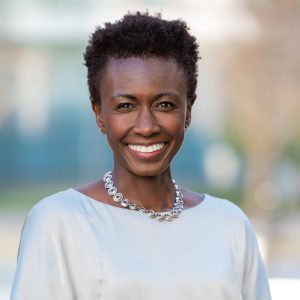
Meet Community Member
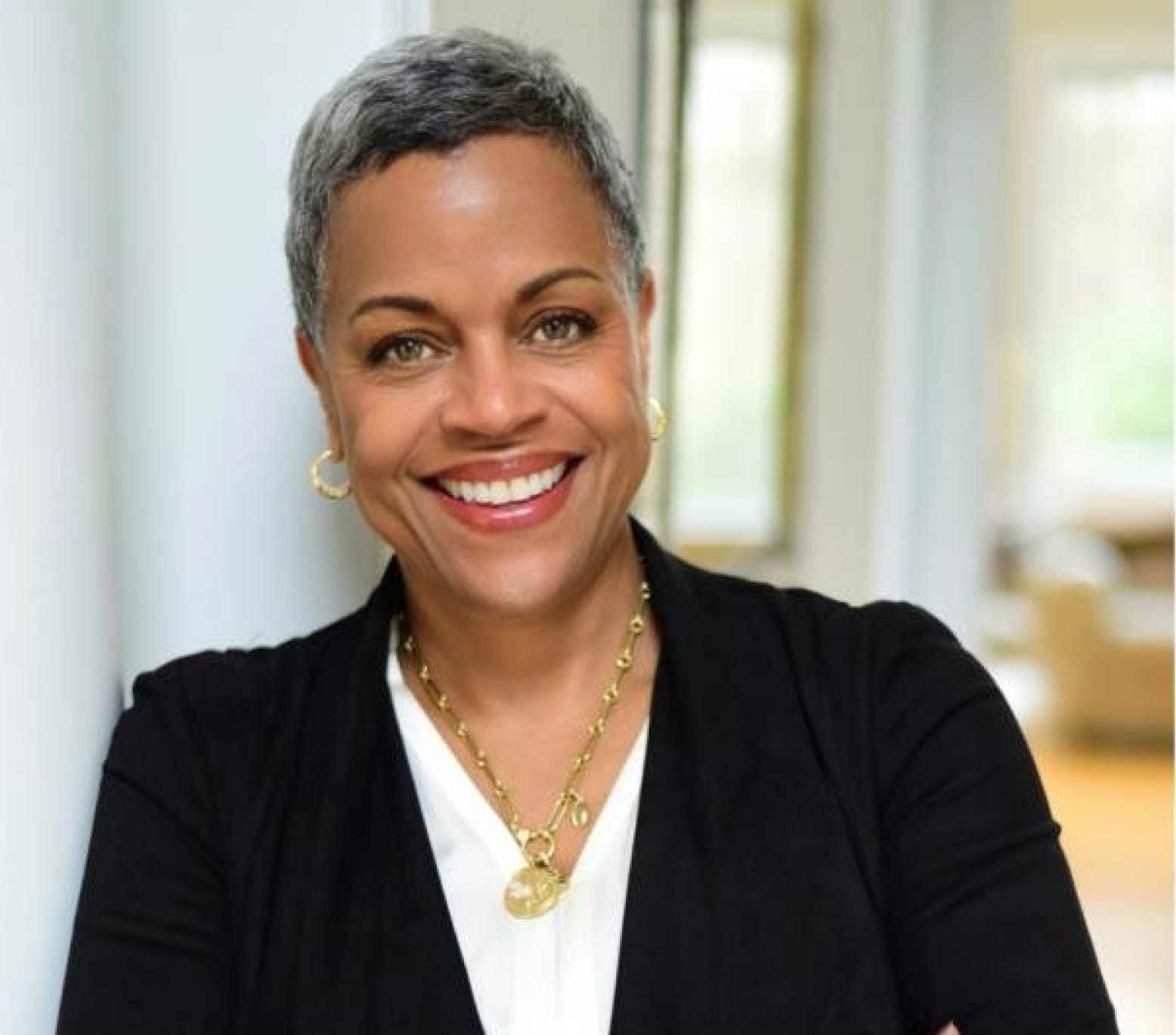
Linda Elam, PHD, MPH
President
Elam Strategies Group

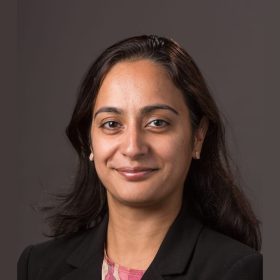
Host: Douglas Riddle
Curriculum Director, The Carol Emmott Foundation

Guest: Linda Elam, PHD, MPH
President
Elam Strategies Group
In this episode of The Treasure Hunt, host Doug Riddle sits down with Linda Elam, a distinguished leader in health policy and management. Throughout her career, Linda has advocated for healthcare delivery for vulnerable populations and served in pivotal roles, including as Deputy Assistant Secretary for Planning and Evaluation under President Obama, policy analyst at Kaiser Family Foundation, managing director at Manatt Health, and CEO and plan president of Amerigroup, District of Columbia, Inc. Currently, she's the founder and president of Elam Strategies Group. The discussion traces Linda’s path from her early passion for science and medicine to a lifelong pursuit of health equity and public well-being.
Linda opens up about the pivotal moments that shaped her perspective on healthcare disparities, particularly her time working between vastly different medical facilities in Los Angeles. She spotlights the power of social determinants of health and the pressing need to connect healthcare with social care for meaningful improvements. Her insights emphasize the significance of clear communication and targeted research, as well as the real-world challenges of policy implementation.
Listen and discover the intricate layers of health policy, the powerful influence of public health leadership, and the lasting legacy of community connections in championing equitable care.
Listen Now
Available On


Connect with:
Linda Elam

Douglas Riddle
Transcript
Doug Riddle: (0:01)
Welcome to The Treasure Hunt. I'm here with Linda Elam. Linda is a health policy and management leader with a rich and varied career focused on the delivery of healthcare to vulnerable populations.
Today, she's the founder and president of Elam Strategies Group, an advisory firm, but she has led healthcare policy work at KFF, Manatt Health, and the District of Columbia. She was appointed by President Barack Obama as the Deputy Assistant Secretary for Planning and Evaluation, focusing on the independence, health, and productivity of folks like me, elderly folks, and people with disabilities. She's been a Carol Emmott mentor since 2023, and I'm pleased to welcome you to The Treasure Hunt, Linda.
Linda Elam (00:50)
Well, thanks so much, Doug, and I'm delighted to be here and speak with you a bit.
Doug Riddle (00:54)
Great, let's start. How did you get into healthcare and, in particular, healthcare policy as a career?
Linda Elam (01:02)
Sure. Well, I have always been interested in health since I was a child. I enjoyed the sciences. I was a pre-med undergrad, and then I discovered I wanted to pursue a career in public health. I was more interested in the health of populations.
I can tell you, a defining kind of moment for that, for me, really connecting the dots and saying, aha, this is what I want to do, was when I was living in Los Angeles at the time and I was working between LA County, USC, and Cedars-Sinai.
And I know that has meaning for you, but for those who don't know, that's like working between basically Beverly Hills adjacent, TMZ in the waiting room, looking for celebrities in the hospital. And then the other one is the large county-run safety-net hospital.
On a good day, I could get between those facilities in 20 or 30 minutes, but it felt like they were very far apart in terms of almost everything you could observe: the physical plant, the surrounding areas, the patient population, even some of the folks' presentations. You'd see things like amputations at County that you really didn't see at Cedars. And so it got me asking questions about how we distribute healthcare in our country and how health itself is distributed.
That sort of path of inquiry led me to public health. I then got the language for things like health equity that, you know, I had feelings about, but I now had a structure to, you know, understand it. So I went, like I said, back to school. I went to Cal for my master's and then continued with my PhD from Hopkins.
Through my academic pursuits and then through my career, I've continued to be guided by looking at how we improve the system and how we have improved health equity. Because of the understanding that while healthcare is hugely important, dealing with the social determinants of health, to deal with the larger part of what makes people healthy, and connecting healthcare and social care really is a driver of the career choices that I've made.
Doug Riddle (04:06)
I get that. Just recently, the American College of Healthcare Executives published in their newsletter an article that we provided them, raising these questions about wellness, which we've been focusing on so often, as some kind of individual activity. Eat differently, sleep differently, and really ignoring the larger context.
It sounds like you were really powerfully affected by an awareness of how the environment makes enormous differences for people's individual and family health. Is that kind of the situation?
Linda Elam (04:44)
Oh, yes, absolutely. You know, again, I think, healthcare for most people makes up around 10% of what contributes to their health. And, sure, your nutrition is important, and, you know, public safety and those sorts of things. But there's also a significant body of literature that talks about things like structural racism and chronic stressors and other things that will impact your health.
To me, I think it's hugely important that we have improvements in technology. We want our hospitals to be able to deliver the very best care. We want to have the top of the line, prescription drugs, for example, to manage chronic diseases and so forth, or even, you know, acute diseases. But we have to pay sufficient attention to that other part of the health equation, or we're really missing the opportunity to improve public health.
Doug Riddle (06:03)
I know that you spent 10 years as principal policy analyst for what is now KFF, which, of course, is a non-profit research and educational organization. I'm not sure about the total mission of that, but what did you focus on during your time there? What were the contributions that you were trying?
Linda Elam (06:25)
Yeah. Yeah. And my time when it was Kaiser Family Foundation was really pivotal to my career, for a number of reasons. At first, I was finishing my doctoral studies while I was there. And it was, I should say, it was a really supportive environment, you know, which has some resonance with what the Carol Emmott Foundation is laying out.
I had a lot of encouragement to finish my studies as long as I was able to contribute to the organization. You know, that kind of support was hugely important. So I served as staff to the Kaiser Commission on Medicaid and the uninsured. And that's when I really got to dig in on the Medicaid side of things, which obviously has continued through my career.
So I was really focused on healthcare access and health equity. Those were the main areas for the research briefs that I contributed to and the studies. I also did a lot of work in prescription drug policy. So, Medicaid prescription drug policy. And I was there during the advent of Medicare Part D. So, looking at how that changed Medicaid expenditures, looking at the effects on the people who were being shifted from Medicaid to Medicare drug coverage.
So a lot of time there. I also did some work on behavioral health, and was really hoping that Kaiser would start a behavioral health issue area, but that didn't come to pass. But it allowed me to meet really interesting people and work on some interesting projects as well. I think just the combination of being able to work with some of the leading voices in the field, whether it was the Kaiser leadership, the commission members, our research partners, and my fellow staff, I learned a tremendous amount. And I think of the things I learned that weren't topic or issue-specific.The importance of communication and how it's done was really, really very important to Kaiser then. And of course, now KFF is sort of this communications powerhouse. But clear, understandable, accurate communications designed for target audiences to allow the research to have the greatest impact is a part of that learning that I've carried with me ever since. It remains vitally important, and I try to bring that to all of the work that I do.
Doug Riddle (09:43)
Yeah, a real theme for you. I think that's great. I know that you've become deeply involved in healthcare in a variety of roles in Washington, DC. The ones I know about are: CEO of the DC Health Plan for 4 years, state Medicaid director, and, for the last 7 years, you've been involved with the Mayor's Commission on Health Equity. Can you talk a little bit about this journey?
Linda Elam (10:08)
Sure, and it's interesting. You know, for a lot of folks, they think of Washington, D.C., as the federal city, and it is that. And it is also the District of Columbia, with over 700,000 residents, and it operates as a state for the purpose of Medicaid and many other programs.
So when I left Kaiser after 10 years, I went to be policy and planning director for DC Medicaid. And then, after the mayoral transition, I was appointed Medicaid director. I lovingly call that my “if you're so smart, go do it” phase of my career because I had spent so much time as an analyst and talking about best practices and so forth. And I can remember some of the work that we did, you know, speaking at conferences or being invited to be on a panel somewhere. And the end user was sometimes like, yeah, that was a nice idea, but, you know.
And I'd be kind of like that paper was impeccable. Well, the paper may have been impeccable, but it was sort of in an ideal state, like almost in a laboratory for certain things. For other things, we definitely conducted interviews and spoke with leaders about their experiences. But I guess my point is that going from kind of an analytical space to being an actual operator is taking that body of knowledge and applying it in the messy real world. Where, if you're talking about best practices, that's fine as a model, but it's not necessarily taking into consideration politics.
It's not necessarily taking into consideration all of the other trade-offs that have to happen because of resource allocation, legal challenges, and on and on and on. So, I'd say that was a really important part of my education. And I am still a District resident. I care very much about the well-being of folks in the District, and I stay connected to that, like you said, through the Commission on Health Equity. Even when I was with the Health Plan, I was a little bit of an anomaly as a plan president because I wasn't an insurance person. I was a public health person. And I brought those sensibilities to the work very unapologetically.
So, I believe you can do well financially; you can succeed as a P&L leader and also make choices that are most beneficial to the populations you serve. I maintain that when you're working in health, you must always keep in mind your population. You must always keep in mind the health of the population. Whether you're the regulator or a vendor, you're there ultimately to take care of people.
Doug Riddle (14:14)
Yeah, one hopes that the mission is not at odds with the management of the process. But I do know sometimes they're framed that way, aren't they? I was impressed, too, by what you said about these two universes, which I think is really important. Research, by its nature, has certain constraints. You draw a circle around what you're studying and try to study that thing. So you do narrow down your focus.
And experience doesn't allow you that. You have to sort of bathe in the chaos.
Linda Elam (14:01)
That's right. That's right.
Doug Riddle (14:05)
That's not as good. I mean, academics do have a little trouble with this. Well, you just didn't design it right then, is kind of the thing. I'm sorry. Reality is not easily designed. Go ahead.
Linda Elam (14:17)
That's exactly right. So, you know, that's part of the research design: understanding that if you want this to be successful, if you want it to translate into something, you know, out in the world, you have to understand the challenges that it will face taking it out of the lab, onto the sidewalk, right?
And so it's a really important point of view. People aren't always as excited about hearing that, and I love a beautiful study as much as anybody else, but it depends on what it is you're trying to achieve with the work that you're doing.
Doug Riddle (15:52)
How has that shaped the advisory work you are now involved in with your own company?
Linda Elam (15:59)
So I think it's really important for strategy, when you're advising on strategy, to have walked some of that walk. With one client, it's working with an advisory group as they undergo change. And having gone through similar experiences, and being able to anticipate what some of the challenges are, being able to put myself in the shoes of some of those folks, because I've been in those positions. It helps me think through strategy, communications, and maintaining relationships that help get the job done, I'd say.
Doug Riddle (16:56)
I want to turn to another one of your passions, which is this virtual care platform for managing obstetrics called BabyScripts. I understand that you actually were the first independent member of the board for Babyscripts. So talk to us a little bit about how you got involved with that and what you're doing with that. And then I'm going to ask you for some advice for the people who listen in on this, about people hoping to contribute as board members. But share your story.
Linda Elam (17:30)
Sure.
Well, this one, you know, it may be a little bit of a unique circumstance because the way I got connected to Babyscripts was that when I was at the Health Plan, we were a customer. They were a vendor to us. And so I got to know the product that way. I was impressed with the philosophy undergirding it and what they were growing.
And then with the results that we were seeing using it. So essentially, it's remote patient monitoring for pregnancy, and being able to get some of those readings without someone having to come into the office all the time is good business in many ways and very reassuring to the patient as well.
While I was at Manatt, one of the founders contacted me and asked me if I wanted to join the board as an independent member. Because they are a startup, they've got a lot of the money folks on their board, the investors, on the board. And I was able to help round out the presence at the table by being able to talk about Medicaid. And since Medicaid pays for like 50%, between 40 and 50% of births, it's a huge part of the landscape for a maternal health solution. Plus, I had the regulatory background, the general interest, and the Health Plan experience, knowing, understanding, and as an actual user. So that's how I ended up on the Babyscripts board.
And it doesn't keep folks from coming in when they need to, but it's keeping people from having to make unnecessary visits. I mean, it does more than that, but that was part of the underlying philosophy there, which made a lot of sense to me. And so, the Health Plan, we had lost our contract. It has since been restored, but there was this period of time where I was just sort of hanging out. So I went to do something else. I went to Manatt.
But I think, you know, the sort of broader takeaway is you just never know from the connections you're making in business where that next opportunity may come. And sometimes it may come up as a job, but in this case, it came up as something different, which was an opportunity to be on a board.
Doug Riddle (20:39)
Yeah, you said you thought it was quite unusual, but I think it's not, oddly enough, especially for early-stage companies, startups as you call them. They have to leverage all those relationships even more. And later on, they might have a formal relationship with retained search or someone who's actually doing that. And we also tend to focus a lot of our advice on these formal mechanisms. But the reality is something that you said, I think, quite clearly, which is that building that network of relationships opens up doors that you could never predict. Would you agree?
Linda Elam (21:18)
Absolutely. Absolutely. You know, for me, being in government for many years, I was conflicted about the opportunity to serve on boards. Another piece to it is letting your network know that you're interested and available. Before it may have been, I'd love to consider it, but I can't right now. But for me, my circumstances changed, and I was able to participate. Prior to the Babyscripts Board, I was invited to join the Altarum Institute Board, and that was a result of having been contacted about a job. I chose not to take them up on that offer. But again, once I was out of government, the CEO at that point contacted me and asked me if I would be willing to consider a place on the board. So you just never know.
Doug Riddle (22:27)
I think that's wonderful, and I love the story. One of the things that occurs to me, in addition to the points that you've made, is that it's important not to undersell your expertise. I mean, I think many of our leaders, particularly fellows, are not as clear about what they have that could uniquely contribute to the operation of non-profit or for-profit boards.
And the expertise you developed, in the terms you said, is of Medicaid in particular, but the whole system is associated with the interaction between government and healthcare. You developed that without intending to turn it into a board chair, you know, a member of the board, but I think it really paid off for that. You've been a Carol Emmott Foundation mentor and member of the leadership council for three years. So this is another volunteer opportunity that you've taken advantage of. What stood out for you about this work with the Carol Emmott Foundation?
Linda Elam (23:35)
Sure, and it's really been a wonderful experience. So let me leave with that. And also, I want to acknowledge Brenda Sulik. I don't know which class she was in, but she was a fellow, or I guess you never are a former fellow. You are always a fellow. So she is a fellow. She and I overlapped in doing aging work. And we were at lunch one day, and she introduced me to the Carol Emmott Foundation and said, you know, I really think you could contribute.
So I'm really grateful to her for that. And again, it speaks to that same word again, the connections and the network and the importance of it. I'm at a stage where I really, well, I always have, but it's even more important to me to sort of synthesize my experiences and give back.
CEF is a wonderful outlet for that, helping leaders think through the things they're grappling with and for me to provide reflections that may help them along the way. I just really love it. So it's that aspect of participating that I really enjoy.
The caliber of professionals all around, whether it's you guys who are running it or the people who are participating in the leadership council or the fellows. It's just a top-tier experience in that way. My mentees have been just wonderful, and I'm honored to be a part of their journeys. It’s just really authentic and fulfilling relationships.
I just want to say, you know, thanks for that and keep up the good work.
I think another thing that stands out, and I've known this before; I've been the beneficiary of being in good cohorts, but it's reminding me of the power of a cohort to help people, especially, the leadership journey can be very isolating. And the higher up you go, the more isolating it can be.
And so, to know that you've got folks who get you, are invested in your success, and cheer you on and lift you up is tremendously important. And one other thing, I'm really proud to be affiliated with an organization that in the current environment has not backed away from its commitment to diversity, equity, and inclusion and is in fact leaning in.
I think it's very unfortunate that these concepts have been maligned in the way they have and deliberately misconstrued. And so, to keep the good work going and to continue to demonstrate, I mean, an organization like CEF is sort of the proof of the fact that there are no people who are just getting over the people that I've met throughout this organization. This is a high-quality group of professionals, period. So when you give a high-quality group of professionals the same opportunities and exposures and ability to shine, we are all winning. We're all winning. You're raising the bar for everybody.
Doug Riddle (27:59)
Thank you, Linda Elam, and we consider you a gift to us. I'm so glad about that conversation with Brenda, obviously a very important one for both us and for you. And it's been a delight having you here in the studio. Hope you have a great day. Thank you so much.
Linda Elam (28:17)
Thank you, Doug. It's been a pleasure.