INTERVIEW SERIES
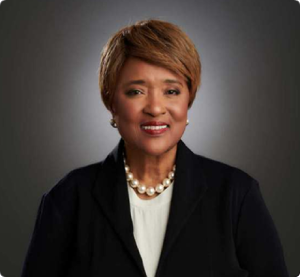
Meet Community Member
Marcia Alesan Dawkins, PhD
Senior Research Scientist, Center for Creative Leadership, Leading Expert in Equity and Strategic Communication
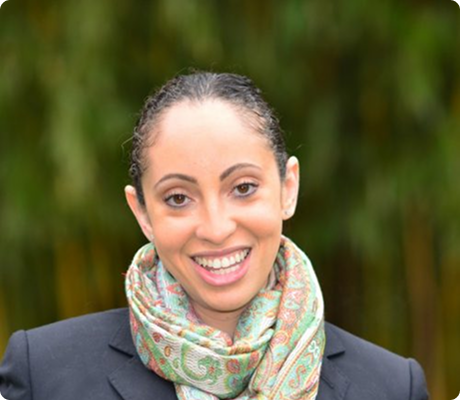

Host: Douglas Riddle
Curriculum Director, The Carol Emmott Foundation

Guest: Marcia Alesan Dawkins
Senior Research Scientist, Center for Creative Leadership, Leading Expert in Equity and Strategic Communication
In this episode, Marcia Alesan Dawkins, senior research scientist at the Center for Creative Leadership, public speaker, author of four books including Clearly Invisible, Racial Passing and the Color of Cultural Identity, expert storyteller, and regular speaker for The Carol Emmott Foundation, discusses her ideas about the meaning of identity. Marcia shares her profound take on sincerity over conformity and grapples with the notion that we don’t just have one story in life, but rather a larger culmination of stories that we present to the world.
Listen as Marcia explains her personal exploration of identity and presents a provocative analysis of the connections between authenticity, identity, succession planning, and leadership development. Marcia also delves into where we belong in society from an evolutionary perspective and how the social, political, and emotional effects of conforming impact humanity.
Listen Now
Available On


Connect with:
Marcia Alesan Dawkins


Douglas Riddle
Transcript
Douglas Riddle (00:03)
I'm here with Marcia Alesan Dawkins, who has become a friend as well as an inspiration.
I first became aware of you, Marcia, when I read your book, Clearly Invisible, Racial Passing and the Color of Cultural Identity. Then my colleague, Joanne Dias, asked if I wanted to meet you. And I went all fanboy on you, as you may remember. And our conversations led to inviting you to do some keynotes for organizations where I'm a leader.
And I'm really excited because you'll be doing a workshop for the Carol Emmott Fellows Network soon and I'm very happy to have you in our virtual studio. How are you doing today?
Marcia Alesan Dawkins (00:43)
Hi Doug, thank you for having me here. I'm doing just fine and once again remembering those times and how you got me out of retirement. I thought I was done with public speaking until you called me out. So thank you for that.
Douglas Riddle (00:57)
This is good. You know, we are older people, you know, we decline if we don't keep busy. Sorry, just added you to that. I was interested in your current motto, which you list on your website, which is sincerity over conformity, if you remember that. And of course it made me think of the 50s.
Marcia Alesan Dawkins (01:04)
Yeah, right here it works.
Mm-hmm.
Douglas Riddle (01:23)
Where sincerity was a big word when I was a child in the 50s. And I'm wondering if you could talk a little bit about, let's start off with that. Talk to us about sincerity over conformity.
Marcia Alesan Dawkins (01:37)
Sure. So my choice in the word sincerity, and for those who may not know, I have a PhD in words actually, in classical Greek rhetoric. So when I choose a word, there's a whole story behind it. So to make that long story short and sweet, the choice of the word sincerity is really in opposition to this idea of authenticity that everyone keeps talking about, particularly in the leadership development space. When you do word etymology of authenticity, suggests that we have one identity that we bring with us everywhere we go over time that's more fixed. And sincerity allows us some more wiggle room. So to be sincere is to be unadulterated, to be almost in Latin, they would say unwaxed. And so it allows you that space to move around and say, hey, I'm evolving. And this is who I am right now. And when we talk a year or more from now, you might meet another version of me and that's OK.
So that's where sincerity comes from and how I get sincerity over conformity, right? When we give ourselves the room to be sincere and to be who we are in these different settings, that pull or attraction of conformity becomes less and less because I don't have to project this one identity everywhere I go all the time.
Douglas Riddle (02:58)
I like that. One of the things that you're writing and speaking of done for me certainly is to open up the complexity of identity. And I think this is a really helpful thing. When you think about identity, what are you referring to? What does that mean?
Marcia Alesan Dawkins (03:19)
Really appreciate you asking this question because as I've gotten older, we've talked about my gray hair a little bit this morning, I've really had to...
think more critically about what I mean by identity. And especially now being a parent and getting back into the research, I realized identity for me is the sum of stories I tell about myself and the sum of stories that others tell about me. And Doug, you might laugh, but as I was making my tea this morning, I realized, my gosh, this is the song that Eminem sang like 20 years ago. I am whoever you say I am. And if I wasn't,
then why would I say I am? And so it just became real for me in a whole nother way this morning as I was waiting for my tea kettle to boil.
Douglas Riddle (04:07)
That's really good. Well, I was thinking about this because of course the idea of sincerity also and your focus on the personas, for example, of Eminem makes it clear that identity, at least for you, is kind of a negotiation with our whole social environment. You say that Eminem practices identity through the prism of persona.
Marcia Alesan Dawkins (04:28)
Mm-hmm.
Douglas Riddle (04:36)
So I wonder if you want to talk a little bit about it and kind of tease out because the word sincerity of course still implies that there's some kind of internal consistency that we're putting out to the world and yet we have multiple selves we're putting out to the world. How does that all work?
Marcia Alesan Dawkins (04:47)
Mm-hmm.
Well, I think back to my high school calculus class when I first realized that many things could be true at one time. Thank you, Mrs. Pellegrino. And so this idea of sincerity, this idea of having personas, some scholars call it a working identity or working identities, is exactly that. It's saying that many things can be true about us at the same time. And what's most appropriate about us in one setting may not be what's most appropriate about us to share in another setting. And so knowing how to do that, that back and forth, that dance is really what identity and communication are about. So I don't know if I fully answered your question as it relates to sincerity, but if I could say one more thing, I would say that it's in doing that dance and being honest about it that is what makes us sincere.
Douglas Riddle (05:54)
Well, I think that's a very interesting issue, think. This kind of dance, and I wouldn't expect anybody to answer completely this because I think you really described quite well the kind of constant flow back and forth. And also, I assume that a big piece of this is how we fit in, how we identify where we belong, kind of our associations, how much of our identity is related to that sense of I belong to this group or this tribe, this political party, whatever it might be. And so this kind of takes us around to that conformity piece of your slogan, sincerity over conformity. But conformity clearly is a big driver for a lot of what we do. It shapes what we give credence to, what information we believe is true or not, these kinds of things. So maybe just a little bit more on this.
About the conformity piece and what does sincerity over it mean? Not in the place of it clearly. So how does that actually operate?
Marcia Alesan Dawkins (06:59)
Mm-hmm.
I'm still figuring it out. I work on this every single day, Doug. But when I think about conformity and when I think about the positive aspects of conformity, in many respects, allows us to, as you said, find places where we belong in society, thinking about it from an evolutionary biological point of view. When we conform, we make ourselves part of the herd, and that provides us protection.
But what happens when being part of the herd actually makes us weaker, right? Actually puts us in a position where we are not able to express who we are, where we become confined. And so it's in those situations where I say, no, we have to choose sincerity over conformity. And it is a risk.
Right, as the stories of passing, as Eminem's work, as many of the other research projects that I've done, you know, bear out.
It is again this dance, right, that we do. keep coming back to it because it really gets back to this larger idea of identity that I have, which is, you know, that it's not just one story. It's the sum of all the stories that we tell and others tell about us over time. So it's hard, Doug. I'm still working it out.
Douglas Riddle (08:33)
Well I love that. mean there's a kind of meta level dynamic of this because our stories talk with each other too as you're saying and I don't think we all are kind of aware we think of we still kind of are dominated by this ideal of a true self you know that's in conversation with all these different personas or something. I think that metaphor you know has some problems. I've been
Marcia Alesan Dawkins (08:40)
Mm-hmm.
Douglas Riddle (08:58)
I've been privileged to be in the audience for a number of your talks, speeches, and workshops that you've led. And you're just spellbinding as a speaker. And one of the things I noticed is that you really arouse a deep yearning in the people who are observing, who are part of that, to know themselves and their own family histories more deeply. It's really quite remarkable how it gets people kind of turned on to looking at their own lives in a different way.
I'm curious, I've heard a number of these, but right now, what about your own family history is shining for you at this point?
Marcia Alesan Dawkins (09:35)
My goodness.
It's interesting that you mentioned this. I was in Philadelphia recently, which is the home to the Dawkins's or the Dawkeye, like Cacti, I like to say. There are so many of us. And I was having lunch with one of my favorite uncles, Uncle John A. Dawkins. And he and I talked about so many things. One interesting family factoid I learned is that we're cousins of the NBA basketball
player Darryl Dawkins, Chocolate Thunder, who used to break the backboards. So that was super exciting. I came home showing that to my family, to my son. He was like, whoa, this is so cool.
So that's one exciting thing. But the other is I really got to talk to my uncle John, who's also a public speaker, who also studied classical rhetoric as it happens, who's now a reverend, one of many on both sides of my family. And we had lunch and we started talking about what it means to be a communicator and what our goals are. And it was really interesting to hear that we had very similar goals, although we talk about different things. And those were to help people find their stories and to help them figure out who they are and how to shape their identities. And while he does that as a reverend, and that's a different thing, I like to do that by helping people see who they are by using the tools that are within their grasp. And that's the stories that they read, the stories that they watch, the foods that they eat, these memories that they have of their uncles or their grandparents or whoever it may be.
Douglas Riddle (11:05)
I'm gonna go.
Yeah, that makes a lot of sense. That's what you call rhetoric, too. What got you interested in rhetoric? Do you remember your own path and how that, or what's the story you tell yourself about how you got to this place?
Marcia Alesan Dawkins (11:22)
Mm-hmm.
Yeah.
That's a good question. I like the way you ask it. So I went to university outside of Philadelphia. I went to Villanova University and I started as an economics major. And that went flat pretty fast because I just was like, this doesn't make sense. My brain doesn't work this way. I learned a lot of cool stuff and had to take a public speaking class as part of that business major. And this was where I saw myself
Douglas Riddle (11:55)
Mm-hmm.
Marcia Alesan Dawkins (11:59)
Shining. I just realized I had a knack for taking disparate concepts and relating them in a different way. And so that teacher, Professor Jackman, he pulled me to the side and he said, I don't know what you're doing in business, but I'm going to introduce you to Dr. Terry Nance, who's the head of the communication department, because I have a feeling that's where you belong. And so I fought, you know, until my grades bore it out at the end of that semester and went over and met with Dr. Nance, whom I'm still friends with to this day and dedicated part of Clearly Invisible to her. So it was some good mentorship that I had there who recognized some talent in the rough.
Douglas Riddle (12:43)
That's lovely. And what a lovely gift to have someone kind of recognizing you or at least saw the impact of you and say, there's a better place here for that. We don't always get that guidance. know Villanova, that area, my best friend lives right in that town. So go through the university because the road goes right through it. Right through there many times, love that area. I'm curious, one of your books,
Marcia Alesan Dawkins (13:04)
cool!
That's right, Lancaster Avenue.
Douglas Riddle (13:13)
And I should have mentioned that you have four books, but people can look you up on the internet as well. But one of them, your co-author on the book, Mixed Race 3.0. And I was thinking about your work at the Center for Creative Leadership. One of the things you do that's not theoretically, I suppose, part of your job has been to be active in the development of the employee resource groups or affinity groups. I'm not sure what CCL calls them.
but I know that you're a member of more than one. And so I'm really interested in this aspect of race and identity and how we identify ourselves. And this is of course one that's very much socially, politically and economically determined also to a great extent. But can you talk a little bit about your own understanding of yourself and your own history and the stories you tell about the multiple racial and cultural threads that come together in you.
Marcia Alesan Dawkins (14:16)
wow. Just a little thing, just a little tiny question you asked me this morning. Woo! You know, it's really interesting. So my mom is from Cuba. My dad is from New York City. My mom...
Douglas Riddle (14:19)
It's the next book, friend.
Marcia Alesan Dawkins (14:33)
is I guess racially considered a bit mixed but identifies as Latina. My dad identified as African American but was also very racially mixed. In fact I'll never forget when we did our 23 and Me's.
We got our results back and he called me. He was like, Marsh, I'm having an existential crisis. I'm like, what happened, dad? Like what's going on? Did you get your 23 and me? I was like, yeah, whatever. I'm not surprised. He was like, my God, I'm 52 % white. I don't know what I'm gonna do about this. I was like, well, dad, there's nothing you're gonna do about this, but we can talk about this and what does it mean? But you know, we joked about it subsequently. But in that moment, I really had to take a step back and understand, for example, from my dad's perspective, growing up through segregation and coming to identify as a black man to find out later, you know, in print that you're mostly something else, but can identify with what that means, with the story that society says it means for a person who's mostly white.
Douglas Riddle (15:36)
Bye.
Marcia Alesan Dawkins (15:38)
Was mind blowing. And so we wound up having a lot of really interesting conversations where he later said, you know, I, he learned from me and from my sister and from our cousins, because we grew up with this different sensibility about what it was to be multiracial, multicultural, et cetera. So I say that to say in my family, one of the great things that we've always had is this ability to have these conversations. And so that has gone a long way.
Toward me being able to identify in this sincere way that I've talked about, right? So when that comes to, for example, at my work at CCL and joining an employee resource group, I remember going to the Black Professionals ERG group, and then I asked someone at the end of the meeting, do you know where the Latinos meet? And they said, no, actually, we don't.
Douglas Riddle (16:30)
enough.
Marcia Alesan Dawkins (16:35)
So I went on this quest and found out that CCL didn't have a Latino TRG. So I found a fellow Latino colleague who was on a call with me as it happened one day, we started going back and forth on teams. And I was like, you wanna start one? And he was like, sure.
And he's become my workplace bestie, right? And so we started this group. And what's been fascinating, and we were very deliberate about this, was making sure that we opened it up to people of all ethnic backgrounds. So it didn't matter if you were married to someone from Latin America or Spain. It didn't matter if you were from Spain or from New York City. It didn't matter if you spoke English or not. It didn't matter if you were half Chinese, right? And so it became this space where we could be many of these things and amplify.
However many we wanted at the same time. And so that has proven to be a wonderful experience and now other folks are leading the group and it's nice to be a member. But that's really, I think one way, right? That I've come to express this sincere way of identifying myself at least along racial lines. And so to go back though, Doug, cause I'm remembering the crux of the question you asked me now.
When I think about my own family, I see how both sides, although coming from very different places and at different times, were really grappling with the same issues. When to be visible, when to be invisible, when to be tender, when to be tough, when to change your location, and how, right? Do you have to move to another country or do you have to sue?
Douglas Riddle (18:20)
Thank you.
Marcia Alesan Dawkins (18:23)
the state of South Carolina to get recognition for what you're already doing and who you already are, right? And all of those things are wrapped up in my family stories. And so as I've taken time to unpack these stories and then begin to weave them together in my own way, it's been a wonderful experience. And I think that's what folks get when I talk to them about some of these stories is, wow, what is my own family story and what comes
Douglas Riddle (18:28)
Mm-hmm.
Yeah.
Marcia Alesan Dawkins (18:52)
What strategies have my ancestors used that could benefit me right now?
Douglas Riddle (18:59)
Yeah. I think 23andMe and similar DNA-based sources of information have really raised a new set of kind of questions for people and really a very different lens on the issue of identity, which I think one of the things that strikes me the most is the kind of political power of identity and your book, Clearly Invisible.
Marcia Alesan Dawkins (19:02)
I think that's it.
Douglas Riddle (19:28)
you do quite a lot with that, but I was thinking, you your dad talks about 52 % or whatever it was, you know. And I think of course, you know, in the South in particular during slavery, you know, in post during reconstruction, that there was the kind of 1 % rule that if you had 1 % African blood, then you were black.
Marcia Alesan Dawkins (19:54)
Mm-hmm. Yeah.
Douglas Riddle (19:54)
no matter what else, which raises, which puts us into that whole passing thing that you've been doing a lot about. Do you wanna talk a little bit about that and maybe also about the kind of political structures, power structures that enable these identity questions?
Marcia Alesan Dawkins (20:10)
Sure. So what you're talking about is the one drop rule, which says that if you have one eighth of your blood.
as black, then you are 100 % black according to the law, which depending on how far back we go in time means you either can or cannot vote, you are or are not a citizen, you are or are not a person, you are or are not three-fifths of a person, it depends how far back we want to go. So it had huge ramifications for who people were, who they could be, and what their life chances could be. And so this whole idea of pass
came around because folks who were enslaved had to carry these passes with them. So they were about, you know, the size of these post-its and they would have, you know, the enslaved person's name on it. So-and-so is able to go from here to here on this date for the following purposes and you would carry this pass with you. But over time,
it would be that certain enslaved people would make these trips more than others. And likely they were the folks who looked more like me, who had lighter skin tones. And so if folks would see someone like me walking around, they would just say, she's out on a pass. Don't worry about it.
And so folks like me realize, well, maybe I just don't have to come back. Maybe I can just keep walking, right? Maybe I can just find something over here or make enough trips, get enough money, and get myself out of this situation. And so hence the term passing came about.
Douglas Riddle (21:57)
Can you talk a little bit about your current research interests?
Marcia Alesan Dawkins (22:04)
Sure.
My current research interest is succession and succession planning. you think, gosh, talking about all this other stuff, and everything else passing, how do we get to succession and succession planning?
But that in and of itself is a very interesting story. I got a phone call earlier this year from an executive at a media organization who wanted to know what I knew about succession planning. And I said basic stuff. And she, after a very great conversation, she said, I'm going to give you a hot tip. Learn about this. And you know, that was kind of it. So I went back and started doing my homework and I've been doing my homework now for about nine months on this topic. And I found some very fascinating and amazing things. First, I looked at...
how succession planning was treated in Emmy and Golden Globe nominated television shows over the past 50 years. And that's opened up a universe of representations that we need to think about, including now being proven that the show succession impacted the Murdoch family's actual real life legal strategy for how they are enacting or not enacting their proposed succession plan.
Secondly, I looked at about 200 signals over the past year, over 19 industries, and I've noticed a sharp uptick in announcements about succession and succession planning. All of that underlied by a bibliometric analysis conducted by my colleague Dan Smith of research over the past 50 years about succession planning that has found a sharp increase in interest in this topic. So among many findings in pop culture and beyond all the way to the academic literature, we found that we are entering a new era in leadership right now, and it's the succession centric era. And if we don't figure this out, most of the organizations are not going to survive the next 50 years. And so my research is about what does that mean? How can we help organizations to think differently? How do we engage different frameworks for prototyping leaders? And how can we evolve this notion of leadership development and development training or development relationships?
to equip people for this next era in leadership. So it's pretty cool, at least from where I'm sitting.
Douglas Riddle (24:40)
Yeah.
Yeah, yeah, I could see that. It's really good. Well, I'm curious
what, well, we might want to do this in a different order, sorry. But I was thinking a little bit, I want to come back a little bit to identity. I'm thinking about gender though, particularly as the Carol Emmett Foundation. And one of the things that, so I'm interested in gender identity.
Marcia Alesan Dawkins (24:55)
I'm not so good.
Douglas Riddle (25:11)
as also a of a socially constructed persona. You we identify as one thing or another. The science, the biology suggests that that doesn't actually capture the realities very well. It's a very incomplete description of that. I'm wondering, as you think about issues of succession, know, future, what's women particularly out of
Marcia Alesan Dawkins (25:15)
Okay
Mm-hmm.
Douglas Riddle (25:39)
the succession planning in these ways. And we get the added complexity now of who counts as a woman. We see these lawsuits by sports teams for trans women and so on. This is a very complex area. I'm wondering if you have some thoughts that would help us begin to raise the right questions as we think about gender identity, succession and leadership for women.
Marcia Alesan Dawkins (26:04)
Well, I can tell you about some interesting findings from my work. So just looking at media representations of succession and succession planning, we found that only 6 % of those stories focus on women leaders. 79 % focus on leaders who identify as men. And then that remaining 15, about 15 % focuses on mixed gender teams or they simply.
Douglas Riddle (26:05)
you
Marcia Alesan Dawkins (26:29)
blow past the issue of gender altogether. So that's one interesting finding. Then in the shows and representations that small 6 % that do feature women, there is a progression of seeing women as second class leaders, seeing them go through challenges, break glass ceilings, and then ascend to this place where...
They have power and they can begin to think through these issues of succession. So even the narratives that we have about women in this space start in a very different place than the narratives that we have about people who don't identify as women. Then we have the issue of people who don't identify as women or men who are not included in this conversation, in these representations at all. So.
So when we think about why does this matter, folks say to me, Marshall, okay, why are you studying TV? Like I want to know five things to make a succession plan. Right? The point is that if we don't start with these large scale media representations stories that we're being told and that we consume almost mindlessly, you know, as I'm eating my salad, I'm watching an old episode of succession, right? To pass the time.
Marcia Alesan Dawkins (27:43)
We don't realize that these are framing how we think about who is and who is not a leader, why they can and cannot lead, what challenges they do or do not face. And so until we address these macro level stories, we're not going to be able to get to those tactical plans about.
what folks need to do to create inclusive talent pipelines, to identify star performers and high potentials, to deal with issues like socio-emotional wealth, to talk about multi-generational succession, which has a lot to do with this issue of gender.
Right, so I'm a Gen Xer and I was raised to think that genders are two things, period, right? But the folks who come after me, that spectrum starts to open. It's kind of like how we think about neurodiversity. It starts to open up and we realize we're all along the spectrum. But if we don't consider the stories that we're telling ourselves about this and how they...
get told differently by different generations, we can't make progress, right? Because some of us are not willing to let go of those old stories. So if I could say one more thing, I'll say that this takes us all the way back to your first question I'm realizing now as we talk, to sincerity over conformity, right? Because if we're being sincere, we can say, I used to think about gender this way, one or two things.
But now over time, I'm able to reflect that gender is all of these things, one and two and three and four and 10 and Google things. And that allowed us, right, that room to grow and to find our successors, I think.
Douglas Riddle (29:32)
Nicely put, thanks for that. I'm curious, one more thing. Part of the purpose for the Treasure Hunt, our little podcast, is that we want to help people who would be interested in connecting with you to understand some things that you'd be interested in being connected with. And so I'm curious, what do you wish someone would ask you for? Would ask maybe information or background or a subject, something that's
fascinating to you that people might not know about, but you really welcome people who wanted to talk with you about that.
Marcia Alesan Dawkins (30:08)
my gosh,
what a great question.
love for people to talk to me about my desire to be a DJ. I would love for people to talk to me about what it's like to start back at the piano after a 30 year hiatus and be vulnerable and what I've learned about leadership through that. I would love for people to talk to me about storytelling in all of its many manifestations and how they can improve.
any almost any situation whether it's family, work, or larger social life situations through better storytelling.
Douglas Riddle (30:53)
Great. So Marcia, how can people follow you? I know I follow you on Substack. What are the best ways for people who are curious about more about these ideas and experiences? How can they find you? You're all over the internet, but maybe there's some specific places where you publish and where we might see more of you.
Marcia Alesan Dawkins (31:12)
Sure. So the first place I'd say to go is my website,https://www.marciadawkins.com/, M-A-R-C-I-A, D-A-W-K-I-N-S, dot com. And there you can find me, you know, from there you can find me everywhere, LinkedIn, X, Instagram, Substack. And of course, there's a contact form where you could email me, drmarciadawkins at gmail.com.
Douglas Riddle (31:24)
you
Marcia Alesan Dawkins (31:37)
I look forward to connecting and hearing what has resonated for anyone who's heard us chat today.
Douglas Riddle (31:44)
Well, as always, Marcia, it's been a delight talking with you and we'll be hearing more from you very soon. So thank you for being with us today.
Marcia Alesan Dawkins (31:54)
Thank you Doug, this was fun. Thanks. Bye.
Douglas Riddle (31:56)
Take care, bye bye.