INTERVIEW SERIES
Meet Community Member
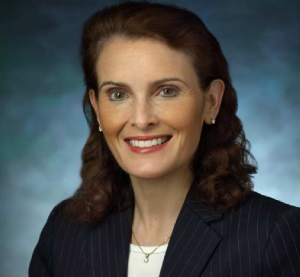
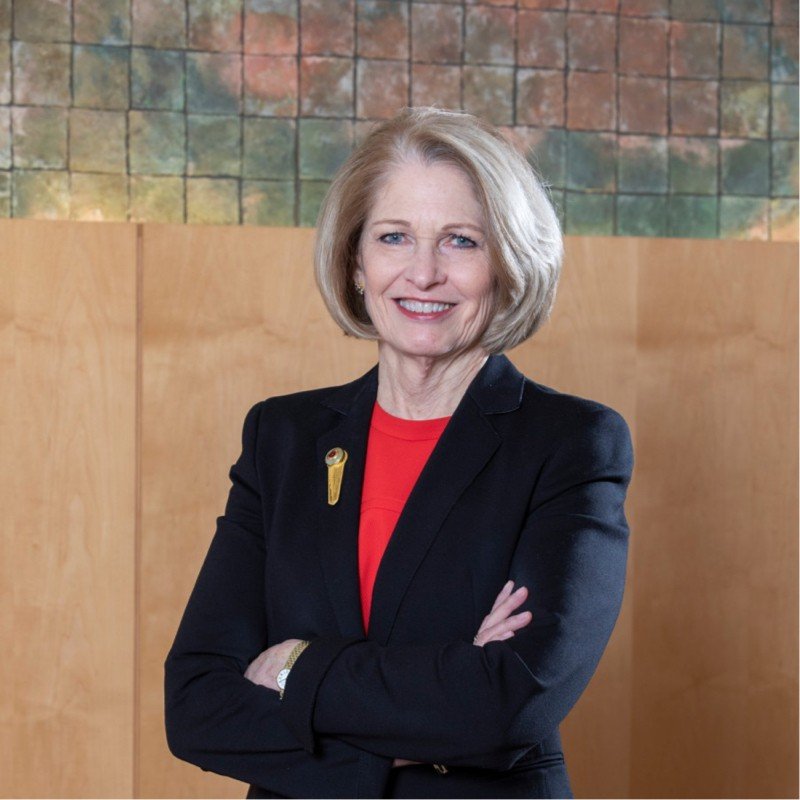
Marna Borgstrom
Retired Chief Executive Officer,
Yale New Haven Health and Yale New Haven Hospital

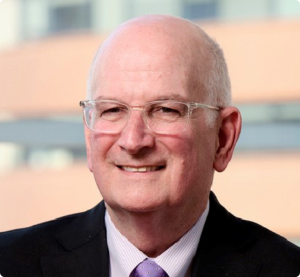
Host: Douglas Riddle
Curriculum Director, The Carol Emmott Foundation

Guest: Marna Borgstrom, MPH
Retired Chief Executive Officer,
Yale New Haven Health and Yale New Haven Hospital
In this episode of The Treasure Hunt, Douglas Riddle sits down with Marna Borgstrom, the former CEO of Yale New Haven Health, who has dedicated nearly four decades to serving the healthcare needs of Connecticut. With a wealth of experience and numerous accolades, including three honorary doctorates, Marna shares her insights on the distinction between the current US "sick care" system and the potential for a truly effective healthcare system. She emphasizes the importance of investing not only in healthcare delivery but also in social infrastructure like education, housing, and community resources that can lead to healthier lives for all.
Marna reflects on her initiatives at Yale New Haven Health, including efforts to provide safer housing for employees and invest in educational programs like New Haven Promise, which aims to support students from high school through college and then encourages them to serve back in their own communities. She discusses serving on various boards and how collaborating with other leaders with a shared vision helps make for a more equitable healthcare landscape.
Their conversation delves into the broader implications of healthcare investment, illustrating the need for a balanced approach that addresses both medical care and social determinants of health.
Listen Now
Available On


Connect with:
Marna Borgstrom

Douglas Riddle
Transcript
Douglas Riddle (00:02)
Marna Borgstrom began mentoring Carol Emmott Fellows with our second class. You retired from Yale New Haven Health in 2022 as CEO of the system after serving the healthcare needs of the region around Connecticut for almost 40 years. You've had more awards than we can count; so much recognition of the amazing contributions of service. It takes up more than a page of my browser to display as well as let's count your three honorary doctorates.
You serve on multiple boards, including the Health Care Institute and the Coalition to Protect America's Healthcare, and you previously chaired the Vizient Board. There's so much we could talk about. It's a delight to welcome you, Marna, to The Treasure Hunt.
I have a quote from another time when you said, "We have the best sick care system in the world if you can access it. What I hope we can evolve is the best healthcare system in the world." So, talk to us a little bit about our sick care and what healthcare would look like.
Marna Borgstrom (01:17)
If I knew the real answer to that, I'd either still be working, or I would have retired earlier, Doug.
I've always been more proud than not of the care that we provide to people when they seek it--when they come into an office, a clinic, a hospital, whatever. And I think that around the world, if I try and pretend that I'm not seeing the last three weeks, I think that the US has been viewed as the place to go for many, many things when people are really ill, or they need particular help. But a friend of mine who used to run the public health school at Yale University and now is a college president, who did a lot of writing on this, did some research that pointed out that the United States per capita spends about the same amount on care and social infrastructure as most developed Western countries.
So why are we not healthier? Well, I think the hypothesis which really appeals to me is because most other developed countries spend more of that on social infrastructure than on the direct delivery of healthcare. So they're making an investment in education, in housing, in things that also can help make people healthier rather than fending off whatever their needs, their lifestyle, their upbringing is, and always coming to the system because they need care for something.
And I think that's what I hope we aspire to is rebalancing the way that we spend our money on healthcare and social infrastructure so that we're still providing great care when people need it, but we're also providing more of what people need to live happier and healthier lives.
Douglas Riddle (03:35)
I think that's critical. Well, it's interesting to me that you, with that consciousness as the head of a hospital-based, we often say, even though it's much more complex, the hospital-based healthcare system actually took some steps to see what you could do in Connecticut to make some changes.
Are there some things that you would like to draw our attention to that you were able to do working through Yale New Haven Health to actually do some of that with creating the conditions that can lead to healthier living?
Marna Borgstrom (04:08)
Well, there are a number of things. There are never enough. I feel like we always lived in the "I know that was great, but what have you done for me lately?" environment. But one of the things that we did for our own employees, and we did this probably 20 plus years ago, is we started buying properties and rehabbing them so that our employees or others in the community had safer, better places to live.
We also helped people get mortgages and helped them understand their financial obligations. We bought property in the neighborhoods in which our hospitals resided and tried to clean those up. You know, supporting housing is really important. With our partner, Yale University, Yale New Haven Health System has always been corporately separate. We invested a lot in a program in New Haven First that's now being replicated elsewhere called New Haven Promise.
It's based on a national model that is intended to get kids through high school into college and then back into the community in which they were educated. So it's to, through, and back. And over the 10 or 12 years that I was on the board, graduation rates soared by nearly 70 percent among the Promise students. And it was a way of not just giving people scholarship money, but kind of what Carol Emmott does for a lot of the women who are coming in; it provided them and their families with mentoring, with information about how you take those next steps.
Marna Borgstrom (06:06)
So education became important through the health system; I think the last count was about 15 school-based health clinics. So, going into the schools to provide care.
I could go on and on and on because I am extraordinarily proud of what our organizations and every one of the communities did. It was different because you do a needs assessment first, and then what's needed in New London is different than what's needed in Bridgeport, than what's needed in New Haven or Greenwich, certainly. So, you know, I think that you have to meet people in the communities where they are.
Douglas Riddle (06:44)
Excellent. Really great illustrations. Turning to another thing you've said in the past, I'm doing this quite a lot with you because you've had a lot of things that I've heard you say, which is one of the best parts. But you've said women are more likely to use the pronoun we. That's important for us, particularly in the Foundation. But talk a little bit about why the ability to collaborate and bring alliances together is so important now.
Marna Borgstrom (07:13)
You know, I think it's critical. I think that what's going to make health care and most other sectors in our economy better are partnerships and collaboration rather than takeovers and sort of focus on ownership.
And I did find in a number of the leadership positions I had with organizations around the country that I would listen to my male colleagues, and they all were CEOs, and they would talk about, "I did this, and I did that." And then I'd listen to my women colleagues, and they would say, well, we did this in our organization.
We, and you know, I think the consciousness about no one person does it all. I think if I had a gift at all in the work I did, it was letting people know that I cared about them. Because I think when people know that the work's gonna be hard, but you care about them, they will move mountains if they need to. And this is the biggest team sport going.
So, I think the focus is not on the individual. It's why when you do an introduction like that, and I look at these honorary degrees, and it's all a reflection of the organization. People didn't give it to me personally. They gave it to me because of the role I was in.
Douglas Riddle (08:41)
And the work that you did as a part of that. Absolutely.
One of the things that you've done a lot for the Foundation is help us think through and provide advice about board membership and board participation and how valuable that is. Governance is a critical part of healthcare as well. Would you advise women leaders early in their careers to volunteer for boards? Can you say something just about how one gets involved and what you would advise, particularly women earlier in their careers, about what they should do if they want to be involved in governance?
Marna Borgstrom (09:17)
I think it's critical for people to get involved in their communities and on boards. And a lot of times when we talk about boards, people bifurcate. There are the community not-for-profit boards and boards like the health system. And then there are a lot of women who want to get on some of the investor-owned publicly traded company boards, all of which are good and valuable.
But I think that many of us are doers. The way that we got into our roles is we're doers. You need to understand that governance is stepping back, looking at the broad picture, and figuring out how to use your fiduciary role to enable the people who are doers in that organization to do something and stepping back from thinking about things rather than how do I solve this problem? How do I become well enough informed to enable the people who are doing the work to do the work as well as they possibly can?
And I think learning how to be a board member, learning what that responsibility is, learning how to be more strategic and advisory than a doer is a really important skill. I also have joined publicly traded company boards, and that was at the behest of my board chair and the former president of Yale University, who both told me that they thought that they became better executives when they took on those board roles.
Because publicly traded company boards are different in many respects. First of all, contrary to the way we think about things, their focus has to be on shareholder value. I mean, that is so different than the way we think about things in not-for-profit healthcare. They have to live quarter to quarter, and they focus relentlessly on whether it's a good company, on execution, and on saying you're going to get something done and getting it done.
I've learned so much on the boards that I have been on, and I do think that it made me a better CEO at Yale New Haven Health.
Douglas Riddle (11:43)
That's critical. That picks up on something I was really interested in talking with you about. I've heard you say the holy grail is execution; you're famous for that around here. But many of the people in the Foundation, the Fellows in particular, are really good at execution, but they're not getting a seat at the strategy table. Do you have some advice for our Fellows, particularly those who want to have some impact not only on getting stuff done that other people think should be done but deciding what should be done?
Marna Borgstrom (12:20)
It's interesting that you raise that, Doug, because it's something that I've talked particularly with my last two Carol Emmott Fellows during our mentoring time. I have just had the privilege and, frankly, the joy of working with some pretty amazing women.
The two that I'm thinking about, and I think all of them are at a stage in their careers where they are recognized as being executives; they are up and comers. They are people who are going to do what they want to and have the opportunity to do great things. But most of them have stayed in one or two key lanes as they've developed their careers. And I think that that was probably pretty true of my experiences as well.
The other thing that I think is important as a caveat to this is that none of them feel like they have a whole lot of free time or that they aren't drowning in the things that are already on their plate. And I think that the secret sauce is figuring out how to develop people under you so that the work that you have, you're not just dumping it on them, but you're helping them grow their skills so that as they can take on more, you can take on more. And I think, you know, with a woman at Duke that I've been working with getting into the boardroom, even if you're just taking minutes and starting to hear and listen strategically to what's going on and then offering to be part of something that's moving forward, even if it's not directly in your portfolio.
But you can only do that if you've got the work that you have in front of you covered. And so that's part of developing people around you. But, I think that any CEO has to be a good strategist. Not everybody wants to be a CEO. I didn't think I wanted to be a CEO, but you have to be a strategist, and you also have to know what it takes to get the work done.
Douglas Riddle (14:46)
Yeah, absolutely. Well, you've mentioned your Fellows and this advice in terms of developing the capacity for doing strategic thinking. Are there some other themes that you've seen come up over and over again as you've mentored Carol Emmott Fellows? Threads of advice, I guess I would call them, that have emerged in your conversations with Carol Emmott Fellows?
Marna Borgstrom (15:09)
I think there are a couple. One is how to thoughtfully select national opportunities to become involved in. You know, what are good organizations? Because everybody can go to the Health Management Academy or the AHA or the whatever. But how do you select those opportunities?
Because as I've always said to everybody, if any of these organizations want you now, they're going to want you more three years from now. So don't overburden yourself; be very selective about what you get involved in. But they're all anxious to develop a little bit more, not only of a national profile but a broader understanding beyond their own organization of what they're doing.
My last year's Fellow wanted to; she had a lot of responsibilities, but she didn't really have a lot of perspective outside. So she asked, and I arranged for her to come to New Haven and curated a day and a half for her. And we talked about what she wanted to see.
She wanted to see facilities management. She wanted to see how a different organization was thinking about staffing in radiology services. And I think that what I've gotten from all of these women is one, they want to have that national profile, and two, they want to have a network.
And Carol Emmott has done a brilliant job of giving these women networks because the women if I go back to somebody three or four years ago, she and her cohort, they still have conversations.
If somebody has a major event in their life, they're still cheering one another on or expressing concern if something's happened. And I think that networks outside of the organization are really important.
Douglas Riddle (17:16)
Yeah, absolutely. I enjoyed reading some of your stories about your own growing up and how you got into healthcare. One of the things you talked about was doing house calls with your physician dad after church on Sundays as a child. I'm curious: what do you remember? What did you learn from them? What comes away from those kinds of experiences, and how has that affected you now?
Marna Borgstrom (17:45)
It affected me a lot. My dad and mom were both great role models. First of all, my dad never wanted to be a doctor. Just like I always said I was the accidental CEO, he was the accidental Army. In World War II, they didn't know how long the war was going to last. So they were trying to do manpower planning. And so they would do aptitude and IQ assessments and everything.
So anyway, it was because of the Army that he went into medicine. He went into medicine at a time when it was very, very different, and he practiced it very differently than it is now. It goes without saying because he started practicing in the 1950s.
That was in the days when he was an ophthalmologist, when he actually put patients in the hospital for days on end for cataract surgery. And I grew up in a community that was a very diverse one, kind of a melting pot. My dad learned to speak enough Polish and Spanish and Italian and Yiddish to be able to communicate with his elderly patients. And he would make house calls. You know, it was a way for my mom to get a break. She could go home and make dinner because we were very traditional. Had a big Sunday dinner at home.
We were generally full because many of his patients fed us at their homes when we went. But what we did was develop a sense of community and a sense of the importance of the individual in front of you. I mean, my dad always had that insight.
I think when I had a bad day at any point in my career, and particularly in the last 10 years, I would call one of my colleagues and say, can I walk with you today? Because just walking into a clinic, into a patient care unit, meeting a caregiver and asking them what they're doing, tell me about this patient you're taking care of, it brings you back to as big as these systems may get, there are individuals in clinics, in beds, in hospital at home, and every one of them is having an experience that's critical for them. And that's what I learned from my dad.
Douglas Riddle (20:08)
Staying present is critical for all the work that we do, isn't it? I'm curious about you in some other ways. You're a person with wide interests. What's tickling your intellect these days? What are you exploring in terms of things you're thinking about, reading about, interested in? You made a reference to the political situation earlier, but I'm curious: are there other things, too? What keeps you intellectually stimulated and what are you exploring at this point?
Marna Borgstrom (20:46)
Well, one, I don't know if it's intellectually stimulating, although it is. I volunteer at a local bakery. I was a customer for years and years when my late father and my father-in-law both lived about 10 minutes from us. I used to go to this bakery and buy tons of things and then wrap them up and bring them over to my father and my father-in-law.
And so I have been volunteering at the bakery, and I have learned how to make some things, but I also wash sheet pans, sweep floors, and do whatever is asked because I am no longer in charge. I do exactly what I'm told. But you know, that's a lot of fun. I've gotten involved with my nephew's wife, a podiatrist, who formed a shoe company, and I'm on her board, and I'm running her compensation committee, which is really helping her think through how you deal with people and boards. And so I've been spending a lot of time on that, more than I thought that I was going to. And I've also gotten involved in one of the federally qualified community health centers in New Haven.
We've stayed in Connecticut. I had to be nonpartisan when I was working in terms of all of these, but this particular health center cares for more undocumented people than any other in the region. And they've worked with a nonprofit group that's done a lot of work with resettling people coming into the community. And I have been passionate about that. We have also become philanthropic in ways like that because now I have the privilege of being one of those people. I used to go with our development people and tell people why they should give to something. And now I'm sitting in a room and people are telling us why they need this. And it's really fun. And it's fun to be able to make a decision about where our resources are. They're not as vast as many other people's, but where they can make a difference.
And the other thing that I've just been doing is enjoying exercising and reading what I want to read. And I have a woman who chairs the health system board now, who's a friend. She said to me when she retired, and she was chief investment officer for a multinational group, and she said, I get up in the morning and instead of immediately exercising and getting out, I have a cup of coffee, I do Wordle, and then I sit, you know, and I might read a couple of things in The New York Times, The Wall Street Journal, The Washington Post. You start reading all this stuff, and you look up, and you go, my gosh, it's lunchtime. So it's a whole different way of living now, Doug.
And I read a little bit of fiction now, which I almost never did before, but I still prefer, I think, nonfiction.
Douglas Riddle (24:00)
Do you? Yeah, well, I've noticed in my own reading has changed. I mean, back to stuff that I would have read as a teenager. I mean, just the fiction, I think, is what gets neglected to our detriment, unfortunately. People's stories are powerful with that. I also understand that you're something of a fly-fishing aficionado. Is that true?
Marna Borgstrom (24:19)
Yes.
I grew up in a family where other families skied and played tennis. My father thought we should learn how to fish. And what I love about fly fishing is that you're in beautiful places. My favorite place to go is a fly fishing camp that's at about 8,800 feet in the mountains in South Central Colorado. And you're just--every direction you look in every day, you're in beautiful places. It's very stable after you catch a fish, and it's all catch and release.
I just enjoy being out and doing it, and hiking is a great vacation because you're outside a lot, you get some exercise. You have time to read, and the food is great.
Douglas Riddle (25:11)
I think that's wonderful. You always seem so elegant when I see you, and I'm just picturing you in waders in the middle of a stream.
Marna Borgstrom (25:25)
What's better? And I don't wear waders.
I like to do wet wading.We go with my brother and his wife, who are both retired physicians, and my sister-in-law and I both say the nicest thing is that the biggest fashion decision we have to make at the end of the day is, are we gonna get out of our fishing pants to go down to the lodge for dinner?
Douglas Riddle (25:38)
Do you? Good for you!
Marna Borgstrom (25:58)
You know, and put on blue jeans.
Douglas Riddle (25:58)
That's a good one. Marta Borgstrom, thank you so much. It's a delight. I just enjoy your sense of humor, and you've contributed so much. I love being in these meetings with you. Thanks for the interview time. I appreciate it. Bye now.
Marna Borgstrom (26:15)
Thank you, Doug.