INTERVIEW SERIES
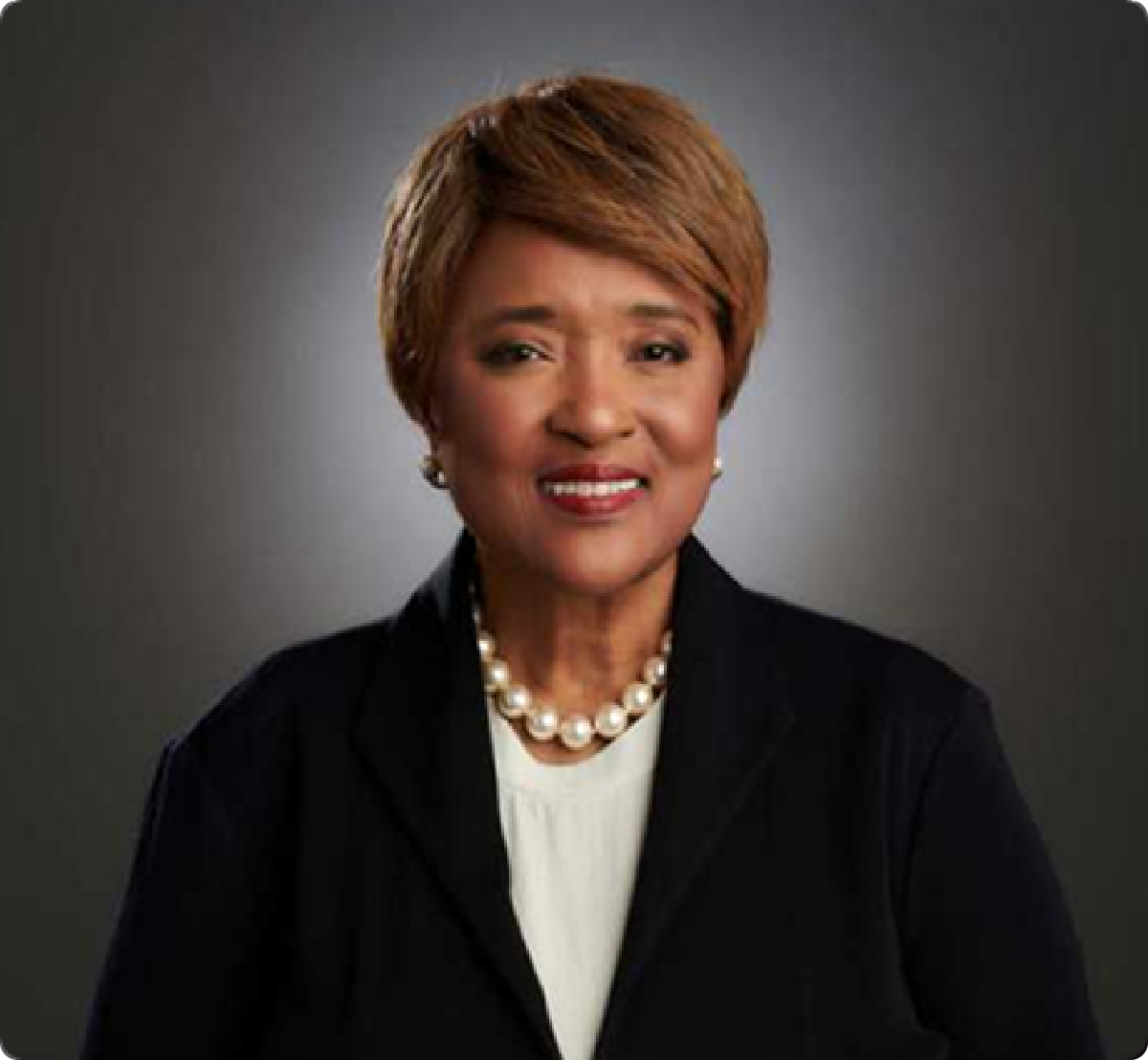
Meet Community Member
Mary A. Pittman, DrPH
Emeritus President and CEO, Public Health Institute


Host: Douglas Riddle
Curriculum Director, The Carol Emmott Foundation

Guest: Mary A. Pittman, DrPH
Emeritus, President and CEO, Public Health Institute
In this episode, Mary Pittman, one of the founders of The Carol Emmott Foundation and former president and CEO of the Public Health Institute, shares highlights from her remarkable career in public health, including Carol Emmott’s influence in shaping her career trajectory. Mary talks about the importance of building a network that focuses on building social capital among peers, the value of advocacy, real life examples of mentoring other women, and personal stories of her current interests in Italy and art.
Listen Now
Available On


Connect with:
Mary A. Pittman

Douglas Riddle
Transcript
Douglas Riddle (00:01)
Hi, this is Doug Riddle with The Treasure Hunt for the Carol Emmott Foundation.
I am thrilled to be able to have a conversation with a person who's become a dear friend, Mary Pittman, who has been really significant in the life of the Carol Emmott Foundation and in healthcare generally, especially in California. Mary was involved from the very beginning as a friend of Carol's.
I remember our very first meetings. You were coming in and out and were there kind of wondering about why we had this old white dude as a facilitator for a women's program. That was great. And we've worked together quite a bit over the years.
Let me talk about you for just a minute. Mary's CV is incredible, and I encourage people to take a look at it. I remember 2023 when Mary was honored as one of the top women leaders in healthcare through Modern Healthcare.
Obviously, you most recently retired as the head of the Public Health Institute, where you got to further your interests in research and making a difference.
And I understand you were there for about 16 years. And I hope we get a chance maybe to talk about some of the programs that you instigated there, which were really inspiring.
For our conversation, I also hope we get a chance to talk a little about your involvement with a group of very senior healthcare women that you've been involved with, The Health Alliance, for, I think it said, 32 years that you've been a part of that.
So networking and how that makes a benefit to women leaders, I think is one of the things we'll want to get to.
For 14 years, Mary was the president of the Health Research and Educational Trust of the American Hospital Association formerly.
Mary Pittman (01:39)
Right.
Douglas Riddle (01:55)
Head of planning, evaluation, and legislation at the Public Health Department in San Francisco. Mary's work with the Public Health Institute was recognized multiple ways.
On the three times that you applied for best places to work, top 50 in the nation, you got that designation every single time.
Mary Pittman (02:17)
Actually, we got four times. Need to upgrade my CV.
Douglas Riddle (02:24)
You've been involved in supporting my work before you ever knew me.
One of the things that you did with Carol Emmott was that you arranged, you helped start the when she started the California Health Care College, you helped arrange for scholarships, six scholarships every year through the California Health Care Foundation, and I was a facilitator one of the co-faculty for the California healthcare leadership, which is how I met the person who brought me to Carol Emmott, the fellowship as well.
So you were involved with that and obviously with starting the fellowship.
So enough of that, there's so much to share about you.
You have such a rich life and I want people to kind of get a sense of all the things that they might want to chat with you about. But let's start out with some of this other. So let's go to the Health Alliance, maybe as a place to begin.
Can you talk a little bit about why that's important and how you see that benefiting women leaders in healthcare?
Mary Pittman (03:29)
Yeah, I certainly can.
The Alliance was started at a point in time when there were many, many informal and formal groups for men in healthcare, and a few of the women who founded it, and Carol Emmott was one of them, were given an opportunity by a male healthcare leader to network when he realized that he asked an informal question like, where do you go to network and who do you network with?
And the response was, well, we don't really have anything formal. And he gave a gift of some money to have a group of women go and see what a time together alone, looking at their personal and professional lives might mean to them.
Well, in typical top women executive style, they went, and they had a very detailed agenda, and they had presentations, and it was all work and no play. And then they realized that that really wasn't what he had in mind when, you know, looking at his group, they went, and they played golf, and they had dinner.
And they did a lot of bonding and a lot of networking and building social capital through that mechanism. So, over time, The Health Alliance has really, it's played two roles: a bonding role to connect individuals who are similar in the kind of work that they do and things like that, but it also bridged people who were different and might not normally come together.
What The Alliance does is it allows you to talk about your work. What's your passion in your work? What are challenges? And in a trusting environment where you can share things that you might not share with business colleagues, you know, day in and day out.
But it also allows you to talk about the other side of your life that you don't get an opportunity often to talk about in a work setting. And that's your personal life, your family, your friends, losses, celebrations, things that really make us whole people, and we have specifically focused on continuing to bring in people who add to the richness of the diversity of the group.
So by age, by geography, by their background, but their common area of interest is that everyone is a senior leader in health, in the health field but from different aspects.
That group it continues to amaze me, the power that it has to help reach out in a variety of silent ways and also explicit ways to support one another. Only one rule: you respond back when someone reaches out within 24 hours. The second rule is obviously anything that's said in the room is kept in the room.
Douglas Riddle (06:44)
Well, it's The Health Alliance and the relationship we've had with many of you has paid off for the foundation as well, and it did shape my own thinking once I got to know you about our own curriculum for the fellowship. And so it's been very influential that way.
And I understand that a number of Carol Emmott fellows found out about The Alliance through the foundation, through the fellowship and have applied and been accepted as members for that. I think it continues to be an important piece for us.
For you personally, how did you get involved? Were you part of that first group that first met or did you come in through invitation later?
Mary Pittman (07:22)
Yeah, I wasn't in the first group and I was actually invited in by Carol. So my relationship with Carol, I worked for her when I was at the San Francisco Health Department, and she was influential in shaping my career.
That was fairly early in my career in public health, and then when Carol left the health department to go start up the California Association of Public Hospitals, it was a civil service system I applied, but I was selected to take her position at the health department.
So it was like stepping into Carol's shoes. And the nice thing is Carol hadn't gone that far. So I had a mentor who was supporting me as I took on what was a much larger role than I had been playing.
And then, when Carol decided to leave, and I represented the hospitals at the California Association of Public Hospitals, along with the hospital CEOs, when she left to go into search, I was asked to apply for that position and was selected to once again follow Carol into the president of the California Association of Public Hospitals. After I had run the association for a few years, Carol invited me to join The Alliance.
Douglas Riddle (08:50)
Okay, so you earned your stripes and then got the benefits. Good for you. Good for you.
You've been, I know we've talked quite a lot about your role and your thinking about advocacy. And, you know, as the political climate and social climates change, advocacy for positions that are not the, you know, dominant ones become more and more important. Can you talk to us a little bit about your own thinking about the value of advocacy and what that looks like for different people?
Not everybody feels comfortable standing on a soapbox, which is not your style either. But there are ways we can advocate for more just healthcare. Can you talk a little bit about that?
Mary Pittman (09:34)
Absolutely. And sometimes, I have stood on the soapbox, but I learned pretty early in my career when I was in the health department. I had responsibility for our policy and legislative affairs. So I was working with the lobbyist in Sacramento, and I had staff who were working day in and day out on policies, and it was a really critical time.
It was during the beginning of the AIDS epidemic, and what I very quickly learned is that advocacy occurs at many different levels and that all of those different forms of advocacy are necessary if you want to make big change happen. You can do little change by having an expert who may be able to go and testify in front of elected officials, and you'll get a little tweak. But if you want a social movement, or if you want big social policy changes to happen, you need to have more than the elites, and the groundswell of grassroots activists often need some ties to the elites to be able to get their work done as well. So.
So, my lesson was one: You have to understand what the political and the legislative process is. If you want to do that kind of formal advocacy work, you can't stumble in. You have to follow the process and procedures.
So when I first started working with the Carol Emmott Fellowship, I realized after talking to the first class of fellows that none of them had ever had any experience in Washington or in the policymaking arena.
So I was really gung ho on we have to at least teach them what the appropriate policy procedures are, introduce them, demystify how things get done in Washington.
And I think that was a great advantage. But then what we learned is only a small number of the fellows were really going to go to Washington. What they needed to understand were those other elements of advocacy. Advocacy within their own system, within their own community.
And so I think that wisely, the curriculum and the approach to advocacy shifted. I've had the opportunity to really lead some major advocacy efforts that have been successful, and I take great pride in that. And then there's some that have gone nowhere. And so you don't always win, no matter how carefully you lay out your plan.
And I believe that what we've seen is a shift over years from the elites who are elected shaping all the policy now; I think that's something that changes depending on the historical context and who's in power. But I think we've seen an increase in community engagement to say wait a minute, we want to have a voice. And I think that that's so important to democracy, to be able to encourage and cultivate the local community voices and to groom people to be leaders so that they can be engaged in the process.
Douglas Riddle (12:59)
One of the things that I've learned a lot from watching you over the whatever nine or so years that I've had the opportunity has been that you bridge both the great strategic stepping back, looking at the big picture, all the pieces in something, as well as focusing on the details, something you can make a difference.
And one piece of that that I thought is particularly interesting is I look at how, especially in the Public Health Institute, and maybe you did before, the importance you placed on strategic partnerships to get things done.
Can you say a little bit about that, and particularly if you can maybe mention some specifics that would help us think about how you, how do you actually think along those as an institutional leader?
Mary Pittman (13:39)
Yeah. Well, first of all, I learned early in my career, you know, for example, back to the health department, I learned that I did not have enough real knowledge of the impact of HIV AIDS on the individuals who were living with it every day. And so I needed to partner with them, first of all, to get the knowledge because the knowledge didn't exist. And I think often that's the case.
We don't truly know clearly enough what's contributing to the problem or issue that we're trying to implement some change or to facilitate something.
And so, you know, for me, strategic partners included people who have complementary strengths or complementary knowledge to what we have. I don't think of them in power dynamics, that there's someone who has more power, so I need to strategically align, although that's something you need to think about.
I start with what is it that we are bringing to the table that will complement and advance both parties. And I think I've often looked at if we have aligned values? Because that's really critical to having a partnership really succeed over time.
You know, you also have to take a look at reputation and credibility. However, I would caution that you have to be really careful and dig a little deeper. ACT UP was an activist organization that was viewed as kind of a third rail. And when I was working in the health department and their job was to push back and to get things done.
And so I found that it was more useful for me to, even though their reputation was, they're hard to deal with; I found that when you invited them in, and you gave them a space to say what I thought was a really important message, that you could forge a really effective partnership.
So, you know, I always look for who are some of your unlikely suspects that could be partners as well. But it has to be something where there's mutuality, where both are going to advance. And I think trust above all else is what sustains partnerships.
You may not go in with a full trusting relationship, but if you can't build that, it's not gonna go there.
Douglas Riddle (16:23)
Yeah, has to be built.
One of the great benefits of knowing Mary Pittman for me has been that when people that I know, especially young people who are trying to get started in their careers, are interested in something related to public health, which I've had a number of those, I know that I can send them to you. And you've been great. You've been such a great sponsor and mentor to these young people who are trying to get started with information and support.
Can you talk a little bit about your own thinking about mentoring, sponsoring, and what kind of a role that's played for you in your career?
Mary Pittman (17:02)
I have been fortunate to have had some mentors, including Carol and several others, during my career, so I really valued having an opportunity when I was young in my career to help other people find little openings that they could step through that would advance their career.
But I also found that mentoring was sometimes not just technical advancement. For example, when I went to the American Hospital Association, I had a number of young women who were already working there, and I was seeing them leave when they had children, and I saw this terrible loss of talent and said, we need to do something to continue to support the women who are here.
I recall there was a person I was trying to recruit, and she was expecting a child, and she said, you know, I don't think I can juggle this. And I said, well, let's see what we can do.
And we did a part-time work opportunity for her, which wasn't the norm at that time. That was, you know, back in the very early nineties. And I also put a little office as a breastfeeding and resting room, which, you know, didn't exist, it wasn't something that was sanctioned. And then, I found women from all over the organization coming and asking if they could use that space.
Previously, women, if they were breastfeeding, had to pump in the ladies room, which was really unacceptable. So, even finding little ways that you can make work life easier for women to me is a form of mentoring. It's a form of helping them see how they can advocate for themselves and find people who will support them getting ahead in both their personal and their career, personal life and career.
And I look for people who have curiosity and spark and often try to help them develop what's really their passion. They may not be in the perfect job for them.
But once you see what drives people and gets that spark and that creativity going, I enjoy working with, you know, mentoring to help them get into that right position to be able to advance that real passion area, and that's, I'm passionate about public health. So when you send me someone interested in public health, I go the extra mile.
Douglas Riddle (19:41)
Well, that gets them very excited too as well as seeing possibilities they might not never have thought of. And I do think, you what you're sort of describing, breaking the walls between the personal and the career, you know, we're just human, and it's quite astonishing what can happen if you decide people don't leave their humanity at the door of the office when they come in, which is what I'm hearing you do. I think that's remarkable.
Mary Pittman (20:10)
Exactly.
Douglas Riddle (20:14)
Why, you're involved in governance as well. You've been on the board of the first board that we have at the Carol Emmott Foundation. You're on other boards and including other organizations. Why does somebody want to be on a board and what can you, what advice can you give to women leaders, especially who might be, who might think, that sounds like a good thing? Do I want to do it?
Mary Pittman (20:39)
Well, first of all, I love governance, and I think it's important, and I value it, and so I've kind of been a student of boards and governance throughout my career. How can you make it better? Make it better for the board members and make it something that's mutually beneficial as well as really how can a board make an organization so much stronger?
But I've also recognized that we haven't had parity on boards. And I'm not talking just about corporate boards, and I sit on one small, you know, for-profit startup company. But, you know, several of my colleagues have served on large Fortune 100 companies.
You know, initially many of them were the only women on that board. And while we've made some progress, we're still nowhere near parity on boards.
I think if you don't groom people and teach them what the possibility is to make a contribution through a different mechanism, through governance, people often don't think, well, I'm not someone that they would select. But I think you can raise that awareness, and I know that we've done that in the Carol Emmott Fellowship, and I think that's a great contribution.
It's sometimes challenging for people to serve on boards if they are not given, again, the right kind of orientation, and they don't feel like their talents are being utilized. A couple of colleagues were put on boards to be the token woman, but yet they were not given the real opportunity to have their voice heard, and so I think that.
Douglas Riddle (22:28)
I heard you and your husband bought a home in Italy. I immediately thought of the movie Under the Tuscan Sun. Is that the kind of experience you're having?
Mary Pittman (23:00)
No, and actually, it's not in Tuscany; it's in Verona. My husband and I bought a place. Now you have to let go. But you can think of the romantic city of Romeo and Juliet instead, okay?
No, I had actually studied in Verona when I was in college and fell in love with the city. It's one of the smaller cities but a beautiful, charming place, and I established a community and a network, speaking of which, while I was there, that I sustained over 30 years.
And when Dave and I had this dream, or I had the dream, and my husband embraced it, to try to find a little apartment or something that we could go to in Italy, and friends found this wonderful house just across the river from the old section of Verona, and Verona is known for its summer opera in the best-preserved Roman arena in Italy. And I go there because I so enjoy art and music and we're right near the mountains and the lakes, and it's just a totally different place where I can really relax and find new areas of my brain to explore.
Douglas Riddle (24:26)
That's so lovely. I have one final question. Just I'm thinking about people who are watching our interview and who might be interested in getting to know you more. What kind of questions would you welcome from people, members of the community that you think would be interesting to talk about or subjects?
Sounds like Italy definitely might be one. Art is clearly another one, but there may be other professional other things. You've covered so many things in your career.
Mary Pittman (24:55)
Gosh, on a professional front, really think that community building as a tool to have greater equity in our healthcare system and also how the social determinants of health.
I know that phrase is used over and over again, but how we need to pay attention to the non-medical aspects of our lives that contribute to whether we're healthy or not. That's something that I've worked on my entire career and I'm passionate about and continue through the National Academy of Science and Medicine with a round table on population health to explore.
People could also ask me about what's it like to be a mother and juggle different demands on your life. We have three adopted children who are now adult children, but it was challenging, and I think it's improved some for women, but certainly, there's still a long way to go.
And I would also be open to any sort of conversation about how can we as women really exert our leadership and influence in every sector of our life. I believe that leadership is something that we all have in us.
And it's, we were talking about gemstones before. It's often a gemstone that is a little bit in the rough, but with a little bit of work, you can really make your leadership shine.
Douglas Riddle (26:30)
Thank you, Mary Pittman. It's been a delight, and I look forward to our further conversations, but this will be enough for today, and I hope you have a great time and enjoy your place in Italy as well as your lovely home in the Berkeley Hills. Take care.