INTERVIEW SERIES
Meet Community Member
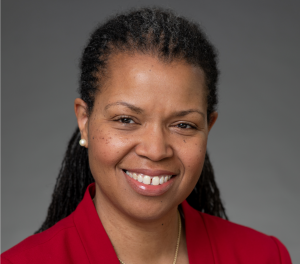
Monica Davy
Senior Vice President and Chief Culture, Belonging, and Impact Officer
Vizient, Inc


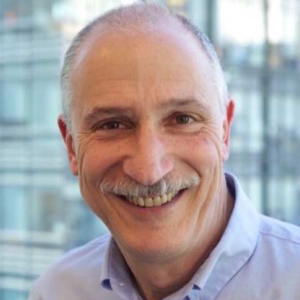
Host: Douglas Riddle
Curriculum Director, The Carol Emmott Foundation

Guest: Monica Davy
Senior Vice President and Chief Culture, Belonging, and Impact Officer, Vizient, Inc.
In this episode of The Treasure Hunt, host Doug Riddle talks with Monica Davy, Senior Vice President and Chief Culture of Belonging and Impact Officer at Vizient. Listen as Monica reflects on the motivations that led her to law school, including inspiration from an unlikely and unconventional source: her great-aunt’s love of soap operas.
She candidly discusses the importance of self-reflection and awareness of external pressures in career choices and highlights how she encourages her own children to pursue their passions authentically.
You’ll also hear about her transition from traditional legal work to conflict resolution, as well as what led to her current focus on belonging and culture.
Drawing on her rich experience at the Food and Drug Administration and the Internal Revenue Service, along with her long-standing commitment to social justice, Monica emphasizes the need for fairness and equity in healthcare. She offers perspective and insight into creating a system that delivers for all stakeholders.
Listen Now
Available On


Connect with:
Monica Davy

Douglas Riddle
Transcript
Dough Riddle: (0:10)
Welcome to The Treasure Hunt.
Monica Davy, the Senior Vice President and Chief Culture of Belonging and Impact Officer for Vizient, is with me for a conversation.
She's an attorney by training and a graduate of Howard University Law School. She's led important work for the federal government in the Food and Drug Administration, the Internal Revenue Service, and the National Credit Union Administration, focusing on equal opportunity in employment, civil rights, alternative dispute resolution, and supplier diversity.
She represents Vizient in the Carol Emmott Collaborative, and I'm happy to welcome you, Monica, to The Treasure Hunt. I'm not the only member of the Collaborative who has appreciated your clear and helpful perspective on our work to bring fairness to healthcare leadership. I know you practiced as an employment attorney for a while. Can you talk to us about your choice to go to law school?
Monica Davy
So this decision to attend law school started at the age of five.
My family tells me that back then, I probably have some memory of it, I was one who always loved a good debate, loved to argue, right? Loved asking and answering questions. I have a not-so-glamorous beginning to this idea of being an attorney.
I grew up in Baltimore, and I had a great-aunt who babysat me before and after school, and probably in the summer when my parents worked, and she was an avid soap opera watcher. There was a particular soap opera that she loved, and it was called Guiding Light. I grew up watching the soap opera, and there was a lawyer on there. His name was Ross Marler, and I loved watching him in the courtroom.
Really, it started at that age of being exposed to that because I didn't have lawyers in my family. My parents didn't attend college. So it's not like I had a lot of exposure to that profession around me anywhere in my neighborhood, in my family, in my church. It was only through media.
And so, pairing that with what I thought I could do well, it started my desire to go to law school. And Doug, you know, it's funny, when I finished college, I had been saying all my life that I wanted to go to law school. And I had to ask myself, are you going because you said it?
Or do you really want to be a lawyer? And I will tell you, probably a higher percentage of me going was because I had said it all my life.
I don't regret one minute of it. I love the skills it taught me from going to law school. I love the way it taught me how to think, how to read, and how to analyze. So I don't regret it. But I do think that a larger part of me going to law school had more to do with me saying I wanted to be a lawyer than with really having that desire post-college.
Dough Riddle (03:15)
I do sometimes worry when our five-year-old selves have chosen our vocation without further reflection. So, as you said, you get to that point where you need to ask the question again.
Monica Davy
I have three college graduates now, and my youngest just graduated from college. She's been saying all her life that she wants to be a dentist. And I'm forcing her to answer this question: Do you really want to be a dentist still? Or is it just something you've told yourself your whole life? So take some time to make sure, because it's an expensive choice when you decide you want to go to law school or dental school.
So I'm pushing her to do the same thing. I didn't have that push. So that was another factor for me. Everyone in my family was pushing me to go because I said I wanted to go and because no one else had done it. So I had that extra pressure, too, in my family: Monica's gonna be a lawyer, and did I want to disappoint people, right? Wow. I'm just letting my daughter know no one's going to be disappointed if you make a different choice, but make sure it's a choice for you and not for other people.
Dough Riddle
That's so important. So, you worked in the government sector for quite a while, IRS, FDA; these are important. How did you know it was time to move to the private sector?
Monica Davy (04:16)
I'm a recovering lawyer. I spent the first 15 years of my 26-year government career at the Department of Health and Human Services. I was an employment lawyer representing the government when employees filed claims against HHS. I struggled with that a little bit, because I attended Howard University School of Law.
At Howard, you are told that no matter what you do after you graduate, you are a social engineer for justice. We were all social engineers. So, going into HHS as an employment lawyer, what gave me comfort was that I could choose whether to litigate or settle the case, and whether a leader or manager needed to be corrected, disciplined, or given guidance based on their actions. But I found that I struggled with the fact that I was doing work after something had happened.
I was defending the government after something broke down, either in someone's performance, communication, or leadership style. So that's why I made the transition from law to conflict resolution at the FDA and then eventually into the diversity space.
It was then I realized that a little bit of time I spent in conflict resolution, a lot of times people are in conflict because they just don't understand how to operate with someone who's different than them. And that's where the diversity work comes in.
But then I was able to proactively go into the diversity, equity, and inclusion space and in government, and work on creating spaces and environments where people understood and valued differences, and how to lead people who are different from them.
And so I did that work at the FDA, at the IRS, and then in the National Credit Union Administration for the next 11 years of my federal career. And it was at the end of 2020 that I was approached by a recruiter looking for, at the time, a Chief Diversity Officer for Vizient.
I had never heard of Vizient; I didn't know a company like Vizient existed. And when I say a company like Vizient, I mean an organization focused on improving health care for multiple communities and making it more accessible.
[They focused on] improving, whether it's improving health outcomes or making hospitals or non-acute care facilities run better. I had a son who was born with cerebral palsy and kidney failure, and I spent almost all of his life in the hospital system. And so the idea of a company dedicated to improving the patient experience and the family's experience of that patient was really intriguing to me.
The other thing that attracted me to Vizient was that I had spent the last few years at both the IRS and the National Credit Union Administration, trying to get the government to realize the importance of culture.
You do all this work to create a space or to go after people who think differently, who come from different backgrounds, or have different perspectives. But if you don't have an environment where people feel like they can be heard, where they're valued, where they can thrive, if you're not looking at your systems and the way you make decisions, which is what culture is, then that talent is going to be a revolving door.
You're going to spend all this money and energy getting diverse talent in, and they're either not going to stay because you don't have an environment where they can thrive, or you don't have a system where they can have equal opportunity to go through their career.
So I love the fact that Vizient, when they first recruited for this job, was looking for someone who was focused not only on what we now call belonging, but also on culture. And they saw the value of focusing on culture, and that's what really attracted me to that role.
Douglas Riddle (08:25)
That makes sense. I also love the way you framed your vocational calling as a point of intervention in a situation. And I think that's a really interesting and useful distinction about the legal profession. For most of our interventions, in fact, we devote quite a lot of resources to coming in to fix, punish, whatever, change things when stuff is done.
It's very expensive, isn't it?
Monica Davy (08:56)
It is very expensive. And again, that's what really attracted me about this Vizient role and Vizient's commitment, not just to bringing in people who thought differently and had different skill sets. Still, they realized you have to intentionally build a culture that you want if you want to be successful in whatever industry you're in. Culture, I know we'll talk more about culture later, but that focus on culture, I think, was really important.
So my calling was: I got a chance to start here, defending how people react, whether it's good or bad. How do you make sure you get different people in? Because we know that people who think differently, and when you have teams made up of people who think differently and have different backgrounds, they have better outcomes. To, well, what kind of environment are you putting those people in when they get here? And that was, so that's been an evolution of my career.
Douglas Riddle (09:49)
That's really key, isn't it? And it's key to the work we're all doing on fairness, because obviously it's one thing to have people with some diversity of thinking, background, that kind of thing. But if you're not creating an environment where they can maximize their own ability to have a voice, to speak up, to be heard, to be a part of that, then that's not going to work very well. That's kind of undergirding what you're saying.
Monica Davy (10:14)
That's right. And at most people's core, they want to be fair, Doug. They do. They want to be fair. That's why you can't just look at whether you or I have a bias. Because even with our biases, we desire to be fair, but our biases override our desire to be fair. They do because they're just deeply ingrained. That's why you have to look at your systems.
And that's what's so important about the culture work that you're looking at, again, how decisions are made. How are you interviewing people? How are people moving through their career trajectory? Those are the systems that you can't debias in my brain and in your brain, but you can debias a system. And that's where the whole fairness piece comes in.
Douglas Riddle (11:01)
That makes a lot of sense. So part of your title is about belonging, and you've discussed it in terms of culture. I've heard you speak of a culture that promotes a sense of belonging. Can you talk a little bit about what belonging is and how we measure that?
Monica Davy (11:19)
For me, belonging is when a person believes, feels, and experiences the fact that they're valued and that they can contribute to an organization. And the way you measure that, the way we measure it, Vizient, we use a practical way that we measure it, is through a survey tool. We ask questions. And we don't ask people, Do you feel like you belong? I mean, we do. We do ask that. But that's not enough, because everybody has a different definition of what that means. We ask, Do you feel empowered to make decisions? Do you feel valued? Do you feel part of a team? Do you feel that your leader leverages your skill set? And we take all those answers to all those questions, and we come up with a belonging index. And that's how we measure belonging, specifically at Vizient. But it's about how people feel a part of an organization, and then you want something more concrete than that.
What is the effectiveness of that person in getting their job done, and their effectiveness in contributing to the team, and that team's effectiveness in achieving business outcomes? Like all of those ways that you can measure belonging.
Douglas Riddle (12:39)
Yeah, you know, belonging is a funny concept because, beginning certainly in school, and I think elementary school, it becomes heightened even more in the middle grades, and this sort of thing. There are a lot of interpersonal dynamics that affect that, as well as these kinds of structural and cultural ones. And I think what you're saying in terms of the specifics of the kinds of belonging that you're talking about becomes critical in a business environment, doesn't it?
Monica Davy (13:10)
Yes, absolutely. And I think that's where it starts, and I'm excited about the work we're doing at Vizient now. You can increase belonging and your employee base when people understand where you're going as a company and as an organization. So that your mission, your vision, your values, your strategy, those aren't just words on paper. If someone can see themselves in how they can help Vizient accomplish its mission, I can see how my work fits into the strategy. I can see that the values at Vizient are lived by its leaders, and it's something that I can practice. It also contributes to my feeling of belonging. So I think in my role, making sure that I'm working with marketing and brand with the chief strategy officer, on the language we're using around our strategy, our mission, and our vision.
My interest in that is, do employees feel like they can connect to that? Because if they feel like they can connect to it and they have performance goals around how they're going to help Vizient accomplish it, that is going to significantly contribute to belonging. Almost as much as I feel secure and psychologically safe, and that my manager sees me and values me, and that I can make decisions. So, I believe all of those pieces contribute to belonging.
Douglas Riddle (14:37)
Wow, yeah. So it sounds like the credibility of senior leadership and the consistency of action and language become fundamental to this. Do you want to say more about that?
Monica Davy (14:55)
Absolutely, you know, we're going through some work now to refresh our values, and it's so critical that, whatever our values are, our leaders are exhibiting them. So you have to recruit for those values, you've got to interview for those values, and you have to hold people accountable through your performance cycle to those values.
Because again, if they're just words on a wall, and we can do that very beautifully, put our values up on a wall, put it on a brochure, if our employees aren't experiencing it through our leaders, then that's going to negatively impact their engagement, their connection to the work, and therefore their belonging.
I think it's really, really, really important that leaders understand and see this as part of their job. I think one of the biggest mistakes we make is calling it 'soft skills' for leaders. That's like nails on the chalkboard for me when I hear somebody say soft. They're not soft skills. Whether it's client-facing or money-making, all those things that we think are the most important.
If you don't have people who are facing the clients, if you don't have people out there who are selling or serving as your brand ambassadors for what you're trying to contribute to the industry, then you're not going to be successful as a business. So these are critical leadership skills. They aren't soft skills for leaders. And I believe it should be your primary role as a leader to make sure that people on your team and those you are leading feel engaged, included, and like they belong. That should be almost the number one response.
It's the responsibility of any leader, because you're not a leader if no one's following you. You're the reason why you're called a leader. It's because we're putting people within your responsibility. So again, I think the mistake that we make is that we consider that either secondary or fourth or fifth on the left on the list of responsibilities for a leader. It should be a primary responsibility for a leader, and I think many organizations make that mistake.
Dough Riddle (17:06)
Right, absolutely.
So, Vizient's mission is to improve the performance of healthcare organizations. I don't have the right language exactly, but I think that's the fundamental idea, correct?
Monica Davy (17:19)
It is, but I will say stay tuned for that because anybody who's listening to this later, we're launching a new mission soon. It's still related to making sure that providers can deliver better healthcare. That's what performance improvement is. We just felt like we needed to be clearer in that, but stay tuned for the new stated mission and vision for Vizient.
Douglas Riddle (17:26)
Alright! Great, I'm happy to have given you a chance to make that clear too.
Connect for me the culture within Vizient, what you are aspiring to, and what you actually see around you: the purpose, the mission, as it were, of the organization.
Monica Davy (18:00)
Again, what we are focused on is making sure that providers, our clients, can deliver healthcare better. That they can do it in a more affordable way, in a more efficient way, in a more data-insight-driven way.
Our expertise is critical to being able to deliver on that mission. Our data insights are critical for us to deliver on that mission. And so if we want to have the best experts, and we want to be the trusted guide for our clients and for providers, we have to make sure that the talent we recruit and those that we are putting out there as experts, that they can work in an environment where they can come up with the best solutions for providers and for our clients.
That's where culture comes in. We have to create an environment where these experts that we're putting out there can thrive, where they can work across business units and come up with the best solution for our providers.
And in order to work across the organization, you have to have a culture that supports that. It can't be cutthroat. It can't be about just getting my numbers and me selling what I need to sell. It has to be about whether delivering what's best for the client or for the provider. That has to be the sole purpose and the sole focus. And we have to create an environment where people can work together to get to that. Our data has to be spot on. And it has to be something that our clients and our providers can trust.
That all ties back to how we make decisions. What are our systems? Do we have the best people working in this space, and do they feel like they can work together? And then, do we have diverse minds, people from diverse backgrounds coming together to come up with solutions for the healthcare system's most challenging problems?
Douglas Riddle (20:09)
Right. Well, I appreciate the way that you described the connection between the internal culture. This is something I know I've believed in forever, and it is really important. But I also know, out of decades of working with companies around the world, I found very few companies have had the alignment or the clarity, the logic map, if you will, about why their own internal functioning affects the way they're experienced by their clients.
I think your description was very helpful in that. And that also helps it kind of segue into, you know, you've been such a great contributor to the Carol Emmott Collaborative, and I really appreciate that you've provided a lot of insights and perspectives that have been enormously helpful. I'm curious about the other side. I know how you're contributing to the Carol Emmott Collaborative and the other members of the organization, but how has the Carol Emmott Collaborative contributed to your work?
Monica Davy (21:12)
So I would say in three ways. Having a space dedicated to people who are doing work like I'm doing is phenomenal to be able to come into those spaces, and you all create both in-person and virtual spaces where we can collaborate. You can't put a dollar figure on that, Doug. I come away from, especially our in-person meetings, because I'm an extrovert and I love to be around people, but I always come away from those meetings extremely energized and charged, and I feel equipped to go back to deal with some challenges that I'm dealing with.
Sometimes it's just the mere fact that other people are dealing with the same challenges that I'm dealing with, and we can come together and talk about it. That is invaluable. I love that.
The other thing that I get from the Collaborative is the insight that you all bring together for us.
The insights that you have about what's going on in the industry, what's going on in the spaces, what's going on collectively among all the members who are there have been phenomenal. And I bring those back, them with my team, share them across teams.
And then the thought leadership that you all bring. You all bring in phenomenal speakers. You give us phenomenal resources. There have been some great books that we've delved into and speakers that you brought there. So I love the fact that I get to do that.
In the years past, you all have taken the data of our representation, just what we all look like, and we can compare ourselves to how other organizations are doing. I love the fact that we were able to do that. So I love the fact that I get to be a member of this collaborative, and I look forward to the continued value that you will not just bring to me as a professional but that you also bring to Vizient.
Douglas Riddle (23:05)
Thanks for the feedback. It means the world to us.
We have only a minute or two left. I'm curious. I know that you have some commitments. I know to your kids' school, for example, you've been on its board. I know that also, though, for a long time you've been involved with the National Kidney Foundation. Would you share a little bit about how you got involved and why that's so important to you?
Monica Davy (23:27)
Sure. My son, I think I may have mentioned this earlier, was actually born with kidney failure. And I donated a kidney to him when he was three. He had that kidney for seven years. He was on dialysis for a very long time before getting another kidney. And then my husband donated a kidney to a stranger in what's called a paired exchange.
We call ourselves the One Kidney Club, like the three of us all walking around with one kidney. And the National Kidney Foundation is an amazing organization that's not just dedicated to educating people about how to protect themselves and take care of themselves so they don't end up with kidney disease. It is also focused on innovation and research in the kidney space.
And it's involved in how to increase living donors, which my husband and I both are. So it's an organization that's near and dear to my heart personally because of what my family has gone through. But one that I just believe in because I don't think people fully understand, and not to geek out too much, how important the kidney is to your body.
The kidney is critically important, and it's not easy. I don't want to underestimate it, but if you are aware early enough in tracking your kidney health, it's something that you can do to preserve your health.
There are things that you can do very easily to preserve kidney health, like just eating better, watching your weight, staying away from the food that you're attracted to, and drinking a lot of water. There are really things that you can do with enough knowledge to prevent one from going into kidney failure. So it's something that's very, very, very dear to me.
Douglas Riddle (25:12)
That's wonderful. Thank you so much. Well, I always love these conversations with you. The in-person ones are especially fun.
Your involvement has been such a gift to us. And thank you for joining me here in The Treasure Hunt, and I look forward to the next time we get together.
Monica Davy (25:33)
Thanks, Doug.