INTERVIEW SERIES
Meet Community Member
S. Monica Soni, MD
Chief Medical Officer, Covered California


Host: Douglas Riddle
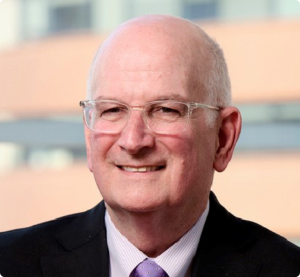
Curriculum Director, The Carol Emmott Foundation

Guest: S. Monica Soni, MD
Chief Medical Officer, Covered California
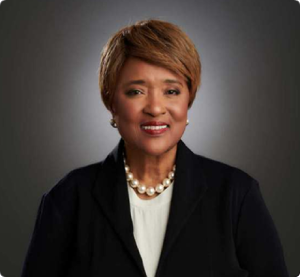
In this episode of The Treasure Hunt, host Douglas Riddle welcomes Monica Soni, the chief medical officer of Covered California and Carol Emmott Fellow, Class of 2023. With an impressive background that includes leadership roles in major health institutions and a teaching position at UCLA, Monica shares her insights on the evolving role of a chief medical officer, particularly in the unique context of a state health exchange.
Their conversation delves into the importance of visibility and effective communication in healthcare, discussing how Monica's experience in the Carol Emmott Fellowship has transformed her approach to leadership and public engagement. Tune in to discover how she navigates the challenges of serving a diverse population while advocating for quality and equity in healthcare.
Listen Now
Available On


Connect with:
Monica Soni

Douglas Riddle
Transcript
Douglas Riddle (00:02)
Hello, welcome to The Treasure Hunt. I'm really pleased to welcome our friend Monica Soni to the studio. Monica is from our Fellowship cohort CEF7 and a Carol Emmott Foundation Scholar for 2023. She's also the chief medical officer of Covered California, chief deputy executive director over the Health Equity and Quality Transformation Division. Before that, she was chief medical officer at New Century Health.
She's also served as director of specialty care for the Los Angeles County Department of Health Services, which is the second largest municipal health system in the nation, and director of continuity care for Martin Luther King Jr. Outpatient Center.
She's really smart, as you can tell, an associate clinical professor within UCLA and Charles Drew University Departments of Medicine. She graduated from Harvard College, attended Harvard Medical School and completed her internal medicine residency at the University of California, San Francisco.
She’s currently a board member for Mercy Housing California, as well as prior commissioner for the County of Los Angeles Hospital and Healthcare Delivery Commission. And I'm sorry, we have no more time for questions now.
Monica Soni (01:16)
It does sound impressive when you say it like that.
Douglas Riddle (01:18)
Doesn't it? And also I give it the full voice here. It's such a delight to see you, Monica. We enjoyed last year's symposium with you and Palav- it was wonderful and obviously you always bring light to every situation. So it's just a delight to have you in the studio today. You became a Carol Emmott Fellow in the 2023 class. How did that experience shape the work that you do now?
Monica Soni (01:47)
Well, I will say that, Doug, it's something that you said that actually, I think really transformed how I approach my work now. So I was not even in this role at Covered California when I started the Fellowship, but we did a fair number of sessions around both voice and visibility. Now I will say, I don't think I've ever had a challenge with my voice, but visibility was something I frankly just didn't think was that important, right? I was a heads down physician leader doing clinical operations, very mission driven. And that was all that I thought that I needed. But really in dialogue with you and the other faculty, I started to think about, look, we're learning a lot of lessons, good, bad, and ugly. It could have ramifications and implications for others. How do you actually get the message out? And so spending time with you all to think about: What does it actually mean to have a meaningful social media presence? How do you write more? How do you actually do a little bit more of the public speaking circuit? It has really impacted how I approach my role now.
Probably a third of my time in Covered California is spent with external engagement and trying to amplify the amazing stuff that's going on and the 1.8 million people that we serve and what they're telling us and the lessons we're learning directly from them.
Douglas Riddle (02:55)
That's really interesting. Actually, that was one of the things I was curious about. The CMO role, Chief Medical Officer, is one that many institutions have all over the country in different disciplines. How is the chief medical officer role in Covered California different from that, say, of a health system?
Monica Soni (03:15)
Yes, it's pretty different. I'm actually the only physician at any state-based exchange or the federal exchange either. The role doesn't even exist in other marketplaces, which is a little bit interesting. But I will say, California likes to think that we're the best at all things and a little bit forward thinking. And so I'm not even the only clinician at Covered California. I have a team of other physicians that work here and it is pretty different, right?
We're not in the delivery, direct provision of services. Our immediate relationship is with the health plans that offer coverage for the folks that we are serving. But I'm very much in the space between what we know is evidence-based care, access, quality, equity, and policy. And so that's the part that I think is super fascinating. I run a health informatics team. We have full claims from all of the health plans. And we serve a very distinct population. These are folks that mostly are working poor, frankly, in terms of the folks that we are serving - if they don't qualify for Medicaid, they, for whatever reason, don't have insurance through their employers, or they are unemployed. And so the way they utilize care, their needs are very distinct. So much of what I do is actually trying to serve as that liaison between what's happening on the ground, what I know is true as a clinician, wearing my clinician hat, and helping serve that up to policymakers, to legislators, to others across the ecosystem. And obviously trying to help our health plans do what I think is right for our members.
Douglas Riddle (04:40)
It sounds like a lot of the skills or competencies that you rely on have changed dramatically as you've risen through the ranks of leadership. Could you reflect a little on, you know, kind of that journey of what skills you apply to the work you do?
Monica Soni (04:56)
It's a great reflection and I think it's true. It is only now in this seat that I've thought about all of the different hats that I've worn. I spent a long time working in the county and I love the county deeply. I actually still see patients in the county every week. And you know, at times it was lean in terms of the resources that you had at your fingertips and the roles that you were asked to do.
I was doing informatics. I was part of deploying the electronic medical record. I was managing physicians and nurse practitioners. I was rolling out new programs and initiatives. I was thinking about substance use disorder and behavioral health integration. I mean, it was just sort of this hodgepodge of things that you were doing. For me, it didn't feel like that. It was all just about how do you serve the person in front of you and the way that they are asking to be served in an equitable way? But the truth was it was a ton of different skill building.
Monica Soni (05:44)
And as I moved out of the county and frankly, out of the delivery system, I started to realize like, gosh, I actually have done a lot of different things. Could I bring that voice? Could I bring that skill set into these other spaces? So, you know, this is the first time a full health informatics team has reported up to me. It feels very natural because I was doing all that work kind of off the side of my desk before. This is the first time my responsibility is primarily with the health plan, but I spent a lot of time rolling out programs in the delivery system to try to have transitions of care be seamless, regardless of who the payer source is.
And we spent a lot of time thinking about how do you measure quality and equity? It absolutely builds from my experience at the point of care on what actually matters. How do I not have a quality measure be a checkbox, but actually something that we think improves the health and wellness of people that we're serving?
Douglas Riddle (06:31)
Can you say a little bit about the structure of your reporting and your response? Your scope of responsibility and the number of people that then report to you?
Monica Soni (06:38)
Yes, for sure. So it's a relatively small executive team. So I report to the executive director of Covered California, who is a woman and amazing by the way; I really love my boss. And then there's a group of four of us that have sort of divided up the rest of the organization. Covered California really, if you think about it, was a startup in state government, right? We didn't exist until the Affordable Care Act, just a little bit over a decade ago at this point in time. And so we have a huge service center that helps support folks. We've got IT, we've got a policy team, et cetera.
Monica Soni (07:12)
We, the organization, really carved out a focus on quality and equity just about three years ago. And so that is really what I'm responsible for as part of the executive team. So once we get you covered, like what happens then? Do you actually get to see somebody? Is the care good or is it meeting your needs? All of that is under my purview and responsibility. So I have a director, I have that health informatics team. I have a couple of clinicians. It's a team of about 22, 25 folks that really are holding our health plans accountable again for the outcomes after you get your insurance card; what happens across the state from the top all the way down to the bottom.
Douglas Riddle (07:46)
Now are all of your folks on your team residents in Sacramento or someplace like that?
Monica Soni (07:55)
So the pandemic hit and everybody changed their approaches, including the state and government. And so it used to be that everybody was in Sacramento. With our hybrid workplace now, I'm still in Los Angeles and I had the flexibility to be able to hire folks a little bit more diversely. So now our team is pretty split. We've got about half of the folks in Southern California and then the rest kind of in Sacramento and the greater Sacramento area.
It sort of makes sense. Over 30% of the covered California enrollees are in Southern California. So I feel like actually it's been really helpful to have a more disparate presence physically.
Douglas Riddle (08:29)
That's great. You're friends with a lot of Carol Emmott Fellows, but one friendship in particular has been of note, Palav Babaria, who's chief quality officer of the California Department of Health Care Services. Can you talk a little bit about the value and the importance of that friendship for your work?
Monica Soni (08:34)
Thank you. Yes, she is like really, really my BFF. I mean, I have known her since I was 17. That is actually the truth. We went to college together. We went to residency together. And then we just sort of had these parallel pathways where we were working in different county systems, but facing a lot of the same challenges driven by many of the same things, unsurprisingly, given our kind of parallel pathways and upbringing. But now being both state employees and really having the same mission has been enormous.
She is definitely the big dog, right? She works for the Medicaid agency, which covers, you know, 15 million people across the state of California. Between what she has in her portfolio, what I have in my portfolio, and then we have a third counterpart, we cover over 45 % of all Californians. And so to actually function in true alignment, kind of this like incredible market power. We change what the health plans do. We change what the delivery system does.
So that shared mission has been amazing. And then to do this with a friend whom I love, care about, who brings me so much joy, who I could say anything to about anything in my life, has been so incredibly important to me. I mean, our conversations and text threads are kind of ridiculous, right? It will span from, should we go to Morocco in 2026? And then, hey, what's the statistical value of that health equity methodology? And like, can you help me recruit for a position? I mean, that's the kind of fluidity we have in our communication.
I wish everybody had somebody like that, frankly, in their workplace. It's made such a difference in my sustainability in this role, my impact in this role. And when there's something sticky, I always know I can pick up the phone and call someone who really gets it really down to the minutiae.
Douglas Riddle (10:30)
That makes me think about how you've talked about the kind of experience of burnout, I think is the word you used, that you experienced after, you know, leading the response to the COVID pandemic and addressing all the stresses that so many people faced during that time. And I'm assuming that the friendship with Palav continues to be, you know, a source of of strength. But I'm curious, what else have you learned from that, your own personal experience, that journey and what it takes, you know, what are you applying now?
Monica Soni (11:06)
I was just talking to somebody about those early days of the pandemic and you almost, you've almost erased so much of it. It was very traumatic for so many folks. You know, I think sometime we'll all need to come back around and do a little bit of work as to what that time was. You know, for me at the beginning of the pandemic, I was pregnant. I hadn't told anybody because it was super early. Everything was shut down. I couldn't even confirm that I had a viable pregnancy because my OB was shut down.
And I was going to work in the hospital that week. And I called just a couple of people to say, hey, I think I'm pregnant. Haven't had that ultrasound yet. What do I do about PPE? We didn't have PPE for, you know, the protective equipment for everybody. And they're like, that's up to you. Like the head of maternity and the head of infectious disease was like, you don't know. Like, are you going to leave service? I was like, no, of course I'm not going to leave service. I'm going to go and do what I signed up to do. And it was just, it was a very intense time.
Douglas Riddle (11:43)
Wow.
Monica Soni (12:03)
But I will say that wasn't the piece that burned me out. And I'm curious what the experience was for others, but for me, it was this incredible opportunity and responsibility. I had been working in the county for a long time, lots of barriers trying to get the high quality excellent care I wanted to deliver to folks. And frankly, the pandemic was kind of this free for all. There were no rules, right? There was money coming in federally and from the state.
It was a state of emergency. A lot of the stuff that had constrained you in the past no longer constrained you. And I was ready to work. Really, I was just ready to go and do what was necessary for the folks I had been serving. And it didn't feel for me at that time like my institution was maybe ready to invest in the same things that I wanted to invest in or that I felt were important for the communities that we were serving. And that was the part that felt the most demoralizing. That was actually the source for me of the burnout. And so I think about that a lot. I think about it here in my new role. We don't have nearly that level of intensity or pressure, but without that purpose, without feeling like you've got alignment between leadership, the others around you, the things that actually bring you to work every day, I feel like that is what erodes your desire to work and to be there.
Monica Soni (13:22)
I don't know if it's a translatable lesson, but I do think I spend a lot of time trying to think for myself. Am I being true to my values and ethics? Am I helping others do that too? What's making sure I understand what's important to these folks that either work for me or who I work for and how to bring that forward almost every day in terms of what we do. Like bringing the mission statement forward, bringing the vision forward, connecting the paper pushing activity back to that mission statement, back to that vision statement.
I feel like that's the most protective thing that I have found right now. It's not that the hours are less or that the pressures are lower; that's not what burned me out. It was again, the disconnect, the inability to deliver on what I thought was so important.
Douglas Riddle (14:00)
Yeah, that makes sense to me also. And I think that's a big challenge. Now, you, of course, in state government, have certain constraints on what you can do. You say you're responsible for an awful lot, a lot of constraints. Does that pose dilemmas for you also similarly in fulfilling that sense of your values and what's espoused? I mean, this is one problem for all organizations, I think, is they espouse certain values. But when you're in them, you recognize there's always gonna be some kind of a gap, whether it's painful or not is the question. What are you finding in dealing with your own constraints?
Monica Soni (14:40)
No. It is definitely true. Every role that you're in there are constraints. And in government, there's a certain interesting set of them that you always have. You know, because I've worked in the county for so much of my career, the bureaucracy doesn't bother me, right? The pace, the like workarounds that sometimes are inherently necessary, that doesn't really bother me. That kind of just comes with the job. But I do think the part that does feel hard at times or that I worry about is you're a little bit at the whim of, you know, kind of what's in the wind at that time, right? So sometimes it's that the general kind of population has a perspective on what health should be like, or, you know, what a policy should be. And that influences, of course, the policymakers and that of course influences the politicians. And then budgets change or what your responsibility is changes or the bill has come forward. And you absolutely are in service of the state of California. And so if something new comes down, frankly, whether or not you really agree with it, it is your responsibility to deliver on it. You are a public servant almost first. And that can be a little bit challenging. It's not, you don't always agree, right? Maybe you didn't vote for that thing as an individual, but with your, you know, employment hat on, you're here to deliver in the best way that you can deliver. And one of my peers, she just retired after, I think the number was something over 30 years of state service. And she worked everywhere like food and agriculture, like all these different places that seemed totally disconnected. But at her core, her identity was as a public servant, right? That she was here to serve whoever happened to be in power at that time and try to do the best for Californians. So in one way it's a challenge, but in the other way it's really a privilege, right? You're not partisan, you're really just there to do the work in the best way possible on behalf of Californians.
Douglas Riddle (16:37)
Yeah, I mean, what I love about this and thinking about my own coaching is, so you're saying that it's not suddenly easier because you have a lot more–both responsibility and resources available to you, huh?
Monica Soni (16:47)
Things are easier, I won't lie.
Douglas Riddle (16:54)
Some things are, that's good.
I'm curious about your own experiences with mentors and sponsors. Have there been people who have made a difference for you in that way and what have you learned from them?
Monica Soni (17:07)
So many, and I'm so grateful to all of those people in my life. I mean, really from very early on, when I was a resident, there were just these few attendings who were so smart and so caring and also were just like kick ass in terms of system transformation. And so at that time I was like, how can I be this person? Right? It was very simple. I just want to be like this person, those people who poured into me, cared about me, invested in me. They opened up their networks to me. They vouched for me. They vouched for me decades after I was a resident and had worked for them. They tried to recruit me into other roles. One of them was my predecessor at Covered California, who has just been an enormous sponsor to me all the way through. My residency program director lets me live with him when I'm in Sacramento. I mean, these are people who are giving every day to me, still.
My mentor from Carol Emmott, I'm so grateful to have her in my life. I can talk to her about anything, from my kids' school, to what's going on sort of on the national landscape, to frankly how to manage team dynamics. I just, I don't know how to say it in enough ways. It's so helpful to just have her on my speed dial. Not just the friendships like Palav, who of course is like a peer mentor to me, but these other people who, depending on the situation, their perspectives are so helpful, they unlock something in me and let me continue to move forward and do the work.
Douglas Riddle (18:36)
Powerful. You always have a ready smile and seem perpetually working to engage people with each other. I'm curious about what lifts you, what keeps you on the joyful side of things given all the stuff that's not always so joyful.
Monica Soni (18:41)
What’s the point if you can't laugh? Ugh, that would be a terrible existence. But yeah, I hope that's how I live my life. I do try to find the joy in every situation that I'm in. And I think I've realized that mostly comes from humans, other people, right? So of course my family, incredibly supportive. There's a ton of travel in this role that I had never really had before. So to have my husband be able to hold things down when I'm not here allows me to do my job. My kids are super understanding. I had just a wicked long stretch of travel and I came home to my office and on the door was a post-it from my six-year-old that said, Mama, I'm so proud that you're a doctor. And I just cried. It was so lovely, right? It was just, it made me feel like, yes, I'm making the right choices. It's important to me. And so it's important to them. It just was very uplifting, but frankly, and this is the part that, I hesitate to say it out loud, but I derive a lot of energy from just other people in the world, frankly. I once had a mentor say, talk about their own mentor who was just hyper responsive. Like anybody can email them, strangers would email them, message them, and they would always make time for them. At the time, I didn't understand that, but now that I'm in the seat and it's a little bit more visible, I get a lot of random inbounds from people that I don't know. A medical student sees that I'm like a Black woman physician interested in what's going on. Somebody else whose family member is struggling and wanting to know if there's some way I can support them. I derive a lot of pleasure from that, like everything that's been poured into me, if I could pour even a little bit out to somebody in the world who thinks that that would be useful, that gives me a lot of fulfillment. And I hope that's not just like stroking of my own ego, but it's really, I hope, instead, that I'm trying to do for others what I know was done for me - that generosity of spirit and of time, which is our most valuable resource, of course.
Douglas Riddle (20:59)
That's really important. So I don't know that it's different for women of color compared with all women, but do you have a message or would you say, coming back to what you said about the importance of visibility? And I think particularly, that perhaps in some cases, women of color in particular are sort of taught to head down, do excellent work, show up well, it may not always pay. And this is not just true of women of color. I think it often affects women altogether in the workplace. But what would you say to folks about this, in particular women of color?
Monica Soni (21:40)
I think it's very true and I guess it's about being a woman, but it definitely is about being a woman of color as well. There are ways that I think we're encouraged to or taught to hide in other ways, right? Like I wear my hair naturally. This is how my hair grows out of my head and that's how I choose to wear it. It took me a long time to feel comfortable wearing my hair naturally like this in my professional spaces, right? And it sounds like a small example, but it isn't. It's about, can I just be who I am, and will you accept it and give me the respect and trust and space that I need and deserve? And I think you're not, you can't be invisible. You know, unfortunately, like you stand out anyway, you're often the only one in the room. You're the only one in the spaces. You're one of a handful. And so it has taken me a while to just own that, all of the things that you read off in the beginning, that make me excellent at my job. It's also who I am, how I look. How I move through the world has also given me a lot of lessons that absolutely make me better at my job than maybe somebody else who's not in the role. So yeah, now I wear it with a badge of pride and honor and is part of the reason why I'm hyper responsive to the inbounds that I get. It's often folks of color who are interested and curious about how did I find the space that I'm in. And I don't feel apologetic anymore about it, but I think there was a long time in my life where I wouldn't say that that was true.
Douglas Riddle (23:08)
Wow, so important. You have so many gifts and interests and I was admiring and enjoyed that. But I'm curious if there are things that you wish people would reach out to you for help with that are not on the resume necessarily, but are just interests or something that's really interesting and important to you that you would enjoy mentoring or talking with others about.
Monica Soni (23:35)
This is probably not the right answer to this question, but the first thing that came into my mind is that actually I love to dance and I've danced through medical school, through residency. I used to choreograph for the attendings at the annual show, like really dance. And I just made a decision that I am going to just keep doing that. So me and a couple of other friends, Palav of course was one, like once a month, we like going out in L.A. dancing until ridiculous hours of the night and just allowing our bodies to be free in that way. And I think especially as women age, there's no spaces to just be as you were in your twenties. So I will say that, like if anyone wants to go dancing in L.A. once a month, I'm probably somewhere on the dance floor. You can text me and find me and I'm happy to do that.
Douglas Riddle (24:24)
That's awesome. But also, I mean, you know, because I'm perpetually drawing lessons, it seems to me that one of the things you’re saying or suggesting, and it's worth exploring, is that creative expression is a big part of being comfortable with who you are.
Monica Soni (24:42)
Absolutely, and I will say when I really am having like just a bad day and I can't shake it, one of the things I do, especially because I know that my energy - you talk about it that it brings joy, but frankly when I'm a rain cloud, it rains for everybody because I have very strong energy. So my kids feel it, right? If I'm feeling a little bit off, my poor kids feel it and they start to act wonky, so we do family dance party. Like I'll feel that I'm not quite right, and I'm like, all right let's put the family dance party music mix on. It's its own playlist and everybody just dances, and it changes the energy in the house. It's creativity. It's acknowledging that what's happening inside of you needs to come out in whatever way is right for you. For me, that's physical movement.
Douglas Riddle (25:15)
Awesome, so good. Well, Monica, thank you so much. It's been, as always, a delight to see you. We've had Monica Soni in the studio, thank you again so much for this.