INTERVIEW SERIES
Meet Community Member
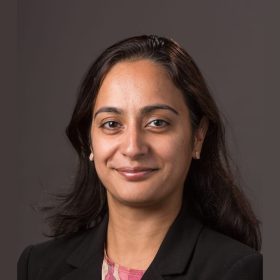
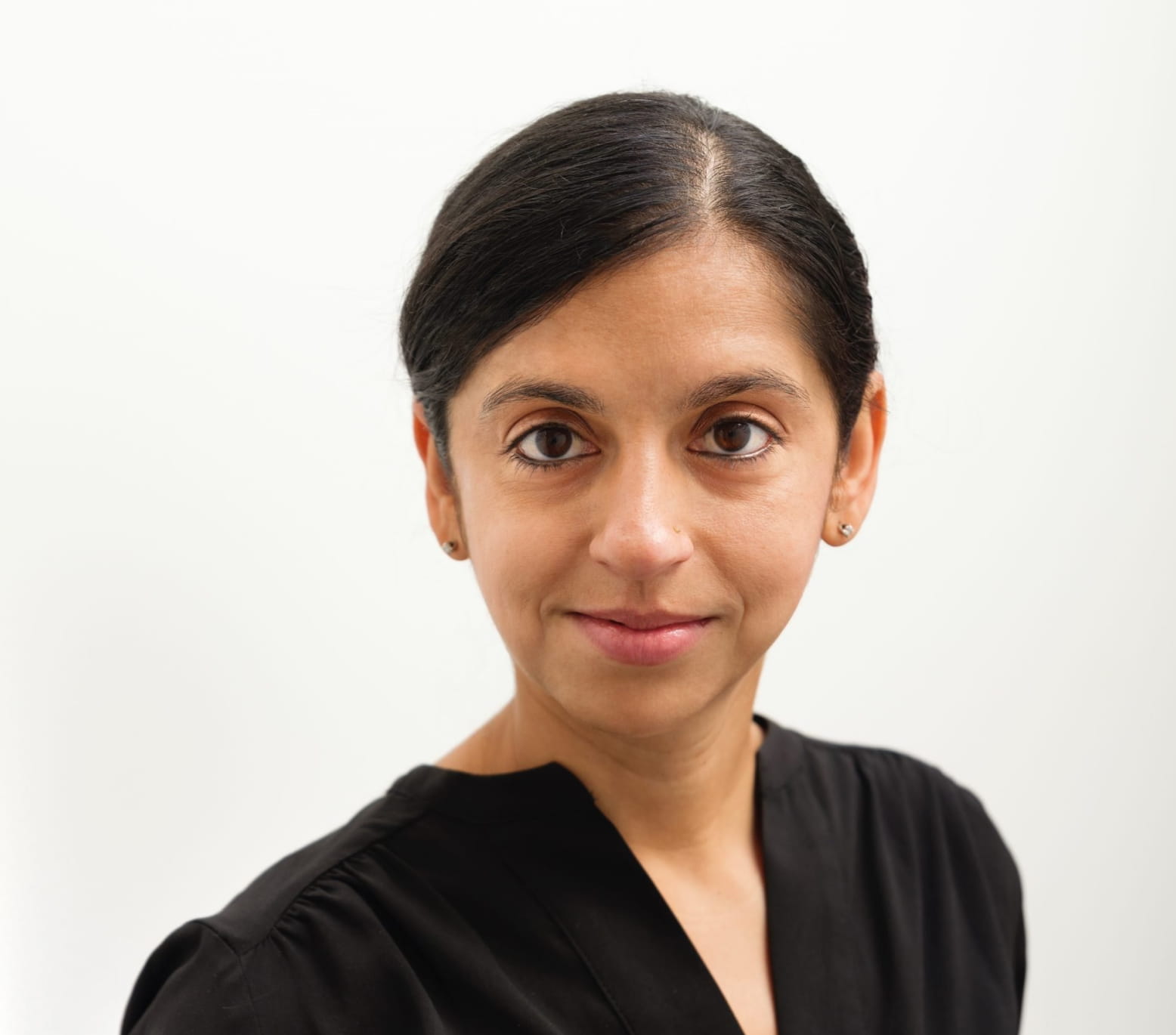
Palav Babaria, MD, MHS
Former Chief Quality Officer and Deputy Director of Quality and Population Health Management
CA Department of Healthcare Services

Host: Douglas Riddle
Curriculum Director, The Carol Emmott Foundation

Guest: Palav Babaria, MD, MHS
Former Chief Quality Officer and Deputy Director of Quality and Population Health Management
CA Department of Healthcare Services
In this episode of The Treasure Hunt, Dr. Palav Babaria, former Chief Quality and Medical Officer and Deputy Director of Quality and Population Health Management for the California Department of Healthcare Services, shares her journey from a humanities-focused undergraduate at Harvard to a transformative leader in California’s Medicaid program, Medi-Cal, which serves one in three Californians.
Listen as host Doug Riddle facilitates an enlightening conversation that explores Dr. Babaria’s experiences. With a focus on navigating government leadership while emphasizing the pivotal role of health equity in statewide policy reform, Dr. Babaria discusses the importance of leveraging the lived experiences of Medi-Cal members in policymaking in order to shape programs using direct member feedback. Dr. Babaria also reflects on the challenges and progress in addressing racial, ethnic, and gender disparities in healthcare, drawing from her personal and professional background as a first-generation American and a woman in medicine.
Hear Dr. Babaria’s perspective on the value of mentorship, the complexities of public service, and the need for resilience and solidarity in the face of high-pressure and ever-changing environments.
Listen Now
Available On


Connect with:
Palav Babaria

Douglas Riddle
Transcript
Doug Riddle: (0:01)
Hi, I'm Doug Riddle, and I'm here in The Treasure Hunt studio with Palav Babaria, the Chief Quality and Medical Officer and Deputy Director of Quality and Population Health Management for the California Department of Healthcare Services. And I'm sure she's gonna have even more and a longer title soon. With any luck at all. Also, Palav was in our fifth class of Carol Emmott Fellows and is now a network fellow. So I'm just really happy that you're here with us.
Palav, thank you.
Palav Babaria (00:33)
Thank you so much, Doug, for having me.
Doug Riddle (00:35)
Let's talk about that, maybe to start. You were a Carol Emmott Fellow in our fifth class. What did you take from the fellowship year?
Palav Babaria (0:43)
So much. I think it is not hyperbole to state that the fellowship really transformed the arc of my time at the California Department of Healthcare Services. I was in a different role when I was accepted into the fellowship, but then, within a few months, I was promoted into this new role leading California's quality and health equity and population health efforts for our state Medicaid program, which covers about 14 million Californians or one in three individuals across the state.
The scale is somewhat mind-blowing. And at first I was just afraid I was going to get kicked out of the fellowship because I had a different job and a different project that I'd proposed. And then, very fortuitously, not only did you all allow me to remain in the fellowship, but you also assigned me an incredible mentor in David Blumenthal, who served as my mentor throughout the fellowship. And obviously, those of you who know David know that he had a similar career journey from clinician and working on the healthcare delivery side and then academia to really becoming Obama's data czar and implementing the HITECH Act.
And so having mentorship from someone who is so widely regarded and renowned, but also who had made that personal and professional transition from being on more of the healthcare and academia side to being a public servant in government, was just invaluable. I felt, you know, he was obviously so overqualified to be coaching someone like myself who is brand new, but it really helped shape and change how I approached my role, how I got used to working in government and working with all of our state partners, and how I thought about what my impact could be like at the state.
Doug Riddle (02:25)
Well, you've continued to be a valuable resource for us. I was mentioning to you earlier this week, you and David, I think, are doing a webinar for the current class of Carol Emmott Fellows, which is our tenth class, so five years after you, talking about the role of government and how that affects the work that we do in healthcare provision. So we've appreciated your contributions and the fact that you continue to get the idea of the fellowship of the network, that it's a lifelong resource for us, and you're definitely one of the people there. Now you've been in this particular role for five, gosh, five years, more than five years now. And I'm just looking briefly at the website for your office.
Palav Babaria (03:08)
More than five years, yes.
Doug Riddle (03:16)
There are a lot of amazing initiatives. Could you share one or two that have been of particular significance for you?
Palav Babaria (03:25)
Yeah, and maybe I'll start with, you know, those of you who have not been tracking California's journey as closely. Under the current Newsom administration, healthcare has been a top priority. And so, even talking to people who've been in state government much longer than I have, it really seems like the reforms we've undertaken over the last five years are once-in-a-generation. And we really have advanced, probably about 20 to 30 years' worth of policy reforms into a very compressed five-year time period, which is sort of mind-blowing in and of itself.
I think the biggest things that I'm proud of are, one, when I took this role and when my position was created, it was really following the aftermath of George Floyd's murder and really a national conversation on health equity. And so, as we've stood up our quality and population health agenda, health equity has been the cornerstone of how we've approached it. And we know in California, right, the fact that one in three individuals is on Medicaid, that is a marker of people who qualify based on low-income status.
Even within the people on Medicaid, we see deep racial and ethnic disparities in our quality measures, life expectancy, pretty much any single metric that you can count. And then, when you look at the disparities between people on Medi-Cal, which is what we call our state Medicaid program, and commercial insurance, those disparities are compounded multifold. So we really have a long way to go until we can really achieve health equity. And we have to keep that front and center when we are designing our programs and coming up with a health policy.
So one of the things when I started at the state, and what our entire department recognized, is we have a lot of amazing, well-intentioned people who create policy. The vast majority of people running Medi-Cal today have never been on the program. And so many assumptions and decisions are made without input or lived experience from people who are actually using the Medi-Cal program day to day. And sometimes you can lose touch. When you talk to our Medi-Cal members, I still see patients a half-day a week in clinic, and you see firsthand how hard it is sometimes to make a point or to get testing done, or if you need a referral to go see a subspecialist, just navigating the system and having access to those things, which on paper the Medi-Cal program covers. If you need a subspecialist, that is covered, and you are supposed to be able to get in, you know, per state law, within 10 days to see that person. And we all know that in reality, that is not what is actually happening, or the lived experiences of our members. So over the last few years, we've really decided to change that and center our members' lived experiences in our policymaking.
Over the course of five short years, we now have a Medi-Cal Member Advisory Council that meets with our director and the entire executive team to provide feedback and input on key policies. We've done listening sessions and tours across the state because the needs in one region may not be the same as the needs in another region through both our health equity roadmap tour and our Cal-AIM listening tour. And then for specific projects, we've gone even deeper. For our birth and care pathway project, which overhauled our maternity policy over the last few years, we did deep focus groups and longitudinal listening sessions with Medi-Cal members who had been pregnant or postpartum or had pregnancy losses, and the feedback they gave us about what was working or not working really changed our policy decisions and what we prioritized when we did that policy redesign.
Doug Riddle (06:53)
Wow, so quite an innovation listening to the people who use your services.
Palav Babaria (06:58)
I know, it sounds so basic, and yet, it is amazing how it really isn't the norm. And to build that into the processes and cultures is, I think, a transformative opportunity that will definitely outlast me.
Doug Riddle (07:06)
It is interesting, you know, we theoretically love democracy, but we don't implement it in so many other places. I was thinking about that as you were talking about health equity. You know, it does seem like a lot of people are defending unfairness as though that's somehow the way things should be, so it means a lot that our state government is committed to making that change. I appreciate that.
I want to look at your history too. I'm a fan of liberal arts; I had that kind of an undergraduate education myself, and I'm curious how your undergraduate major at Harvard College in Sanskrit and Indian studies prepared you for your work.
Palav Babaria (08:00)
My undergraduate major was really me trying to run away from a future in the medical field, which is what my parents do. And so I was like, how far away can I get from this and be a liberal, you know, humanities major? I also didn't go to medical school straight out of college because I thought I was gonna do international development and nonprofit work. And of course, lo and behold, here I am, a doctor many years later. But I did, in my defense, try to run away.
I don't think I realized it at the time because, again, it was a more reactive decision, but my humanities background serves me every single day. And I think you know, increasingly the healthcare field is realizing this that, you know, the basic sciences are amazing and wonderful, but are not predictive of who is going to have the sort of bedside manner and empathy that you want in a clinician. Certainly, that's not always predictive of who's going to be a systems thinker and can understand our healthcare delivery system and help improve it over time and so that grounding and really just you know understanding how people and populations work, I was really focused on the South Asian diaspora and how social justice movements over time change and can advance communities and community engagement really underpins a lot of the work that I do today and serves me well.
Doug Riddle (09:21)
Was it helpful to you as part of that diaspora, I guess we'd say? But you were born here in the US?
Palav Babaria (09:30)
I was. I'm first-generation. So my parents immigrated in the 1970s, and I was born here. And I think certainly what drew me to my major at the time was wanting to understand my own experience, my community's experience, and have some context. You know, certainly growing up as a child in the 1980s in pretty much an all-white town, I was the only Asian person in my school, only one of two Asian people in my school for a very long time. I didn't see representation around me, and we've come so far I think now raising my children who are growing up in an incredibly diverse environment, who see their community, their skin color, their experiences reflected, whether it's on television or in the movies or in books that we check out from our public libraries, so much of that was just not accessible to me for the vast majority of my life.
Doug Riddle (10:17)
Yes. Wow. So important. And I think, you know, as a nation of immigrants, in point of fact, it's shocking, surprising at the least, how little most of us know about our own family histories and the cultures that we come from and how that comes in. So I admire that you took that step, even if the motivation was to not follow in your family's footsteps quite so closely.
Recently, you spoke at a conference called Urgency Now, which was sponsored in part by the California Black Health Network. Can you share a little bit about what you got from that and what you shared with them?
Palav Babaria (11:03)
Absolutely. So the California Black Health Network is an amazing organization that really brings together numerous entities and people who are working to eliminate racial and ethnic health disparities, especially for Black Californians across our state. And they have a number of different convenings that they put on. This one was a legislative briefing, so it was held in Sacramento, and all of our state legislators and their aides and their offices were invited. One, I was just humbled to be on a panel of incredible people. It included State Senator Akilah Weber. It included other physicians and activists working in California. It included Dr. Monica Soni, who is a CEF 6 alum and current Chief Medical Officer of Covered California. But what you heard across that panel of all sorts of women of color in incredible leadership positions was how much work we still have to do to truly meet the needs of our communities, to close racial and ethnic disparities in our state and how much of the progress that we have made is really under attack with the federal changes that have largely been passed through the Big Beautiful Bill in addition to other efforts by this administration to you know take money out of Medicaid, reverse on a lot of decades of progress, you know, reducing the uninsured rate in our country. And that I think people don't even realize that the most devastating of those changes has yet to come. We haven't even felt the impact of most of those policy changes yet.
Doug Riddle (12:37)
Well, that's frustrating.
Palav Babaria (12:38)
To say the least.
Doug Riddle (12:42)
Along those lines, I guess this is a different one. Early in your career ⁓ you know, because I like to do a little history stalking, I saw that you actually had a number of journal articles and some work on the gendered experiences of medical students. Not a surprising topic as a woman medical student at one time, so you had direct experience and the opportunity to share that. But can you say, do you feel like there have been any significant improvements for women medical students since the time you were writing?
Palav Babaria (13:19)
Yes and no. I sigh because, so one, you'll see a common thread is that, you know, when you're a humanities major, you just want to endlessly dissect everything about the world around you. And so when I got to medical school, and I was flabbergasted at just the sort of degree of overt sexism that I experienced in my medical education and my colleagues' experience, I wanted to study it, and that's sort of why I went down the pathway of publishing and doing a number of research studies on that topic, and you know, this was in the early 2000s, and the papers that I was reading that had been largely published in the 1980s could have been written in my day, you know, and it was so disheartening to read studies that were done 20, 30 years earlier and pretty much said the same exact thing as what me and my fellow female students and classmates and professors were going through at that time.
Since graduating, I've, you know, followed loosely the literature, and it continues to be disheartening to see how many studies continue to be published about sexism and you know gender dynamics in healthcare and I think with the Me Too movement we saw a lot of industries that came really to grips with the sexism in the professional environment and I don't know that healthcare truly went through that. You know, we didn't see the sort of public outcry in the healthcare space that we saw in the entertainment industry or in other industries at that time.
And so I would love to say things are dramatically different, but the anecdotes and the evidence that I see suggest maybe not. I will say, though, there are pockets of best practices and amazing opportunities. So part of, you know, I moved out to California for residency, and partly why I stayed is because I felt like the gender dynamic and the culture of medicine out on the West Coast felt different to me than what I'd experienced back East in my training. I had so many more attendings and leaders who were women or people of color or understood work-life balance, you know, we did not have early morning rounds, we did not have late evening meetings, and even in my own professional career here, you know, in my role at the state, I have raised two boys, I've been a working mother in the current state there have been periods at the state where every single person on my team, starting with a frontline staff member all the way up through the Secretary for Health and Human Services for the state of California, is a woman. And that experience of being in a multi-layered female-led environment has been really transformative for me.
Doug Riddle (15:54)
Can you say a little bit about your own emotional consequences of the kind of surfacing of sexism, the kind of marginalization, which I think was hidden at least for a certain period in the early 2000s, possibly, but now seems to be quite overt. Do you have some thoughts about that?
Palav Babaria (16:21)
I don't know that it was ever hidden for the people who were experiencing it, right? I think anyone who has experienced any type of marginalization or discrimination, or outright hostility, we all know it; we feel it. I think the way our communities and cultures have talked about it has obviously changed through time. And I think, you know, even though there's a lot that's been written about what the culture of sexism was in the nineties, and when you watch television shows or movies from that era, you know, they bristle now because the public consciousness around some of these topics is very different. But even that ebbs and flows, right? The national dynamic around race, immigration, or gender right now is very different than what it was even five years ago.
Doug Riddle (17:07)
Yeah. The apologetics for discrimination and marginalization becoming part of the kind of major national dialogue is maybe useful from the point of view of surfacing things that are there all along, but still quite painful, I think.
So, you have a crazy high-pressure job. It's a very political environment because you're working in government. And also you're in a field, healthcare, that is kind of a lightning rod for all kinds of- well, everybody's got opinions, let's just say that. But you've spoken before about a special friendship you have with Doctor Monica Soni, who you mentioned is the Chief Medical Officer of Covered California, and the friendship that you've had for quite a long time. Can you talk a little bit about that friendship and what it's meant to you?
Palav Babaria (18:14)
Absolutely. So some folks who may have been at our CEF alumni meeting have heard bits of this story, but what many people don't realize is that Dr. Soni and I have known each other since she was 17. And I believe I met her when I was 21. When we met in college through shared extracurriculars, including running a dance troupe. And our paths have sort of been woven throughout time ever since. We also trained together in the same UCSF residency program.
I was her senior resident on many a rotation throughout our residency. We then had very similar and parallel job experiences when I was working at a public hospital in Alameda County, and she was working at a public hospital in Los Angeles County. And then most recently, for the last few years, we've overlapped in our respective roles for the state of California. And so it is such a privilege and an honor to have a friend who not only knows me personally, you know, and has seen me evolve and change over the years, but also has so many professional parallels where as we go through really challenging experiences professionally, we can pick up the phone and strategize and think through how to make collective progress with this just deep level of trust and personal relationship that we've had. And she's what keeps me sane. So actually, literally a week ago, Monica and I were on our first-ever girls' trip to Vietnam, which, if you can imagine, all these years and we'd never taken a trip with just the two of us before. And it was just, and you know, there are very few people I can think of in this world where I can spend a week with them straight 24 hours a day and still not run out of things to talk about.
Doug Riddle (19:59)
You're surrounded by people, and we know that medical professionals and clinical workers, but really everyone throughout, are subject to significant pressures that lead to burnout. Can you say a little bit more about the way a friendship works in a context where the pressures are unyielding, and the resources, frankly, the emotional and relational resources generally are pretty weak?
Palav Babaria (20:30)
Yeah, you know, I think it's interesting. I met someone recently who's a physician who was talking about just really struggling with being in a very male-dominated environment, actually, and not having, you know, her husband is not in healthcare and not having anyone who understood how isolating and devastating that experience can be. And so much of what she's been told is, okay, go, you know, here's our workplace therapy resources, go talk to the stranger, and then you'll feel better, and you know there's limitations to that, and I think what I've just been so fortunate—it is a crazy time. You know, every day I wake up, and I scan the New York Times because, as many of you have realized, I think there's a special fondness or lack thereof of this federal administration towards the state of California. And so there's a lot of scrutiny and pressure, especially on our Medicaid program, but on the state as a whole. And there's a lot flying our way and you if we want to protect the members we serve and the programs that we've built and the services that people have, it's just never ending. And I think within that pressure, solidarity is what gets us through. And I think for all of us, figuring out where does that solidarity come from? Who are the people in our lives, whether that is friends, family, colleagues, you know, I think it looks different for everyone, but that really you can go to and process these really unbelievable times that we are living in.
Doug Riddle (22:02)
Yeah, beautifully put. I think you mentioned, you know, therapy or other kinds of resources, professional resources. I think they're necessary. On the other hand, it's kind of like being sent to do yoga so you'd be less stressed out. It's one more thing added to an already insane schedule, especially if, like you all, you’re parents, you have ⁓ you know, major obligations. So having something that feels as though it's organic must be important. I know it is in my life and it sounds like that's very important and a different kind of a quality for that.
Palav Babaria (22:40)
Yeah, and I think, you know, I've done all of it. I've done therapy. I do yoga and Pilates still when I can fit in the time. And I think for me it's really just been about building boundaries, right? I'm a mom of two. Yes, I have this crazy high-pressure job, but I also wall it off. So, my colleagues know, you know, the evenings and weekends are completely off-limits. That is time that I use for myself to parent, rejuvenate, and do self-care. And without that balance, there is no way I could wake up and do the day job that I do.
Doug Riddle (23:10)
We were facing an election. We're just between the primary and the- I guess we're between the primary, finally possibly, and the general election that's gonna change the administration, the people you report to at the top. Do you- I don't know how much continuity is guaranteed or not. Do you have thoughts or concerns about that?
Palav Babaria (23:38)
I mean, certainly every administration comes in with its own priorities and its own agendas, and so I think time will tell what that new administration in California will look like. And I think there's always a fair bit of turnover, especially for appointed roles. But I also think the challenges are not going to dramatically change, right? Nationwide, and certainly in California, we have an affordability crisis in healthcare, and I know Dr. Soni's talked a lot about that as well, but with some of the changes to subsidies for our exchanges, with the changes to the Medicaid programs, uninsured rates are projected to significantly rise almost to pre-Obamacare levels in the state of California. With the rising uninsured, that is going to put tremendous strain on all of our hospitals, all of our providers, and all of our health insurance companies. And those effects are going to be felt much more broadly than Medicaid. They are going to affect everyone in the state. And it's going to have effects on affordability, even for people who have commercial insurance, you know, insurance through other means. And so I think no matter who the administration is, they are going to have to grapple with those same challenges for the state.
Doug Riddle (24:47)
Good point. One other question: I'm thinking about people who look up to you and might be considering government service as a place they might go, which I know you said you didn't start out in. I mean, that was not what you began with. But do you have any advice or thoughts that you think people might find useful as they consider going into government service?
Palav Babaria (25:14)
Yeah, I mean clearly the story of my career, I tried not to even go to medical school, and then I ended up there, and I certainly didn't try to come be, you know, be in Medicaid; I didn't think that's where my path was going to be at the policy level, but here I am. One, I would just say, and I give this advice a lot to more junior clinicians, especially that I'm mentoring. Is that one, people, you know, who are in healthcare, you are smart, you're motivated, you will figure it out. So I would not shy away from opportunities just because you don't feel like you have enough experience. When I took this role, and you know, I was so grateful to my previous boss who hired me into this role and took a chance on me, I had no experience with policy. I don't have a public policy degree. I'd never worked on the policy side, and so I had a steep learning curve. You know, my first two years in the department, especially under David's mentorship, were really— I felt like I’d gone back to school, you know, and was digesting and learning about how healthcare works, what federal policy is, what state policy is, but I was able to figure it out and then I was really able to match it with deep operational and clinical expertise that I had from like actually working on the ground where I could then say, hey, this policy, I get the intention, but this is not gonna work because that is not how the real world you know operates in terms of healthcare.
And so I've been able to bring a lot, but also had to learn a lot, so I think it is worth taking the leap, even if you're not 100% confident that you can do it. I'm confident that people can learn on the job and develop the skills that they need. And we need more integration. We need more policymakers who truly understand what's happening on the ground and the lived experience of people trying to access healthcare. And vice versa. We need people on the healthcare side, too, who understand the financial constraints and financial levers that the system operates under. And the more people that have that global perspective, the more we'll actually be able to fix the broken systems that we have.
Doug Riddle (27:12)
Thank you, Palav. I've been here with Dr. Palav Babaria, and we're looking forward to more time with you, and I'll see you later this week as well. But thank you so much for being with us here at The Treasure Hunt.
Palav Babaria (27:26)
Sounds great. Thank you so much for having me.