
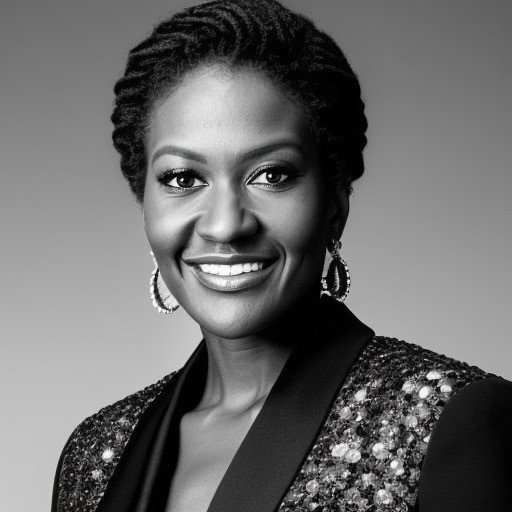
By Randi Woods, MBA, MS, RN
CEO/President, Sisters Together and Reaching, Inc.
Fellowship Class of 2025
My Path to STAR
I didn’t arrive at Sisters Together and Reaching, Inc. (STAR) by accident.
I arrived with a deeply personal connection to its origins—but also with a professional lens shaped by years of experience across healthcare systems, payer strategy, and the intimate work of bedside care. Before stepping into leadership at STAR, I had served as a nurse at some of the nation’s top health systems, cared for patients across the economic spectrum—from the globally affluent to the deeply disenfranchised—and helped build one of the country’s earliest payor-led Patient-Centered Medical Home (PCMH) models.
That perspective matters. It’s helped me lead STAR not only with heart, but with strategy.
A Culture of Care
But my roots in this work run deeper than my resume. I often say I was raised in a culture of care.
I’m the youngest of three children raised by a mother who accessed opportunity through the strength and support of her trusted community. My father was a steelworker, and his access to union-protected healthcare benefits made a real difference in the quality of our lives. Together, they created stability and modeled what it meant to serve, provide, and persevere.
Their path was made possible by the generation before them—my grandfather, a migrant sharecropper who left the South during the Great Migration in search of something better. He believed—wholeheartedly—that success didn’t come by chance, but by access to opportunity. That belief laid the foundation for everything I now stand on.
Early Lessons in Dignity
When I was a little girl, our family’s caregiver—our nanny—would ask us to help with her bedside commode before school. At first, I was uncomfortable. But eventually, I began to feel something different: pride. That simple act introduced me to the dignity of service, the honor of being trusted to care for someone. It planted the earliest seed of what would one day become my profession.
Though I began college as a pre-med student, a conversation with my grandmother nudged me onto a different path. She worked in hospitals her whole life and told me, “If you want to understand how people move through care, go into nursing. Nurses see the bigger picture—and they see it sooner.” She was right. Nursing gave me not only proximity to people, but perspective.
The Birth of STAR
My mother, Rev. Debra Hickman, is also a nurse. She is a natural influencer, a woman with a nurturing spirit, a big voice, and a bigger heart. When the HIV epidemic was ravaging Baltimore, she and her co-founder Dr. Lee saw women dying alone—disconnected from community, dismissed by systems, and silenced by stigma. In 1991, they took action and founded Sisters Together And Reaching (STAR)—a name that reflected their mission to educate, connect, and uplift.
They took action. They went into churches and community spaces, places where trust already lived, to educate women on the truths about HIV and how to be supportive helpers to one another. They created a sisterhood rooted in love, faith, and facts.
I was 14. At the time, I was more concerned about “Sistergirl Saturdays”—fun girls’ days at the mall. But over time, I witnessed something even more important: the power of women building something sacred from almost nothing. The women she served became our extended family. I watched my mother—and the women around her—turn pain into purpose.
I didn’t know it then, but I was being prepared to carry the next chapter forward.
Honoring Legacy While Leading Forward
When I stepped into leadership at STAR, I came in with reverence—but not nostalgia. I knew STAR’s origins were powerful, but I also knew the landscape had changed.
Community-Based Organizations and the CHW Model
Health disparities remain, but the context has shifted. Communities are navigating increasingly complex health and social challenges. As a result, solutions must move beyond traditional systems—they must be collaborative, community-informed, and people-powered.
That’s where STAR—and the Community Health Worker (CHW) model—comes in. From our earliest days, we’ve understood that care doesn’t begin in a clinic. It begins in relationship, in trust, and in spaces where people live, work, and gather.
CHWs are the bridge. They are trusted members of the community who activate care from within, providing navigation, education, and connection that systems alone cannot achieve.
We know that nearly 94% of Marylanders are insured, yet health disparities persist across zip codes and populations. That tells us access alone isn’t enough—we need proximity, humility, and trusted presence.
CHWs are a proven solution. Randomized controlled trials show CHWs yield up to a $2.47 return for every $1 invested, creating $2,500 in annual net savings per person. Their involvement leads to higher CAHPS scores, increased provider loyalty, and stronger connections to care:
– 12% more use of primary care
– 43% fewer emergency visits
– 29% fewer hospitalizations
– 60% drop in readmissions
These aren’t just numbers. They’re outcomes STAR is proud to influence. Because we’re not just a support system—we’re a partner in building healthier communities.
A Vision Grounded in Innovation and Equity
That’s why I lead STAR with both intention and innovation. Our model doesn’t just address health—it supports workforce development, economic mobility, and systems transformation.
We’ve always centered on hiring people from the community, but now we’re also investing in training, credentialing, and supporting them as changemakers within and beyond our walls. And through long-standing service-learning partnerships, we’ve opened access to community for students from nursing, public health, and medical schools—giving them a window into what culturally rooted care really looks like.
We’ve expanded how we engage institutions too. Historically, STAR responded to grants and built programs. Today, we’re working with hospitals, public agencies, and even corporations—not just as grantees, but as co-creators of community-based solutions. We’re positioning our work as both a clinical strategy and an economic solution. Because healthy people work. And thriving communities don’t just need healthcare—they need opportunity.
Our Four Strategic Pillars
As we evolve, STAR’s future is anchored in four strategic pillars:
- Community Health Academy – Our accredited CHW Training Academy builds a pipeline of frontline public health workers with lived experience—and trains institutions on how to effectively integrate them into their workforce.
- Community-Based Care – We provide culturally responsive, trauma-informed care and navigation support—meeting people where they are and creating pathways to healing.
- Community Health Innovations – We consult, co-design, and collaborate with systems to implement what works—grounded in equity, rooted in community, and informed by data.
- Community Space – We believe that through community space, we create community. It’s more than physical infrastructure—it’s where belonging happens. Every pillar is informed by community itself.
Why I Lead
I’m not leading STAR just because my mother founded it. I’m leading STAR because I believe in it. I believe in the genius of our people. I believe in healing that’s joyful and systems that are just. I believe that everything a community needs to thrive is already within—it just requires opportunity, resources, and collective will.
What began as Sisters Together and Reaching has evolved into STAR Community Health Solutions—a name that reflects the organization’s growing mission. We are not just responding to public health needs; we are providing real solutions to a strained healthcare system and an underfunded public health infrastructure.
This is the work. This is the way. And I’m honored to lead it.