
Carol Emmott Foundation
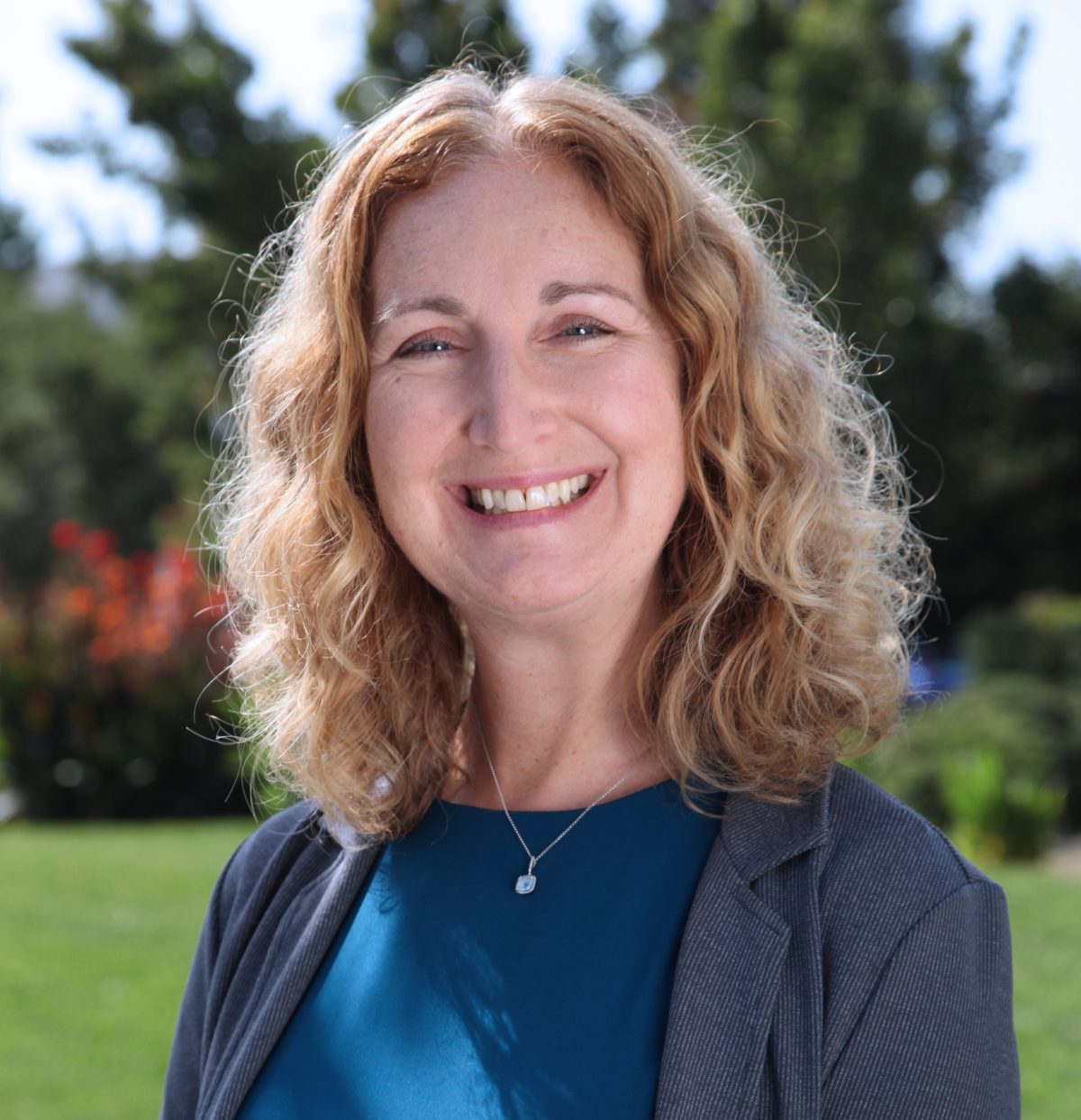
I’m Doug Riddle, Curriculum Director of The Carol Emmott Foundation. And I’m here with Jill Kacher Cobb, MD who is the Chief Wellness Officer in the Office of Well-being at Sutter Health. Prior to her current role, she was the Chief Medical Executive at Sutter-Novato Community Hospital and the Well-being Co-Lead for Sutter Health. She’s an anesthesiologist by training and a fellow of the Carol Emmott Foundation, Class of 2025. At the time of our interview, Jill has been in the Chief Wellness Officer role for about three weeks as I saw, although she had been leading this work since 2021.
What are the factors that led health systems like Sutter to adopt the Chief Wellness Officer role?
Jill Kacher Cobb, MD
Great question. Sutter began well-being work about eight years ago and the primary focus was on the well-being of our physicians and advanced practice clinicians in the medical groups. The reason it was primarily physician focused, is because physicians have the highest rate of suicide and burnout of any profession in the United States—an incredibly disturbing statistic. Also, physicians across the nation are struggling with workload, including in-basket and electronic health record demands. At Sutter Health, we saw a need to prioritize well-being by proactively addressing these issues, and that’s how this work came about. Over five years ago, Dr. Laurie Gregg and I were brought onto the team to address a gap because we realized we weren’t doing enough to address well-being for hospital-based physicians.
And then the pandemic came. Of course, it highlighted wellness challenges across the whole care team and into healthcare support teams, too.
At that point, we saw our colleagues, for example, our nurses, environmental service workers, admitting staff struggling. We realized quickly that the work needed to be expanded to everyone across the organization.
To amplify this, we built a system-wide interdisciplinary well-being committee. We started by asking for a nurse well-being leader, an ancillary staff well-being leader, and a physician well-being leader to lead local well-being committees at the different hospitals.
So over time, this program began to build and evolve based on the needs of the individuals in our organization.
Further bolstering the work, about two and a half years ago, Warner Thomas joined Sutter Health as our new CEO and president. Through him and his leadership team, Sutter Health rolled out the new strategic plan called Destination 2030. Our team was thrilled! In Destination 2030, we’re working to become the best place to work, practice medicine, conduct research, and learn—in the nation. We want to be an employer of choice, where people come to Sutter, to grow, flourish, and stay with Sutter for their entire career. This is what we’re all about here.
And then not too long after we introduced Destination 2030, Sutter Health unveiled our new mission, which is Patients First and People Always. As you can see with this evolution, there was a natural movement to open up a new Office of Well-being and have a Chief Wellness Officer. We focus on the second half of our mission—People Always. And as our team loves to say, “Invest in our people and the rest will follow.”
Carol Emmott Foundation
Excellent. What experiences led you personally to begin thinking of wellness as a systems issue rather than just an individual response to stress?
Jill Kacher Cobb, MD
I’ll talk about the literature first. Dr. Tate Shanafelt (we love to call him the godfather of well-being) discovered in his research that only 20% of burnout is due to personal resilience, and 80% is due to systems issues. Physicians are a resilient group of individuals. We go through pretty brutal training, quite frankly, helping build our resilience. So, asking a physician to be more resilient really does not land well. To make true change, we must focus on the systems.
About six or seven years ago, I was just moving into a chief of staff role at one of our hospitals, Alta Bates Summit Medical Center. For the new chiefs of staff, they sent us down to where you live, Doug, in San Diego. We attended a California Medical Association Leadership Development Conference there, and the conference had a section on well-being. For the first time, I learned that physicians have the highest rate of suicide of any profession in the United States. That really struck me. It surprised me initially, but the more that I thought about it, the more I reflected on the really hard work of my colleagues, and the fact that many of us gravitate toward perfectionist tendencies. When something happens, the weight of the world is on us, and we have not been taught ways to cope. We don’t really have a support structure, network or tools in place to cope with some of the really intense things that happen to us or the great amount of responsibility we have. Through this CMA and UCSD talk, I was inspired to bring the discussion back to my medical center’s medical staff and my medical group. There were so many individuals who resonated with this and also saw a gap.
In talking with others in and outside my organization, I have learned that so many of us have been touched by colleagues we’ve known well who have taken their lives. So that’s really where my passion for the work comes from. We must do what we can to change the systems we work in and provide needed support.
Carol Emmott Foundation
Can you talk a little bit about the structural drivers that take joy from caregiving?
Jill Kacher Cobb, MD
Absolutely. A lot of it has to do with the systems that have been built up around us. There’s the micro, meso, and macro systems in which we work. Micro refers to the local environment—a clinic or a hospital. The meso is the health system level, the macro is at the governmental level, and all these different systems we interact with impact us. There are a lot of barriers that get in the way of being able to connect with our patients, and those are some of the drivers of burnout. For example, at the clinic or the hospital level, many experience the burden of the electronic health record, work after work, in basket, note documentation, and things such as that. In the operating room, inefficiencies in the system in which we work such not starting on time and long times in between cases can cause stress. There are a lot of barriers that we encounter every day, a lot of inefficiencies that oftentimes are outside our control and end up leading to a longer workday. So that’s at the micro level.
Then there’s the meso, or system level, along with the macro or governmental level. Things like prior authorizations and the time required for paperwork can cause distress for physicians when they have patients they need to see. That’s where advocacy comes in and where we can effect change. Our strategies focus on process improvement, well-being, and reduction of burnout. And each of these areas is incredibly important.
Carol Emmott Foundation
That’s a useful framework for thinking about this. When I think about all of the levels of stressors, it leads me to wonder where the heck did you begin? What do you pick out as a place to start working, because it just seems overwhelming to some degree.
Jill Kacher Cobb, MD
It is a lot. Eight years ago, the team started with the electronic health record and the in basket. When Dr. Gregg and I started our work, the pandemic had just begun. We realized that there was a need for mental health support and building a network of resources for individuals. We began to build that out and pulled in resources outside of Sutter to make those easily accessible.
We also invited Dr. Jo Shapiro, who at that time was at Brigham and Women’s, and she was helping set up peer support programs across the entire country. We invited her out and trained quite a few peer supporters across our organization. We created a playbook for how our medical staff and medical groups could start up peer support programs locally. We learned a lot from that: what worked, what didn’t work, also the resources necessary to start up those programs.
Early on we realized that some of our smaller facilities did not have enough resources to start up a program. From that evolved the concept of a system-wide peer support program. At that point, we were only supporting physicians, and with the pandemic, we realized that our nurses and our other staff members also needed peer support. So we began expanding that network.
With so much work to do in so many different areas, this work really relies on partnerships with multiple different areas in the organization. For example, we have a strong employee assistance program that does crisis management, and a great digital team that is working on EHR related issues.
We also are beginning to partner with Sutter Health University. Oftentimes, when a physician gets tapped to be a leader, we will agree and say, “Sure, I’ll do it,” however we may not have formal leadership training. Our team wants to ensure that our leaders have the tools and the training they need to be successful in their role and to be able to support and help their people.
We’re just starting to do listening sessions across the organization, gathering data and information. And once completed, we’ll use what we’ve heard to build out the strategy of the new Office of Well-being. So more to come there.
Carol Emmott Foundation
I’m curious about what kind of data you’re relying on to make the case and to build the systems that you want to do. And particularly, what kind of data or metrics are you looking forward to gathering?
Jill Kacher Cobb, MD
That’s a really fantastic question, and we’ll home in on our final KPIs (key performance indicators), our metrics, once we have our strategy laid out. Turnover is a great indicator of whether people are satisfied at work, if they’re happy in their work environment. Another metric we follow is in our annual survey data, physician satisfaction and employee satisfaction. This is something that we’ve been tracking very closely at Sutter Health.
We also closely watch our burnout data. We’ve been making progress as a healthcare system as we’ve seen burnout decrease significantly year over year for the past couple of years.
We recently began utilizing the organizational biopsy survey as a pulse six months after our annual survey. It’s from the American Medical Association and asks a variety of questions that pull up into a well-being index. It measures job stress, leadership, teamwork, and a few other areas.
Carol Emmott Foundation
Just yesterday I was reading a wonderful article by Diane Bergeron and Kylie Rochford called “Good Soldiers versus Organizational Wives.” By and large women get called on to do that community building, good citizen, unpaid work to support the whole organization. That helps us work together and be connected but it doesn’t pay off in advancement or compensation. We know this is common throughout all industries, frankly. It’s part of our society’s way of thinking. I’m curious how that plays into your own work as you think about your role as Chief Wellness Officer? About how the levels of distress or the kinds of distress are experienced by different identity groups in the Sutter system. Is this something that’s of concern and how are you addressing that these days?
Jill Kacher Cobb, MD
That’s a great question. First, let’s pull back and look at the national data. Burnout in women physicians compared to male physicians is much higher. The other interesting part is feeling valued is lower with female physicians. Interestingly though, intent to leave is lower. We’ve found the same results for Sutter Health in all three of these areas. Other research groups have shown that women have a higher cognitive load, as you described, which ends up driving stress at work and burnout.
Carol Emmott Foundation
I wonder, changing systems is not easy. We all know that. Who are your major partners in improving well-being, resilience, and engagement in your own healthcare force? Who are you tapping when you look around Sutter or at other resources?
Jill Kacher Cobb, MD
This role will have a dyad partnership with Human Resources. We are in the process of developing and then will hire for that role. Right now, my dyad partner is our Chief Human Resources Officer, Deborah Yount, who has been great.
Other partnerships include our Research and Digital Services team. We measure time in the medical record, work after work, and other measures. Also, our Employee Assistance Program and Behavioral Health teams are great partners, along with Sutter Health University and Inclusion and Belonging.
Carol Emmott Foundation
Does the elevation of this role to a chief officer status indicate anything to you about the support of Warner Thomas and the rest of the executive team and the board about this matter?
Jill Kacher Cobb, MD
Absolutely, opening the Office of Well-being is a big investment and shows that our clinicians and employees are prioritized here at Sutter Health. It demonstrates a strong commitment from the organization to the well-being of our people and living up to the mission of “Patients First and People Always.” Warner’s been messaging since the very beginning has been if we focus on our people and treat them well, the rest will follow.
Carol Emmott Foundation
That’s really good. I’m curious. So, you’re a fellow of the Carol Emmott Fellowship this year, the ninth class, which is really awesome. Can you talk a little bit about how the Carol Emmott Fellowship is affecting how you think about this work?
Jill Kacher Cobb, MD
It’s been wonderful getting to know so many incredible leaders from across the country from storied organizations. The fellows are amazing, and I am fortunate to have made hopefully lifetime connections with so many individuals. I feel that already, we’ve learned and grown together, and we only are half way through the Fellowship!
The other highlight has been mentorship and just-in-time mentorship. I’ve been able to learn from other organizations and also have gotten advice on how to best move this work forward as this is a new program. They all have been incredibly helpful.
Also, there was a book that really resonated with me–“How to Be a Thought Leader” by Denise Brosseau. She also came to speak with us. The book was incredible, and I wish I would have been able to read it 20 years ago (it wasn’t published then!). It taught me how to lead with vision and the book maps out how to have an impact at a national level. She writes about how to engage with individuals to help build out an idea, garner feedback, and then how you utilize your networks and engage other individuals to help to carry that message. It was really an incredible book. So that was another big thing that I’ve taken away.
Carol Emmott Foundation
Excellent. Well, Jill Kacher Cobb, thank you so much for spending this time with us. I know that wellness is an issue across our institutions in the whole country, not just healthcare. And I really appreciate you being with us and sharing your great work. We wish you well as you tackle the role of Chief Wellness Officer for Sutter Health. Take care and thank you.
Jill Kacher Cobb, MD
Thank you so much Doug, I really appreciate the opportunity. It was a pleasure!