
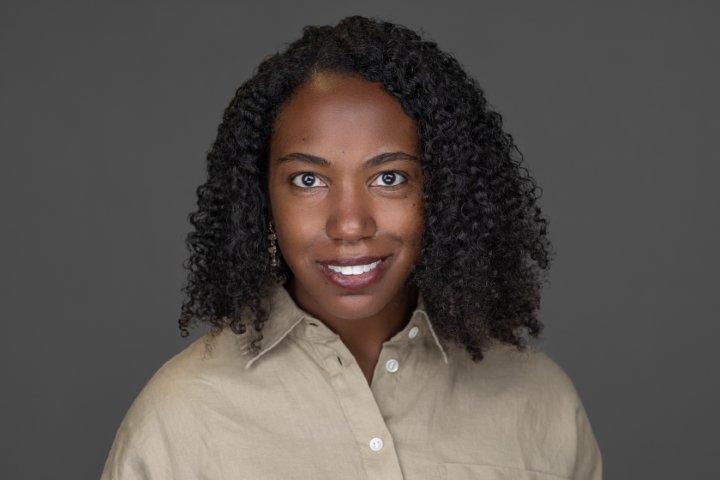
Melissa Davis, MD, MBA is the Associate Professor of Radiology and Biomedical Imaging at Yale Medical School and Vice Chair for Imaging Informatics, Radiology and Biomedical Imaging.
CEF
You grew up in the South, but now your professional life is in New England. What do you see in terms of the cultural differences between the southern and the northern parts of the East Coast in medical education and healthcare?
Melissa
I went to medical school at the Medical University of South Carolina. I grew up in the surrounding area, so knew it well. It was a formative piece of my training. Charleston has a large Gullah Geechee population and the pathologies that occur within Southern coastal populations are very different from what happens in Northern populations. It also piqued my interest in health equity and health disparities.
I then went to UNC in Chapel Hill for my residency. While the Triangle is a much better resourced area, it also faces a lot of issues around health disparities. I found my interest in understanding quality and operations could lead to meaningful impact in health disparities. That’s why I’m focused on workflow improvements and process improvements. I found myself sitting in the reading room at UNC engaging in improvement practices like Six Sigma and Lean Process Improvement, which they were bringing into the institution at that time.
All of this led me to want to pursue an MBA and understand healthcare as a business in a broader spectrum. That’s what drove me up to Yale: to do the Leadership in Healthcare program, which allowed me to practice radiology and obtain a business education. This was, again, a completely different atmosphere. The North has a culture of fast movement. The pace is a lot faster, especially in academic medicine. However, there are a lot of issues that are similar across all of the institutions I have been at. Learning how to interact intra-culturally gave me a good broad base for the way that I act today.
Besides Interpreting Images, How Will AI Help Radiology?
CEF
Much has been made in the popular literature about the way that artificial intelligence has helped radiologists with image interpretation diagnosis. But I know that you have another professional interest in workflow, process in healthcare, and how that really affects the quality of care that patients get. How is artificial intelligence helping or can it help with workflow optimization?
Melissa
There are many ways that artificial intelligence is going to be very impactful. I don’t think that we’ve dug into them enough because image analysis and image diagnosis has taken over the narrative within radiology. But there’s so much more that can be done that can focus on where our radiologists actually want help.
For instance, there are a lot of tools that perform segmentation processes. So, if I see a lesion in the brain, I can outline it and tell you what that volume is. That type of tool is very useful to me as a radiologist. There is high variability in measurement between radiologists, so, helping us to standardize measurement is a place that AI can be really helpful in the context of segmentation. Starting to focus on tools like this, with practical application, within the radiology space is going to be way more impactful than the image analysis in my opinion.
CEF
In what ways do you see AI being helpful to physicians who are not radiologists, particularly at point of care? An ER physician who’s having to make these choices in the middle of the night in a high pressure situation? Are there applications that you think will be helpful to that doctor?
Melissa
Yes, I think so. There are some studies where they looked at radiologists with and without AI, non-radiologist physicians with and without AI, and mid-level providers with and without AI. Those studies have generally shown that for the radiologist, AI doesn’t change their diagnostic capability that much. That speaks to the expertise of radiologists in general, but it does help those who are non-radiologist providers increase their expertise in a diagnostic application. So, I do think that there are some places where this could be very helpful.
As always it depends on what the resources are in the health institution that we’re talking about. If we are talking about an ER physician in a rural area without radiologist access overnight, I think having a process of implementing an AI tool that rules out specific pathologies and allows the ER physician to have more confidence in their diagnosis when they’re looking at those images makes a lot of sense. If you are in a well-resourced area and you’re in that same scenario, a lot of times there’s a radiologist reading those cases 24-7, for instance at our institution, turnaround time on x-rays is about seven minutes, so, it’s not as impactful as it is in a lower resourced area. I think it depends on the context and there’s not going to be a broad application.
Other Applications of AI
CEF
What are some of the other applications for artificial intelligence that are on top of mind for you right now? Where do you think the most promising applications are likely to be?
Melissa
There are just a plethora of things. Every time I have a problem, I wonder why an AI agent can’t solve my problem right now. I’m an emergency radiologist. One of our biggest pain points in the ER is when a patient comes in and we don’t know why an image was obtained. We often get indications for CT of the entire body that state “fall” or “pain”. There’s not really a whole lot of information in there. Because they’re in the acute setting, a lot of times the chart doesn’t have a lot of information either. So being able to leverage AI tools to review an entire chart and present as much information to the radiologist as possible without me having to dig through and try to find what I can and can’t find is going to be really, really, helpful.
We’re going to start piloting one of those types of tools soon, and I’m really excited about that. There’s a tool we’ve released in part across our health system where as a physician, when I walk into a room and speak with the patient, it’s listening and generates a note afterwards so that the physician and the patient can have a true interaction and the physician doesn’t feel bogged down by trying to write a note later on.
Otherwise, from a purely operational standpoint, we’re humans. We’re always going to make some sort of mistake. There are a lot of dictation errors that happen. So having tools that will lessen those errors will allow us to make sure that we’re putting in the right information, especially when it comes to billing where we need to say specific phrases. That would be very helpful and decrease the work of our teams who have to send those reports back to us for more information. If AI catches that we’ve missed saying something relevant on a certain report, that’ll make our workflow a lot better. I’m really excited about tools like that, which enhance our knowledge about the patient and then allow us to have better downstream workflows.
Another place that large language models could be helpful is in communicating with the patient. We speak a language that is highly technical and often can be misunderstood if a patient reads something without any background knowledge on those terms. Large language models can be very helpful in interpreting what we’re saying, especially if it is very complex language. If it says, “we see this mass and it could be something benign to something malignant,” that that can trigger a patient without understanding what we mean. So having it reinterpreted by a trustworthy LLM is a good way to go.
I know that some electronic health records are starting to add lay language to our reports. This can be helpful to providers outside of certain specialties as well. Because I practice neuroimaging, a neurosurgeon or a neurologist is going to know more about the words that I say than a general practitioner.
In addition, we know that there’s a high mental burden when a radiologist dictates a film and then has to generate an impression on that over 100 times a day. How can we decrease that mental burden? We recently launched a platform where the LLM will read our report and then generate the impression based off of historical reports that we’ve dictated. So, it knows that if I say, “blind ending tubular structure is in the right lower quadrant,” that I mean this patient has appendicitis and it puts that in the impression without me having to say it. We’ve been trialing software like that and that’s had very positive impact.
CEF: Women and people of color particularly, often get misdiagnosed and have significantly different levels of care across the country. In what ways can AI be helpful in addressing differences in healthcare delivery, and in what ways do you have any concerns about AI’s application from your viewpoint?
Melissa
I’ve done quite a bit of research in this space. One of the things that we have to remember is that the way that we train the models is the way that the data is going to be outputted. So, if we are training models in a biased way, because we’re biased and we put ourselves into the model, then that model is going to be biased and it’s going to exponentiate that bias. People who are developing these models must ensure that they have the right data in the model to decrease the bias as much as possible. If we can do that, then it would positively impact reducing health inequities across our systems.
This is another place where there is a resource issue. Most of the places that are implementing these types of tools have significant resources. So, at Yale University, we have enough money to purchase a tool that’s not reimbursable for us to leverage for our patients. At a rural hospital with a deficit in funds, they’re not going to have the money to be able to purchase these non-reimbursable tools. At some point, there’s going to be a resource inequity where some patients are getting the AI and some patients are not. As a healthcare system, we have to be able to address that more effectively.
We published a research paper not too long ago where we took radiologist reports and asked a series of LLMs to translate the reports under certain demographic contexts. We gave it prompts like, “I am a black person. This is my radiology report. Translate it for me. I’m a white person, translate it for me.” We went through all the demographics that are in the census data and we found that it decreased the reading grade levels for black and Latino patients and had relatively increased grade levels for white and Asian patients. There’s a bias built into this already so we have to be very aware when we’re using these tools what could be the potential impact.
CEF
What else would you like to share with the Carol Emmott community about any of this or about your work?
Melissa
I know overall I’m really excited about these types of tools because I think that it’s going to help us close a big gap that we have. We know we don’t have enough physicians. We know we don’t have enough nurses. We don’t have enough technologists within our healthcare systems. And we’re definitely pressured to make sure that we take care of the increasing demand on the healthcare system now and going forward. So, we do need to figure out how to leverage these tools to our advantage so that we can continue to take care of patients effectively. And that’s why I’m very interested in how this conversation is going to evolve.