INTERVIEW SERIES
Meet Community Member
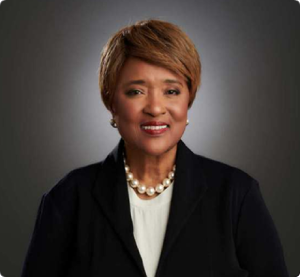
Ruth Williams-Brinkley, RN, MSN, FACHE
Regional President (retired) of Kaiser Permanente’s Mid-Atlantic Region


Host: Douglas Riddle
Curriculum Director, The Carol Emmott Foundation

Guest: Ruth Williams-Brinkley, RN, MSN, FACHE
Regional President (retired) of Kaiser Permanente’s Mid-Atlantic Region
This episode of The Treasure Hunt presents a discussion with Ruth Williams-Brinkley, a member of the Carol Emmott Leadership Council and a highly sought-after mentor for Carol Emmott Fellows. With accolades that include recognition as a top 100 most influential leader in healthcare, a top 25 woman in healthcare, and a top 25 minority executive in healthcare, Ruth has accumulated invaluable knowledge and experience throughout her many years as an industry leader.
Listen as Ruth shares insights gleaned from an impressive career that began as a bedside nurse in Chicago and ended with her retirement from the Kaiser Foundation Mid-Atlantic, where she served as regional president. Hear about her people-centric approach to healthcare and how successful outcomes can be enjoyed by all stakeholders when compassion and sensible practices are accompanied by providing individuals with the tools and knowledge they need to be healthy.
Ruth stresses the importance of mentors and increasing the presence of women and people of color in the healthcare space while weaving in tales of nursing, CEO life, motherhood, and how she relies on the NFL and the NBA for coaching tips.
Listen Now
Available On


Connect with:
Ruth Williams-Brinkley

Douglas Riddle
Transcript
Douglas Riddle (00:01)
I'm pleased to welcome Ruth Williams-Brinkley to the virtual studio today for the Treasure Hunt. Ruth retired at the end of 2024 from the Kaiser Foundation Mid-Atlantic where she was regional president. Ruth is a member of the Carol Emmott Leadership Council and a highly sought after mentor for our Carol Emmott Fellows.
Beginning her professional career as a bedside nurse in Chicago, she has served as a healthcare leader for a number of organizations across the US and continues to serve on healthcare and educational institution boards. She was recognized as one of the 100 most influential leaders in healthcare, top 25 women in healthcare, and top 25 minority executives in healthcare. And I'm just pleased to count her as a friend in the work that we do at The Carol Emmott Foundation.
Ruth, thanks so much for being with us today.
Ruth Williams-Brinkley (01:01)
I'm delighted to be here.
Douglas Riddle (01:04)
Well, we want to get into it and the purpose of our conversation is to just help people get to know you a little better. But I'm quite selfish about this, so I just enjoy having a chance to talk with you. I've enjoyed the times we've been on panels or been in small group discussions and I've always learned a lot. So, after 40 years in healthcare leadership, what do you see as the pull-through threads? What are the things that carry through in your career?
Ruth Williams-Brinkley (01:32)
Well, Doug, there are a few things I would think of - four things. First of all, I always remember that there is a person and a family we're serving. It's not a diagnosis. It's not a medical record number. And that largely comes from my training as a nurse. You always want to put the patient and family first. And so I've never forgotten that.
So that's one. Number two is a focus on quality and safety. Certainly, we want to do no harm. And when people trust us with their healthcare, it is important that we honor that trust and that we do well with that trust. Number three is focusing on people and leadership development, which is so important. Organizations are not inanimate entities. Organizations are made up of people and you can get the best out of people if you're willing to give them your best. And so I've always focused on people and trying to engage people in whatever way they feel comfortable being engaged and in a way that ultimately benefits the patient.
And then finally, a strong interest and focus on the community. People don't live in hospitals. Patients don't live in hospitals and their families don’t live in hospitals. They live in communities. They don't live in doctor's offices. And so I've been really fortunate to always work in organizations that focused on the community. So those are my four things, the pull-throughs that I've had through my career.
Douglas Riddle (03:16)
I was really interested in something you said in your farewell letter to the Kaiser Permanente community. And you talked about the different results or outcomes that Kaiser Permanente members had compared with others in the region. As I recall, you said that Kaiser Permanente members overall on average lived six years longer and that African American Kaiser Permanente members lived on average 10 years longer than similar folks in the region. Can you talk a little bit about what you saw making that happen?
Ruth Williams-Brinkley (03:55)
Yes, I can. And it was nine years for African Americans and six for everybody. I'm a strong believer in the Kaiser model. I've always admired it. And I was fortunate to be able to spend the last part of my career with Kaiser Permanente. And it's the model and approach being a comprehensive model and focusing on health and wellness and certainly taking care of people when they're ill. But because we focus on health and wellness, we look at the things that are going to keep you well, such as managing high blood pressure, managing blood sugar levels and the like, managing the things that end up causing someone to have bad health outcomes in their lives. Because no one wants to find themselves in a situation where they're suffering from something that they can control. And so we do a good job of what I'll call closing clinical gaps for people. And that is what partly leads to the outcomes. I think too, at Kaiser Permanente, the Permanente physicians are excellent. They do great work and everyone works together to make sure that we move upstream and that we don't just focus on the illness model but along the continuum. Taking care to make sure people have what they need to be healthy is important and that's part of what I call the Kaiser Permanente DNA.
Douglas Riddle (05:37)
I'm really conscious at the time we're having this interview, United Healthcare, the largest insurer in healthcare in the country, is under a lot of criticism. It's become quite a movement, in fact, mostly due to the murder of the CEO of the health plan. Do you think some of the distress and anger that people are experiencing toward United and other health care insurers is related to what you're talking about in terms of structural differences in the institution?
Ruth Williams-Brinkley (06:22)
Let me just say, my heart goes out to the family of Brian Thompson and what happened. I want to say that first of all, and to everybody who's been impacted by this tragedy. What I'll say is that, and these are not profound words, I think many people would tell you this, I believe that we don't have a system. We have a collection of pieces that we've put together - and this is in the US I'm talking about. It's a system that is hodgepodge at best. And the challenge for families and people who need health care is they have to figure out a way to enter into that system. And it's not always easy.
Ruth Williams-Brinkley (07:20)
And I also think people truly don't understand the health insurance industry and the process of how it works. And it's beyond getting into here. But I believe that we could do a much better job in explaining how the health system works and helping people to understand so that they are not so angry and so that they don't believe that people are trying to cheat them out of something that they're due. One of the things I like about the Kaiser Permanente system, and it's not to denigrate any other system, is the approach of a comprehensive healthcare system. That truly, in my opinion, is a model for the country because in the Kaiser Permanente system, as an example, you come in and we're focused on your wellness. Certainly, they treat you and take care of you when you're ill. However, the focus is to keep you well and they do a good job in my opinion of explaining things to people because many of our members stay with us for life and so they know us. We know them.
Ruth Williams-Brinkley (08:43)
in American society owe our citizens a much better explanation and a real system of healthcare delivery.
Douglas Riddle (08:53)
Well said, well said. You've mentioned, and I've certainly seen it, certainly in how you relate to, you're held in such high regard. And I knew about your reputation long before we got to have some conversations. And you talked about the focus on people. I'm curious, do you find that in different organizations that you've led, that you needed to change your leadership style, or does this concept apply of just focusing on the people around you? Does that work everywhere or what can you say about how you've chosen your own leadership style in different organizations?
Ruth Williams-Brinkley (09:28)
Well, different organizations, of course, have different challenges. And I had the fortune or misfortune of being in some organizations that have a lot of challenges. I find, though, no matter what the challenge, you still have to work with people. And people will support your organization and its culture and what they're trying to deliver if they understand it. And there's time taken to engage them in the organization because what's good for the organization is usually good for them. And so I've been in organizations that have financial challenges, been in organizations that have cultural challenges. And I find that while you have to focus on the financial challenge situation, you must focus on trying to keep the organization stable and keeping the organization alive, quite frankly, keeping it sustainable. But I think being honest with people and letting them know in ways that they can understand why their support and their cooperation and their buy-in to the organization is so important. Sometimes you have to make decisions that aren't popular, but that's when I believe it's very important and critically important to face people and let them know and try to explain to them what's going on. They may not like it. I've had to make decisions where people didn't like the decision, but they appreciated the fact that I tried my best to explain it to them and to help them to see why I had made the decision that I had to.
Douglas Riddle (11:12)
So important. You mentioned challenges. I'm curious, and particularly, you know, as a leader, what you've had to do. I'm curious as you think back, you have a great perspective here, as you think back on your professional career, were there certain kinds of challenges that resulted in the most growth and new understandings for you as you look back?
Ruth Williams-Brinkley (11:35)
My goodness, yes. I think that financial challenges have stretched me the most. A part of my career I spent as a consultant helping troubled organizations. That was back in the mid-90s. I was working for a company that did turnarounds, although we didn't call them turnarounds at the time. When organizations get to the point where they need to bring someone in, not to tinker, but to do a major overhaul, it's painful and it's challenging for everybody. And we called it re-engineering at the time, which became an unpopular term, but it really was doing a turnaround, financial or an operational turnaround. I found and I know organizations found those experiences very challenging because it often ended up with sometimes having workforce reductions and having to ask organizations to really change a lot of the things that they were used to doing. And so I learned a lot from being a part of that organization. When I left that organization and left consulting and became a CEO, I've been learning to apply those principles, those strategies ahead of time, hopefully, to keep you out of having to do a turnaround. Now, someone can change your future with the stroke of a pen, you know that. So you can't predict everything, you can't plan for everything.
Ruth Williams-Brinkley (13:25)
But what I found was the importance of getting on top of things quickly and not ignoring it, not burying your head in the sand, doing the best you can to get on top of it quickly. You know, most organizations, at least back then, now it's a little bit different, but most organizations had local boards, and those board members are members of the community and they can really help you explain things to the community and help you to understand the perspective of the community. It truly takes a village. But at the end of the day, you really have to sustain your organization and cultural challenges. Maybe there was one organization where I had cultural challenges, but that wasn't as hard as financial challenges. And then I've not had an organization that had really bad safety and quality challenges. That, to me, would be the hardest. You can fix finances, you can fix culture. It is sometimes difficult to fix quality and safety issues and service issues around how you treat your customers. Because while that emanates from the culture, culture is difficult to change. And when you're trying to change from a culture where quality, safety, and service aren't important, it is a big task and you've got to engage the hearts and minds of people and it takes a while to do that.
Douglas Riddle (15:04)
I want to turn to some questions about the succession and advancement of women and people of color, in particular in healthcare. And I was fortunate to sit next to you while listening to a speaker one time. And the speaker blamed the absence of women and people of color in the pipeline for not having enough candidates that represented marginalized groups. I want to ask you a little bit about your thinking about this idea that somehow there's some lack or that we don't have enough women, people of color, others who have been marginalized. I think you have some feelings about that. Would you share a little bit about that for me?
Ruth Williams-Brinkley (15:54)
Well, Doug, we don't have enough people and women of color. That's clear. And we strive in most cases to look as much as we can like the communities that we serve. And I have spent a good part of my career really helping to mentor and to develop, sponsor women and people of color, but I've also sponsored men. And so I'm equal opportunity when it comes to that. I've been fortunate in my life to have many men who sponsored me, men of all backgrounds and ethnicities and most of them were white men. That's what were, what was, you know, available. That's who was leading at the time, mostly. and so I believe that everybody should have a mentor and for sure a sponsor and both if you can get them as we know they're different. And I think that people have to broaden their scope of who could be a mentor to them and who they can in turn mentor. The person who mentors you or sponsors you doesn't always have to look like you. Now it helps if that person has a shared background, a shared cultural experience, but you can't always get that. And so I ask people who I'm talking to, to find your mentor wherever you can. And if you look around your organization enough and you look carefully enough, there's somebody who will serve as a mentor and sponsor and help you get there. Being a woman of color, it's not always easy. Being a member of a minority group, it's not always easy. However, I think that people can, if you don't have someone that volunteers to be your mentor or sponsor, I think you should ask somebody. And you may not get someone and you can't be so thin-skinned that you are fearful of rejection. You have to ask. And it's not easy, Doug, but I think that people who are determined can get there. You may not get everything you want, but you can certainly get a lot of what you want.
Douglas Riddle (18:18)
Can you say a little bit about the people who have sponsored you and how you've used what you learned from what they did with you?
Ruth Williams-Brinkley (18:28)
Well, you know, the people who sponsored me, I would say were mostly men. There was one female and there were not a lot of females in executive positions at the time and still not as many as I'd like to see quite frankly, especially women of color. I'll just talk about the men who sponsored me first and then I'll talk about the female because I think she is unique. The men that sponsored me always were encouraging and if I needed to do something, I felt that I could go to them and discuss in all cases my discomfort if I felt any discomfort. To say you asked me to do this, these are some of the consequences that are going to result from doing this. And I'm pretty certain that these consequences are going to be things that we don't especially like, but we can manage through. I need to know that we're together on this. And I might not have been that articulate at the time, but that was the message that we need to be together because when it gets hot in the kitchen, you can't get out. You have to stay there and finish the job. And so itI felt like the men treated me very well, the ones that sponsored me. I've had some men that weren't as supportive, but I've also had some women that weren't supportive. So I think a lot has to do with the individual.
The woman that was a sponsor for me asked me to take on an assignment for her because I was looking for something different. And it came at the intersection of she needed someone to do something for her. It resulted in my first CEO role. She had a vacancy that she couldn't fill easily. This was after I had done several years of turnaround, financial turnaround. And I knew I needed a break to do something that wasn't as intense. And so we met at that intersection where I wanted to do something different. She needed someone to do something different. And it was probably my favorite job of all the jobs I've had. And she believed in me. I had never been a CEO at the time, but she believed in me. And someone has to believe in you if you're doing something for the first time. None of us is born doing the things we're doing. Someone believes in you. And that's what I believe a sponsor does. They not only believe in you, but they support you and they can help you carry through the assignment you've been given.
Douglas Riddle (21:21)
And it sounds like they're willing to take risks on you.
Ruth Williams-Brinkley (21:24)
They're willing to take risks because they see something in you that they know, they believe can lead to the outcome they want. And that was just a great job, just a great job. Yes.
Douglas Riddle (21:40)
Excellent. What a great story. Do your mentees give you feedback? Do they tell you what they find most valuable in the time they spend with you? And I'm curious, what is it?
Ruth Williams-Brinkley (21:54)
They do. I just met with one of my mentees this morning. So this is just one data point. But what this person said - and it's consistent with what other mentees have said - is that I give it to them straight. I don't you know, I'm not unkind. I try very hard not to be unkind, but I give people the straight scoop on what it's like to be an executive leader if they are looking to walk that pathway. And it is not balanced. You leave a lot of your personal life behind. No matter what people tell you, It is not a work life balance situation. So I tell people that I also tell people the same thing I just said to you. Everybody who can help you doesn't have to look like you. And I tell people to look five to six years ahead and look at the job or the role they want to have in five or six years and then gear your moves to lead you there and where you want to be five or ten years after that. And incorporate the skills, the abilities, and the experiences that you need. And not to doubt yourself. Have the confidence. One thing I tell all of my mentees is that you don't need to have the answers to everything. And I truly believe this. What you need to have are the right questions and to know who has the answers. You can't possibly know everything, but you need to know the right questions and to know what problem you're trying to solve. Because if you're solving the wrong problem, you're going to get the wrong outcome. And so those are the things I tell my mentees. And I really try to give it to them in a way that they can receive it. And I help a few of them to build confidence.
Douglas Riddle (24:06)
Right.
Ruth Williams-Brinkley (24:20)
If there are 10 requirements for a job, women feel like they have to have 12. Men, I know you've heard this, most men feel like that if they've got three, they're qualified. It's probably somewhere in between, but you don't have to think you have to be perfect. It's like having the right answers to everything. Having the right questions, in my view, is the most important.
Douglas Riddle (24:43)
Yeah, that's a good one. Thanks for that. As you look back, you did mention, you know, this being a CEO is kind of all consuming. Does that lead to some ambivalence as you look back on the choices that one has to make to have the kind of leadership roles that you've had?
Ruth Williams-Brinkley (24:52)
It is. Well, not ambivalence, but I think that experience is the best teacher. And so as I look back, there are a few things I would have done differently and that I would tell people to do today. First of all, have honest conversations with your family and including your children. And, you know, I grew up in an era where children did what their parents told them to do quite frankly in most cases and that's sort of how I did. Although I gave my kids a lot more input into things, but what I would do, I'd probably stay at one or two or three jobs I really, really liked and just for a while until my kids were in college. My son and daughter are nine years apart. My son was out of the house and in college by the time my career started ascending, my daughter was still younger. And she went through a lot of moves that in retrospect, I wish I had handled, just not done. But as a result, the good thing that came out of that is my daughter is incredibly adaptive. And she has done a junior year abroad. She is not afraid to go anywhere. And so that has helped her and maybe it's my own guilt and that I just feel like if I had stayed at one place but they both have done really well although they were like really two generations apart.
Douglas Riddle (26:44)
Yeah. And for some reason, motherhood seems to always result in some guilty feelings no matter what. I think it's the complexity of parenting. It's guaranteed.
Ruth Williams-Brinkley (26:58)
I wonder if men, if dads feel the same kind of thing.
Douglas Riddle (27:03)
I totally do. I look back, I think, so many choices, but apparently they're turning out okay. I mean, they haven't murdered anybody that I know of. Do you think nursing is a good place to begin if you want to be a CEO?
Ruth Williams-Brinkley (27:31)
I believe that yes. Nurses have you. You're always pulling together. First of all, you got a patient in front of you and you have to pull together a lot of data as part of a team working with physicians is critically important. I would say it is a critical skill knowing how to work with physicians. Now the physician organization, generically speaking, has changed a lot. There are a lot of employed physicians now. There's still some that contract with hospitals. So the medical staff dynamic in a hospital setting is very different today than it was years back. However, physicians are critical members of the team. And so you need to know how to work with them. And that's what nurses learn as you're doing clinical nursing, you are interacting with physicians, with other therapists, with families, with patients. And so you're constantly having to absorb and integrate data to form it into information that helps you make a decision. Back when I was a clinician, didn't always have physicians in the hospital. And so you needed to know when the clinical parameters required you to summon the physician to help to give a new order or to change the course of treatment. You needed to absorb those data. So I think you can translate that into the role of CEO,
In the role of the CEO, you're constantly getting data from all those places, not at the same granular level as a clinician. But you want to know how your nursing organization is doing. You want to know how your physician organization is doing. You want to know what your board is doing. And that's a whole different kind of situation. You want to know what your community is thinking. And are you leading to a healthier community with the work you're doing, not only inside the hospital or facility but outside. So I just think nursing gives you all those things. You're constantly integrating data. I can remember at one of my organizations, it was a big deal to get a piece of property. And I had to meet with every city councilman, every county council person. And the person who was able to help me was the last person that I went to because everybody viewed this person not as very helpful. He opened up the key to making that work. And that was a lesson for me because I said, first of all, you never believe everything people tell you. And I am grateful to that man for this day. And he exactly told me who I needed to go to to get what I needed to for the organization, and it worked. So, you know, again, comparing what nurses do, what CEOs do, I think is a great fit.
Douglas Riddle (30:55)
In the role of the CEO, you're constantly getting data from all those places, not at the same granular level as a clinician. But you want to know how your nursing organization is doing. You want to know how your physician organization is doing. You want to know what your board is doing. And that's a whole different kind of situation. You want to know what your community is thinking. And are you leading to a healthier community with the work you're doing, not only inside the hospital or facility but outside. So I just think nursing gives you all those things. You're constantly integrating data. I can remember at one of my organizations, it was a big deal to get a piece of property. And I had to meet with every city councilman, every county council person. And the person who was able to help me was the last person that I went to because everybody viewed this person not as very helpful. He opened up the key to making that work. And that was a lesson for me because I said, first of all, you never believe everything people tell you. And I am grateful to that man for this day. And he exactly told me who I needed to go to to get what I needed to for the organization, and it worked. So, you know, again, comparing what nurses do, what CEOs do, I think is a great fit.
Ruth Williams-Brinkley (31:09)
Would you believe, I don't know. I'm still figuring it out. So I retired in January of this year, 2024. And first thing I did was I went on several trips. I did a road trip in the US that I went to, and that was two and a half weeks. And I went to Mexico for two and a half weeks, the interior of Mexico and to the coast. And then I went Dominican Republic, then I went to Nigeria, and I finished all that by August. So I am now at a point where I'm thinking, I'm working on several projects. Of course, I do board work and I'm doing some advisory work and a couple of other projects in the hopper, but I haven't quite figured it out yet.
Would you believe, I don't know. I'm still figuring it out. So I retired in January of this year, 2024. And first thing I did was I went on several trips. I did a road trip in the US that I went to, and that was two and a half weeks. And I went to Mexico for two and a half weeks, the interior of Mexico and to the coast. And then I went Dominican Republic, then I went to Nigeria, and I finished all that by August. So I am now at a point where I'm thinking, I'm working on several projects. Of course, I do board work and I'm doing some advisory work and a couple of other projects in the hopper, but I haven't quite figured it out yet.
Douglas Riddle (33:12)
That's awesome. So people come to you for a lot of help and lot of advice. Your experiences are vast and cover a wide range of things. Are there some things, some kind of interests you have or passions that you kind of wish people would ask you about that you kind of think, it'd be fun to talk about this too and not just how to become a CEO.
Ruth Williams-Brinkley (33:35)
Well, I love executive coaching. And that's not the same as being a CEO because when you're a coach, you really have to step back and help the person to play the game, so to speak. And I've been watching, I've become enamored with sports since I've retired. I watch the NFL on Sundays, I watch the NBA. I'm just enamored with sports. And as you look at coaches, you have to sit on the bench. They may get exercised every once in a while, but you really, you're not playing the game. They're playing the game. And that's the way I look at executive coaching with executives and professionals. They're playing the game. My goal is to look at the game. In this case, looking at the environment they're in, look at the setting they're in, the role they're in, and help them to effectively carry out their roles. I can't do it for them. And watching sports has been very illuminating because I was always interested in sports, but this year I've been able to take that interest to another level. And being able to watch, you watch the coaches pacing the sidelines, sometimes they get kicked out for whatever, but ultimately, they cannot go on the field and play the game. So that's one of the things I really look forward to doing and I've got a couple of people that I'm coaching right now and I have kept my feet on the sidelines but very watchful. So that's one of the fun things. So I don't think I want to be serious all the time and talk about work all the time. I want to enjoy my life. And that's what I think. I want to do some things that are important and I'm doing those things but I also want to leave time to do some fun things.
Douglas Riddle (35:51)
Wonderful. Well, Ruth Williams Brinkley, thank you so much. You've been an amazing supporter of the work of The Carol Emmott Foundation because that's been your lifelong commitment anyway. And so, I appreciate it and I appreciate you spending the time with us and we look forward to further conversations. You have a great day.
Ruth Williams-Brinkley (36:08)
Thank you so much. I appreciate being here. Take care.