INTERVIEW SERIES
Meet Community Member
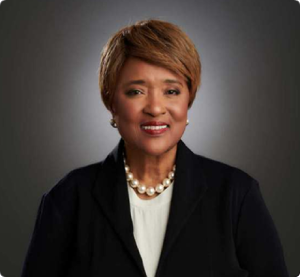
Kevin Mahoney
CEO of the University of Pennsylvania Health System


Host: Douglas Riddle
Curriculum Director, The Carol Emmott Foundation

Guest: Kevin Mahoney
CEO of the University of Pennsylvania Health System
The Treasure Hunt’s most recent episode features Kevin Mahoney, the CEO of the University of Pennsylvania Health System, Perelman School of Medicine. Alongside host Douglas Riddle, listeners will explore Kevin's impactful leadership style, emphasizing empathy as a core value in healthcare. Kevin reflects on a transformative summer during his youth that shaped his perspectives and career. He recounts pivotal experiences, including an influential conversation with a real estate developer and a serious accident that landed him in the hospital.
Through these stories, Kevin illustrates the importance of resilience, teamwork, and the desire to create a better world, which have ultimately guided his approach to healthcare leadership.
Listen Now
Available On


Connect with:
Kevin Mahoney

Douglas Riddle
Transcript
Douglas Riddle (00:03.233)
Hello, I'm here with Kevin Mahoney, who is the CEO, Chief Executive Officer of the University of Pennsylvania Health System and Perelman School of Medicine. Penn Health has been a consistent supporter of the Carol Emmott Fellowship since we began and now The Carol Emmott Foundation.
And Kevin, I'm so pleased to have you. You've been a powerful advocate for fair and accessible healthcare. You know, so many honors, we could take up our whole time with me listing the things, but we're associated, we've been associated with Modern Healthcare, which picked you as one of 100 most influential people in healthcare. But also I think the Philadelphia Business Journal selected you as a most admired CEO.
I was thinking about that because I talked to some of the fellows you've sponsored over the years. And Dr. Lisa Walke was one of them and told me some stories.
She interviewed you before, but one of the things that struck her, she remembered a couple quotes. One of them she said was a closing comment, and I guess maybe in a talk you gave, that empathy is the only habit that matters. And that really struck me as a powerful kind of a thing that might affect the style of your leadership.
You've frequently told a story about a transformational summer when you were 19 that shaped your life and your career. Can you share that story with us also?
Kevin Mahoney (01:35.278)
Sure, thanks for listening to me for a little bit. I'll try my very best to let you know what's inside my brain, but mostly of what's inside my soul as we go through this, because I think we're at a point in healthcare where we need to lead with both mind and soul.
This would have been the summer of 1978 and I was 18 years old. I had just been told my freshman year at college was a mistake because my grade point average was 1.98, and I came home and my dad said you better get a job, so I went to work for a landscaper.
And I'm fond of telling people in a short period of time three things happened to me that put me on the road to where I am today.
The first was I met a real estate developer in Philadelphia by the name of Bill Rouse. And Mr. Rouse was famous in Philadelphia up until the late 70s. Every building in Philadelphia stopped at 40 stories because we had a tradition that you couldn't build above William Penn's statue at City Hall. So imagine a city skyline with all flat roofs at 40 stories.
Douglas Riddle (02:46.966)
I remember it.
Kevin Mahoney (02:47.826)
And so I met Mr. Rouse that summer I was working for a landscaper, as I mentioned, out in Great Valley, about 30, 35 miles west of the city of Philadelphia.
And Mr. Rouse said, I want you to cut down the cornfield. And I said, but the corn's still growing. And he said, I'm having an open house next week and I need to put a tent up, and I'm going to invite people.
What are you building? He said, I'm building offices.
And I said, no, Mr. Rouse, people sleep in the suburbs; they work downtown. And he said the same thing he said when you can't build taller. He said a law, tradition, zoning regulation said no, it's just the way it's always been.
And he said, Kevin, don't build things the way they've always been; build them the way you want them to be. And for a young man, you know, it probably was 20 minutes, maybe 15 minutes, but it's stuck in my brain.
Kevin Mahoney (03:46.88)
So it had a big impression on me. Build the world the way you want it to be. Now he Vietnam War had just ended, and it was a different time in our country and I was trying to think through, how do we make the country better?
So that stuck in my brain.
I got on my tractor. I'm going back and forth. I fall off the tractor, under the tractor, and the tractor runs over me and then: hospital on a ventilator, the priest giving me last rites. My family just beside themselves andnobody thought I was going to pull through. I was in the hospital a long time and I loved every minute of it. I couldn't believe that these people, you know, are not 19 and 18 and egocentric. And couldn't believe everyone in that place wanted me to get better.
Like, it was incredible, you know, I tell everybody I come from a large family. Maybe it's because I got 100 % of their attention and because of all my siblings, I couldn't get 100 % because of my siblings.
I loved being in there and watching the teamwork. And I grew up in there and Dr. Fanfara, who treated me, took the bandages off. I looked like a wreck.
Kevin Mahoney (04:52.564)
And I start crying. I take it out on my mom, and he comes back in and he said, it's just skin. Like, grow up, get going. Put your big boy pants on and get going and never be mean to your mom again.
As a young kid, I said, why was I making my mom feel so bad? Can you imagine your child getting last rites and he's complaining about some scars? So I grew up in a hurry.
And then the best thing happened to me November 10th, 1979. I walked into a bar in Millersville where I went to college to meet my old friends that got me in trouble the first time, and I walked in and I laid eyes on the most beautiful person who's been my wife and best friend for 46 years.
So Pam keeps me on the straight and narrow. So I grew up in a hurry. I learned to be visionary.
Douglas Riddle (05:42.538)
Wow, congratulations.
Kevin Mahoney (05:52.342)
I love being in the hospital and having your best friend to keep you on the straight and narrow; it’s just been incredible for me.
Douglas Riddle (06:02.428)
Awesome. That's really helpful. One of the people I talked to was Dr. Florencia Polite, Rennie, who's one of our fellows. And Rennie, of course, is a mover and a shaker, really makes a difference.
In 2020, of course, we're facing the pandemic, but also George Floyd's murder. And that was when she said she met you for the first time.
Douglas Riddle (06:30.0)
And she was standing where she was gonna give a speech to these crowds gathered in your fields. And she said you were right there on the one yard line right in front of her and heard her practice her speech and talked to her a little bit about that. But she and a number of the Fellows have talked to me, told me you've been just really a consistent supporter of fair and just access to healthcare and care for the leaders.
I mean, I think what you're saying about, you know, your wife and about practicing empathy have clearly guided your leadership. You want to talk a little bit about what drives you with respect to this kind of fairness in healthcare?
Kevin Mahoney (07:14.476)
Yeah, I am not a fatalist, but we are all going to come to the same conclusion. And I think it's unfair– poverty, the difference in health care access, whether you have a Medicaid card or whether you have a commercial insurance card or you have enough where you can pay for concierge care. So I know.
People that can afford concierge care know how to access the system. I'm worried about the single mom who can't get to an appointment. I'm worried about someone who has to work two jobs to feed their family and can't fit in healthcare.
Medicaid expansion helped, but there are still people that struggle to access healthcare. During the pandemic, when it first broke out, it's great, we're gonna go to telemedicine.
Well, you know, if you're having a GYN appointment and you have one computer in the house and your son wants to play a game, your daughter wants to do her homework, and you want to have an appointment with your doctor, it doesn't work.
You go to my house, there are three or four computers sitting around. So it drives me and I think it goes back to my grandparents' roots. They all came over from Ireland with nothing. They were simple, beautiful people. But fairness and equity was a critical part of that.
Douglas Riddle (08:46.839)
Picking up on that, Dr. Rennie, of course, talking about the dire state of healthcare for women of color in our country. The statistics are really horrifying. And I was struck though, particularly by some proactive initiatives that you've led. And one in particular stood out. I wonder if you could tell us a little bit about
this partnership with the Wharton School and what you're doing to kind of change the playing field for some groups.
Kevin Mahoney (09:18.434)
Yeah. So, let me first go back to Dr. Polite. Rennie is a force of nature. But, you know, like a lot of the Carol Emmott Fellows, she's wicked smart, she has passion, but she needed a little bit of a platform, and I think the Carol Emmott Fellowship allowed her to speak truth to power.
Maternal morbidity, as you mentioned, 3% if you're white, double digits if you're black or BIPOC. And the department of OB-GYN here has technology called HeartSafe Motherhood. They send the patient home, they monitor the blood pressure for a couple weeks after they go home and we've seen that get reduced.
As Rennie taught me that day on Franklin Field, she was like, you have to be uncomfortable. So, I put in all of our top managers, the 600 top leaders at Penn. We have a management incentive plan. I included reducing maternal morbidity and mortality in BIPOC females. So that it wasn't just Rennie doing her best, she's an incredible doctor, but the whole organization from myself on down was going to be incented on whether we drove it down.
And guess what? We did. And that's a good thing. But as Rennie says, we've got to be uncomfortable. And I think that's really important. With the Wharton School, we set up a $100 million fund, 50 initially. Put another 50 for life sciences startup companies.
And you know we're spinning out gene therapy and cell therapy and the companies are doing great, science is advancing.
When it comes to social determinants of health though, we would give $10,000 to the neighborhood association, you know $2,000 to the street fair. I said, why don't we take that same approach of creating companies that tackle social determinants of health?
Kevin Mahoney (11:22.688)
So the students at Wharton as part of their class, they vet the companies, they make a recommendation to an investment team, and then the health system funds it. So, an example is again, back to morbidity, childbirth. The company gives single moms, you know, when Pam was pregnant she could call my mom, she could call her mom. Young kids don't always have that opportunity. So they get a doula, a midwife, a nurse navigator; they get a coach that gets them through that prenatal period at no cost.
The company charges the insurance companies for it, so we were able to fund that, that is sustainable impact. That's not just buying an ad in the local paper and thinking that you're making a difference. So the fund for health sustainable impact over time focuses on social determinants of health.
Douglas Riddle (12:21.214)
Wonderful. I'm curious, you've been quoted as saying that you're determined to deconstruct healthcare. And I was thinking about what that related to. I wanted to give you a chance to talk about what you mean by that.
I think a lot of people would agree that that would be useful in the American context. But one of the pieces I was interested in: Penn Medicine at Home.
One of our Fellows is the COO at Penn Medicine at Home, Sarah Johnson. And you've referenced a couple of things, these kinds of taking healthcare to where people are. Does that fit into, is that part of your idea about deconstructing healthcare instead of having the hospital the whole center?
Kevin Mahoney (13:04.6)
Clearly, clearly. So I talk about our four sites of care: hospital, ambulatory, home, and virtual. And things are moving from left to right. You know, what had to be in the hospital when I was a patient in the hospital, you know, now
may be done ambulatory, often done at home. Technology is allowing us to do more and more outside the hospital environment, which should lead to lower costs and better access. An example: our chemotherapy and medical infusions at Penn, more than 50% are completed at home.
So the old way, you get in the car, you drive down to the hospital, you find a parking spot, you go into a very large building, you go up to the infusion suite, you sit there for three hours and you repeat. The better way is, you have it done at your home. When it fits into your schedule, you sit in your chair, your dog or puppy's beside you, you can watch a TV show you want to watch.
My hearing is getting worse so I turn the TV up way too loud according to my family, but I could do that at home. Whereas down here, no, I would be interrupting other people. So we are deconstructing away from the hospital into easiest access for the patient and meeting them where they are which is often going to be virtual in the future.
Sarah is another example of a Carol Emmott Fellow that I think one day could sit in my chair as the CEO of the entire health system. She came back with a network of people that she could count on and run ideas past, and she's just doing terrific.
When I started, your degree was in hospital administration. You know, your degree should perhaps be in artificial intelligence and iPhones because we're not going to be hospital centric. We're still going to have hospitals. You know, we're always creating new, more advanced ways to take care of patients, but we're not going to have as many as we have had in the past.
Douglas Riddle (15:15.478)
It does seem to me that you've really, maybe more than some of our other sponsoring organizations for the Foundation, have really worked to engage the Fellows that you've sent to really build on what they've received as a part of the Carol Emmott Fellowship.
We've mentioned Sarah and Lisa and Rennie and Phillynn and some others. Penn was one of the first, and I think this might've preceded your first year here with your predecessor, but Penn started involving the Fellows in selecting, helping select fellows to ensure we have a really diverse selection from Penn.
And that kind of set a best practice that we've encouraged other sponsored organizations to do, for example. But also I do think that we've heard certainly from the Fellows that you seem to have an intent to leverage the enhanced network and national visibility that Carol Emmott Fellows have in service to Penn Medicine, Penn Health's service of its community, too.
Can you talk a little bit about your intentions and what you're trying to do to take advantage of these folks?
Kevin Mahoney (16:30.722)
Yeah, for sure. Thank you. So first of all, I used to work with Carol Emmott, so I have an affinity. So, when the Carol Emmott Fellowship was suggested, myself and Ralph Muller, who preceded me as a CEO, we jumped right in.
So, we jumped in early, and it's just what you said. Whenever Penn jumps in, we want to be all in. And I happen to think that the cohort is almost as powerful as the teaching.
You know, there are people I rely on to call. I can't always call my boss or call the president of the university or call a board member because guess what? I don't want to tell them I don't know the answer.
But I call Steve Corwin at, you know, New York Presbyterian or I call Anne Klibansky at Mass General. So, I wanted that cohort that Sarah and Philynn and Rennie and others could lean on throughout their career, and it has worked.
Kevin Mahoney (18:16.142)
The group comes back, I think, more confident, more understanding how to get through a problem, more able to make connections that are helpful to their careers. I mean, it's been phenomenal. We also joined The Equity Collaborative and Alicia Gresham, our CEO down at Pennsylvania Hospital, was out there this week and I think it was San Francisco. It was in the West.
Douglas Riddle (18:42.346)
Yes, well, it was Oakland, but yeah, it was great to see her.
Kevin Mahoney (18:44.874)
But at least it came back last night at the Pennsylvania Board meeting. She talked about where she went. She talked about what the group talked about. She applied it to the work at hand and the board members were enthusiastic. And so we are strong believers, but it's the cohort. It is a selection by the other Fellows that creates continuity. You know I could pick people. Peer recognition is better. When you're picked by your peers.
Douglas Riddle (19:57.301)
Great. One of the things you've kind of referenced in several of the answers is just the realities that healthcare in America is facing right now. So many hurdles for so many people and healthcare itself is under fire. No, we're no longer the most popular or most beloved. A lot of people have complaints and we've seen really some striking things happening this year, particularly because of hurdles to care. I know that access is a passion of yours. Can you give us some examples about how you at Penn are addressing those hurdles?
Kevin Mahoney (20:37.87)
So I can give you an example, but I will also tell you that, like a lot of institutions, we are falling behind. There are externalities that we're fighting against that I just want to talk about briefly, but a good example of how I've tried to help people overcome, a hospital about 20 blocks to the west of the Hospital University of Pennsylvania was slated to close.
A lot of people said they had about 30,000 ER visits a year, but heavily Medicaid. Well managed, but just in a tough spot. So a lot of people said, well, you're putting up the new pavilion, you know, we'll have room. And I'm like, yeah, but it's four bus rides; it's 20 blocks, like it's a couple miles. It's not the right thing for us to do.
So we re-envisioned that campus as a healthy village together with Children's Hospital of the University of Pennsylvania, Independence Blue Cross, Public Health Management Corporation, and we still run the emergency room.
Kevin Mahoney (21:50.602)
People said to me, what's your measure of success? And I said, in five years, if the emergency room's closed because we have a bustling primary care practice, I'll think I accomplished it. And our fourth year, we're not closing the emergency room. But it is demonstrable. It's cost us a lot of money, but it was the right thing to do. And we did it because the neighbors, our neighbors, needed access in their neighborhood where it's convenient for us to provide the care.
But the biggest challenge we're facing in access as a country is, you know, we're gonna be somewhere between, I read 50,000 to 100,000 physicians short in 2035. Myself and other baby boomers are all gonna be on Medicare. And we wanna live long and we wanna live well. So we are gonna consume a lot of healthcare resources. So, when we have increased demand and a lower supply, access is going to be a problem. So what can we do innovatively? You know, we're using nurse practitioners. So a lot of, but could we treat people at home? We have a program, you come into the emergency room, the doctor often admits you because they're not sure if you're going to get that test. They're not sure if you're home, so we have a program where people go home, we follow them remotely and it has been remarkably successful and published, so we're trying to figure out how do we not just have people come to the hospital emergency room as we lose more and more practitioners.
And we have Penn Medicine on demand 24 hours a day, virtual access. You get a nurse and a doctor and it's better for most things than going to the emergency room. It's easier, you don't have to leave home. So we're working hard on those ideas.
So a lot of people are living longer, thank God, but they still get in sickle cell crises. They come to the hospital and they were complaining to me and I said, I have a solution. They said, yeah, the solution is you send us to the cancer center to get our infusion. And my head's like, but that's the cheapest way for me to do it. Their perspective was, we don't have cancer and why are you making us, no disrespect, but you don't understand our disease. And it often happens at night and the cancer centers, so they changed the way we approach sickle cell disease, but that was listening to them directly and trying to reduce those hurdles that they have.
Douglas Riddle (25:12.82)
Yeah, the best leaders ask the best questions and make sure they're asking the right people. I think it makes a big difference.
Kevin Mahoney (25:19.662)
It goes back to that comment that Dr. Walke mentioned. A lot of people when I was growing up, would say, read Stephen Covey's Seven Habits of Highly Effective People. And if you do that, you know everything. The only one that I think matters is empathy. And in this particular case, listening to but understanding what it's like to have sickle cell disease, and you know go to the emergency room. You need pain medication. You're a person of color? Immediately everybody thinks you're a drug seeker. And have empathy for how they have to enter the system, how they have to access the system and deeply understand it. I think it's just critical to any of us being able to do our jobs.
Douglas Riddle (26:14.614)
I think you're absolutely right.
Hey, we have time for one more. I know, CEOs get asked questions about their institutions and about strategy and the healthcare market, et cetera, et cetera. But you're a much more well-rounded and, you know, person with a lot of interests. What's of interest to you these days and what do you wish you had more time to share your thinking about?
Kevin Mahoney (26:38.082)
It's a wonderful question. I think it would be around 2001, A Space Odyssey and Hal, the computer, which was a movie we watched that scared everybody because we were going to be run by computers. Well, guess what? With AI, we're getting farther along. So I'm very interested in the interface between artificial intelligence, which is a powerful tool, and the human mind, how we use AI to make us have a more enjoyable life, and have better clinical outcomes.
What I worry about is it's going to continue to create the isolationism that I saw post the pandemic and, you know, kids that can only communicate via text because they missed out on so much. So my passion is the social aspects of artificial intelligence and that human interface that I think is just going to be critical if we're going to survive as a society.
Douglas Riddle (27:50.676)
What's your personal interface with AI at this point?
Kevin Mahoney (27:53.774)
Pretty lousy. It took us about 20 minutes to get my computer to work.
Douglas Riddle (27:55.767)
Still learning queries hahaha!
Kevin Mahoney (28:05.002)
Tech savvy, you know look, a good example people don't think of is AI, but it's algorithm based and it's an app. So I have two grandchildren in Nashville. I love to go visit and if I have to talk to a human being between Philadelphia and Nashville, I didn't do it right. You know it's on the app. It's how you how you interface. But we're rolling out for breast cancer. We have an ARPA-H grant and it's remarkable how much better the reading is when you have AI assistance, AI guidance to the pathologist, radiologists as we're going through that. So I'm very excited about those parts of it.
Douglas Riddle (28:54.646)
That's awesome.
Kevin Mahoney (28:55.702)
I still like to go to a restaurant instead of ordering out. I still like to see humans, but it's common. And I think it'll be a challenge for us to, as a society, not as a hospital administrator, but as a society to balance out that interface.
Douglas Riddle (29:13.12)
Yeah, yeah. Well, thanks for this face-to-face. I enjoyed the chance we finally had to have this conversation and look forward to seeing you next time. Thanks very much and you have a great afternoon then.
Kevin Mahoney (29:26.603)
Okay, thank you,