INTERVIEW SERIES
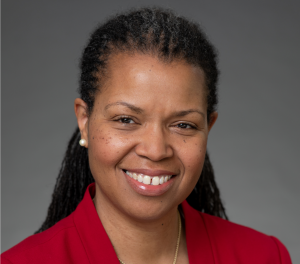
Meet Community Member
Joanne M. Conroy, MD
CEO and President
Dartmouth Health


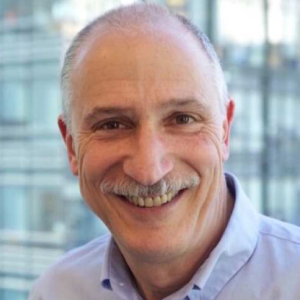
Host: Douglas Riddle
Curriculum Director, The Carol Emmott Foundation

Guest: Joanne M. Conroy, MD
CEO and President
Dartmouth Health
In this episode of The Treasure Hunt, host Doug Riddle welcomes Dr. Joanne Conroy, the CEO and President of Dartmouth Health. With a rich background as an anesthesiologist and a remarkable leadership journey spanning several senior roles, Dr. Conroy shares her insights on navigating complex challenges in healthcare.
In this candid conversation, she recounts a pivotal moment in her career when she was thrust into a leadership role to save her department from financial crisis. Discover how she tackled the issues head-on, demonstrating not only her leadership acumen but also her commitment to service and problem-solving.
Dr. Conroy reflects on the importance of understanding institutional dynamics, breaking through hierarchical barriers, and embracing unexpected leadership opportunities.
Listen Now
Available On


Connect with:
Joanne M. Conroy, MD

Douglas Riddle
Transcript
Doug Riddle (00:03)
I'm welcoming Dr. Joanne Conroy, President and Chief Executive Officer of Dartmouth Health, to The Treasure Hunt.
Joanne is an anesthesiologist by training and has been CEO at Dartmouth-Hitchcock since 2017, after multiple senior leadership roles. She's also the immediate past chair of the American Hospital Association and has been recognized for her leadership by many organizations, including Modern Health, Becker's, and others, due to her influence on healthcare across the nation, particularly in New Hampshire.
She's been a great supporter of the work of the Carol Emmott community from the beginning and has shaped the expansion of our work. Joanne, welcome to The Treasure Hunt.
Joanne Conroy (00:50)
Thanks, Doug, happy to be here.
Doug Riddle (00:51)
I'm so pleased you are. You started your medical career as an anesthesiologist. What were some of the decision points that marked your journey from clinician to an acclaimed national leader in healthcare?
Joanne Conroy (01:07)
You know, sometimes you're called to service and you're not really sure what you're signing up for or that it's actually happening. But I do remember when that shift happened for me. I was vice chair in the department of anesthesia with a very new chair who had followed my previous chair, who had been in the role for over 35 years and was well known nationally and greatly revered locally.
We had some significant financial issues, and I remember the business manager came to my office when I was on call on a Saturday, crying because she said we can't make payroll. And I said, What do you mean?
When we turned over the reins of the department to the new chairs, we had a million dollars in the bank. And she says it's all gone. And we actually owe the practice plan an additional $250,000. And so I said, Well, give me everything you have.
It's not rocket science. It's a spreadsheet, with income in and expenses out. And it was pretty clear what had happened.
I actually went and spoke to the senior associate dean, who was very clear. He said the dean will not speak with you. He doesn't want to undermine his chairs; you're just going to have to figure it out. Then I went to the head of the practice plan. And he said, Joanne, you have a problem. We're kind of hoping you're going to figure it out. And then I went to the chair.
You know, I should have thought I could get fired for this, but that thought never crossed my mind. And I went to the chair and kind of explained the situation that we were in, and that we were like a car heading down a hill into a brick wall. And we had to put the brakes on, and we had to turn it around. I realized at the time that he actually did not have a complete grasp of the department's finances.
He had no idea where our revenue was coming from and how quickly our expenses were draining our account within the practice plan. I encouraged him to bring in a third party who helped interview all the members of the department and assess their understanding of what was going on. And we had a faculty meeting about a month later and talked about how we were going to right the ship.
And, it's funny, I was being called into service, but I didn't really know it. I just saw a problem, and somebody had to fix it. So I just stepped into that role. So at that point, I think I realized that that was something that not only I was pretty good at, but I was stepping into a space that was empty.
Nobody else was stepping into that space. I definitely wasn't elbowing anybody out of the way to have a difficult conversation with the chair. But it's interesting, other people in the institution noticed that as well. I navigated it, and we corrected the course of the department financially and did it without a lot of screaming, drama, or bloodshed.
And I think that's a mode of operating that's continued throughout a lot of my career. That was a little bit of a defining moment for me. And then the chair left, and they did a search and then appointed me chair of the department of anesthesia. And I went from there to senior associate dean, and then into my other roles outside the organization. Sometimes, somebody taps you on the shoulder in a call to leadership in a very unexpected way.
Doug Riddle (05:37)
Or maybe a cliff opens up in front of you, and you think, We shouldn't run over this. I think your description of, you know, seeing a problem and figuring it needs to be done. I love how you began, by trying to activate the formal processes of leadership in the department and in the school, the practice with very modest responses from them, which also left it in your hands, which is not an unusual situation, I think, these days as well.
Do you find that?
Joanne Conroy (06:07)
Yes, you're right, Doug. It's interesting that we have a lot of hierarchy in the way we do things in all of our institutions, which sometimes doesn't get you the result that you really need. And what was fascinating, though, was that in my role as chair and senior associate dean, those same people really depended on me in order to do the things they needed to get done. At the same time, when we went through some difficult times at the institutional level after the Balanced Budget Act of 1998, I also saw some of those same leaders probably would not stand up with me when we were doing tough things.
I won't go into the gory details, but I realized that one of the most important things you do as a quarterback, as you're moving the ball down the field, is to make sure that your linebackers are actually providing you some cover so you can do what needs to be done. I was running the ball down the field, and my linebackers kind of disappeared. They got weak knees. That was instructive.
As difficult as some of those situations are, they remind you that a lot of the things that we deal with are very human. People get worried about their careers. They get worried about their place at the institution. They get worried about their income. I've had people be so angry about challenges to their income that you can almost feel their spit on their face when they're yelling at you.
But you appreciate that a lot of this is just their reactions, and how they behave in situations is human. That doesn't mean they're right or wrong, but I understand the human aspect of some of the difficult situations, challenges, and things we have to do, and the importance of figuring out who you can really count on.
Doug Riddle (08:22)
I like how kind you are, Joanne, about people who, in fact,won't pick up the responsibilities they've been handed that are part of the job. I would say what you said about them not being right or wrong as a human response.
Absolutely, that's true. But I wonder if you think the same thing about people who have accepted the mantle of authority, but also who then abandoned the field. I understand that some people get afraid. But when people respond with paralysis, which we see in many of our institutions, from what we're seeing, it is a real concern for us. Do you find that?
Joanne Conroy (08:57)
Yes. You know, I find that responsible leaders have a level of self-reflection. And when I look back at some of the tough decisions I've had to make, I sleep pretty well at night. I know I did the right thing. I know I did it with integrity. I know I did it with honesty and transparency. And I think that's what people remember me for.
You know, people go to sleep with their own realities every single night, so I can't say that people are tossing and turning about what they did or didn't do in their career. You know, I do think as leaders we are a sum of all of our experiences, though that we have in leadership.
You know what? I am glad I'm going to sleep my way, rather than dealing with some of the things that they've had to deal with. Let me tell you a little anecdote that ties back to the chair that I had to have that difficult conversation with. I also appreciate that there's some type of integrity in everybody because at a meeting, literally 25 years later, he went to one institution after he left and then back to his home institution, I was there giving a lecture about leadership. It was a fireside chat. And in the Q&A session, he was in the audience, and he stood up and apologized to me. He did not have to do that. It was totally unexpected.
Doug Riddle (10:49)
Wow. No.
Joanne Conroy (10:59)
I knew he was in the audience. I was going to be gracious. But he stood up and apologized publicly and said, You know what, I was not sophisticated enough to recognize real leadership when it was right in front of me. So I think sometimes just letting people's own kind of conscience and their own understanding of leadership integrity does make a difference.
Doug Riddle (11:34)
And timing may make a difference too, 25 years later, but yeah, that's great.
So research has recently, I'd say the last 10 years or so, been very clear about some of the factors that really help marginalized folks, particularly, we're gonna talk about women here because of the care limits focus, about what makes a difference. And we've based the curriculum for the Ffellowship on some of the things that we've seen in the research. One of which is the real importance of a close-knit network, an intimate network of other women for women leaders.
You started the Women of Impact. And that's an example, and it's actually been a model for us in some ways with Tthe Carol Emmott Foundation, and some of our work. Can you talk a little bit about what led you to start that and how it's grown and how its focus may have even changed over the years?
Joanne Conroy (12:33)
Sure. So I started thinking about this in 2011. I'd gone to a leadership development course that I really wasn't that excited about going to, but an individual who was participating in the course convinced me to attend. And it was a leadership course unlike anything I'd participated in before.
It wasn't about networking or skills.
It was about really thinking about your future, living into your future, not just doing what's put in front of you, but making decisions about what you would do and where you would go professionally and personally with and for a purpose in support of a career that you really loved. And it was interesting.
I was in a session, and there were only 11 of us there, and I was the only person in healthcare. Everybody else was from Dutch Oil Shell or Microsoft, and we had to develop what was called the legacy. You know, what do you want to be known for at the end of your career?
And I thought, number one, this was a very different experience. Number two, it made me really think about the impact I wanted to have, which was really creating a sustainable healthcare system. And number three, I realized I couldn't do it alone. So I said, well, I'd better get a lot of other women in healthcare who want to participate in this.
And so I wrote the Robert Wood Johnson Foundation, and they used to give out grants of less than $99,000 for specific projects, and I wrote like a couple of pages of an assessment about what I was gonna do, and they actually funded me. And at the first meeting, we were actually totally driven by the RWJ's support, and we invited 23 women.
And so we brought women of impact together, and we kind of first coalesced around the theory of the broken windows. And I know there are people on both sides who decide whether or not they like or don't like the theory of broken windows, but it's basically you create this environment and people act differently when they're in a different environment.
It was funny, people say, Well, how did you figure out who to invite? And they'd laugh at the end of it because it was friends of mine or friends of friends of mine or people I met in a taxi cab or women that I just thought were amazing, but were at the close to the peak of their influence. And the focus really was, what are you going to do with that influence? What are you going to do to improve the world for everybody?
And so we brought women of impact together, and we kind of first coalesced around the theory of the broken windows. And I know there are people on both sides who decide whether or not they like or don't like the theory of broken windows, but it's basically you create this environment and people act differently when they're in a different environment.
I'll give you an example. If a policeman walks up to your car while you're in a New York street and raps on your window, you have a reaction. If a homeless person walks up to your car and raps on your window, you have a different reaction. It's all within the context. And the question is, can we change the reaction by changing the context in health care?
We talked about the broad range of things we wanted to do. And it felt a little bit like boiling the ocean. And we met a number of times after that initial meeting to try to kind of hammer down what we really wanted to accomplish. And after about six months of conversation, we said, we are not going to change the world, the 23 of us. But if we have more women who are influential and ready to make a difference, maybe able to change the world, and we may be able to get women into positions of power and authority, which is the only position from which you can really change things. And so we focused on supporting each other, supporting other younger women who are coming up through the ranks. Thus, an idea came to us from one of our members who was also connected to Carol Emmott about creating the Fellowship.
That and many other programs that we've been involved in are really to support women leaders, both established women leaders and emerging women leaders. And, it's interesting, we spend a lot of time figuring out how we can not only just support each other personally, but also how professionally we can use our level of influence and sponsorship to get people to be considered for positions of power and authority.
When we look back, we have a number of women who were in the Obama administration and had leadership roles. We have had a number of women who are now leading large organizations across the country. So how can we just do that again and again and again? You know, someone told me a long time ago that it's hard to change things from the bottom.
You almost have to get to the top to change how we think about women and leadership, how we deliver care in the United States, and how we change the context in which people both receive and deliver care in our healthcare system.
Doug Riddle (18:17)
Wonderful. You've been, as you mentioned, instrumental both in the founding of the community, the Carol Emmott community, and you've provided a lot of volunteer support and leadership for us as we've gone along. What is the value that you see in what's now called a foundation, but it's really, Carol Emmott, it's a community of a variety of initiatives now. What is the value of this community as you think about it?
Joanne Conroy (18:48)
Well, it's something very affirming when you attend the annual meeting and see people whom you've either sponsored or supported over the years actually really blossom personally and professionally.
And you always leave the meetings with a lot more energy, hope, and inspiration than maybe you had when you actually went to the meeting. These meetings are really uplifting. The same thing happens when we have our annual Women of Impact meetings. You make the time for them because you realize, after the meeting, you've gotten so much out of it. And I can't emphasize enough that it's just inspiration when you see young emerging leaders and how, with just a little bit of effort and help their careers are accelerated. And they are incredibly thankful for any time that you give to them. And it's a pleasure to interact with them at every single level.
Doug Riddle (20:01)
Interesting. I think it's interesting because in a way, what you're saying is that you're seeing your legacy in operation. It's not something that's off in the future sometime, like when you're gone, isn it?
Joanne Conroy (20:14)
That's true. I mean, we are building it right in front of us. We also see the setbacks. And I would be remiss if I didn't acknowledge that there are some of us who say, Where are we going? We didn't think we'd be fighting this battle still. But our involvement and our continual kind of presence is just reminding people that diversity is actually the key to financial performance and organizational performance.
That means gender and ethnic diversity help us make better decisions. We have 20 years of literature from McKinsey that demonstrates that. And we don't need another study to tell us that that is the path for success in our economy and in our field.
Doug Riddle (20:52)
That connects for me. As the immediate past chair of the American Hospital Association and also in your other roles, you've seen the recent decline in the recruitment of women to CEO and other senior leadership in hospitals. You referenced the McKinsey studies. What's happening, and is this likely to change?
Joanne Conroy (21:33)
Well, first of all, I'd go back to the data.
I was, at least in healthcare, discouraged that they didn't do a separate healthcare cohort last year when they released the study, because they said they didn't have enough people participating in order to cut the cohort.
I don't know if that's true or not. I'm going to assume positive intent. But we've got to get more people to participate so we actually have the data. Now, people say, well, you know, a lot of these decisions are driven by data, but at least you have to begin with the data.
We do know anecdotally, and it's been discouraging when we have strong women leaders who, as they go through a recruitment process, select a male to lead the organization. I just don't know how many we are seeing where men are retiring and now they're replaced by women.
Number one, I'd go right back to the data. Number two, if the data supports what we suspect, I think that's a call for an alarm because let's not forget that 90% of healthcare decisions are made by women. And yet we ignore that often when we ignore the important role of women leaders in healthcare.
You know, we've come so far. We don't want to lose ground. We want to keep moving forward because arguably, I would say, the involvement of women leaders in health care has focused on things that, aside from financial performance, which they're pretty damn good at, but they do address issues of involvement of the families, importance of quality, treating the whole person, focusing on health rather than just healthcare, and the very important aspect of the role of healthcare institutions in the society at large. Also, the importance of societal health on the impact of the healthcare system, as well as the environment in which we live.
Doug Riddle (23:56)
I've always appreciated this comprehensive view you have about what healthcare means.
I was thinking about this as I was looking up some of what you've done there at Dartmouth Health to take advantage of and recognize the importance of the community, the whole social context.
If you were talking about health, that it's not just delivery of medicine and medical care, it's much larger. I know that at Dartmouth, you've studied and found solutions that help move healthcare forward.
Solutions that address the social fabric and the environmental context of that. I'm thinking of the initiatives around childcare and housing. Can you fill us in on your perspective and on these initiatives that you've taken to recognize that health is not the same as medicine?
Joanne Conroy (24:46)
Well, I'd love to say it's altruistic. I actually do have a benefit as an employer in rural America because the issues that affect all of our patients also affect our employees. And I probably hear it first from our employees, then I hear it from our patients. However, no organization, no matter how well-financed or organized, can solve a lot of the societal problems that face us, but certainly, we can be a responsible partner.
I remember a study done in Portland, Maine, when they were focusing on childhood obesity, and Maine Medical Center used a very small amount of money, a grant of about $50,000, to support a community-wide focus on healthy eating and educating kids.
We had done the same thing at Morristown with the communities around Morristown Memorial in order to focus on healthy eating. And actually, in Portland, Maine, as we did in Morristown, we saw childhood obesity decrease. And that's the beginning of addressing healthy lifestyles. But you need broad community partners. We have worked with vital communities up in this area to advocate for housing.
We sponsored a study that identified there were 10,000 units that needed to be built in the Upper Valley, not just to support us, but to actually support the broader community. And we started waving our arms about six or seven years ago, and it takes a long time to get people motivated, but all of a sudden, we are seeing development after development actually being constructed, so people can actually find clean, affordable, available housing in communities where they want to raise their families.
The second thing we're going to have to address is the types of housing, because there are a lot of apartments here, but people want to own something. When you own something, you have that glue that keeps you in the community. So we're talking broadly about single-family homes and townhomes, and we're talking to hospital systems like in California that actually have done it very effectively.
The other thing we've been doing is really focusing on increasing the number of child care providers. So not only can we expand our institutional child care system, but actually support an industry of people that want to provide child care in their homes, which, for many families, is preferable.
So we actually have a whole training program in partnership with the Upper Valley Childhood Education Group. So we can train between eight and 12 certified child care providers every six months. We believe that by doing this year after year, we may be able to leverage close to 800 slots for toddlers and newborns in the community which will unlock, what we believe is the important potential of women returning to the workplace. We know that after COVID, we're still 10 % behind what we were pre-pandemic for women in the workplace. And a lot of that has to do with the cost of childcare and the availability of childcare.
We support public transportation, the buses that need a little bit of help running from Claremont, from Thetford, are actually across the Hanover, Levitin community, and are critically important, both for patients to come to get their appointments, but also for employees to commute to work.
The only thing I have to do is buy the bank and buy the grocery store, and I'll be a turn-of-the-century mill owner. But, you know, the question is, in rural America, a lot of mill owners were in rural America, and they actually had to provide everything for their employees. I don't really want to own the bank or the grocery store. That's not my core expertise, but we have to work with our partners in the community, and they'll help us develop those services that are necessary to have a thriving economy.
Doug Riddle (29:16)
Well, I love the perspective that incorporates all that's necessary for human life and community to work. And I think that's really a gift and critical for what we're doing.
Very nice. I've seen pictures of you and your mom on a trip you took with her to Provence, I think it was, when she was 95. I understand. I'm sorry to hear that she passed away in 2024 at 100 years of age. What did you learn about aging and caregiving in your own relationship with your mother?
Joanne Conroy (29:55)
I learned a lot. It's fascinating. As people age, I realized that the things we worry about in newborns are whether they are eating appropriately . If they're uncomfortable, what's the cause of it? A lot of times, it's all about pooping and urinating.
And to be honest, when you're a hundred years old, that's really important as well. I mean, my mom was very, she was really with it, but when things didn't work like they should, she was uncomfortable, and she would say that.
She had a stroke, so she wasn't as mobile as she would have liked to have been. And we used to laugh about it together because it's almost strange that it's very similar to when you were a baby. I have to say, though, my mom aged with grace, but also a lot of joy. She was always smiling.
She had a stroke, so she wasn't as mobile as she would have liked to have been. And we used to laugh about it together because it's almost strange that it's very similar to when you were a baby. I have to say, though, my mom aged with grace, but also a lot of joy. She was always smiling.
I know things were hard for her. She had worsening congestive heart failure. She had wanted to go home, but she was never going to be able to live independently again. But she was just so gracious about a lot of the indignities that happen as you get old. And she always had a sense of humor, and she would smile all the time when people came to see her, and they would say, How are you feeling? She goes, just great.
My mom taught me some really important things. We have a choice when we wake up in the day. We can wake up grumpy, or we can wake up happy. That's a choice you make. And she chose to be happy every single day. She was an inspiration, and I'm going to choose to wake up and be happy every single day; it doesn't matter what's going on. There are far more things to be happy about than unhappy about.
Doug Riddle (31:57)
What a gift. Well, Joanne, you continue to be an inspiration to me personally, and I know to my colleagues in the Carol Emmott community and in healthcare broadly.
You know, we have the gift of Fellows who come from Dartmouth, and it's clear what you've created and supported. Your own institution is an important model for us.
Thank you for spending this time with us today. I hope the rest of your day is fabulous.
Joanne Conroy (32:44)
Thank you, Doug. Same to you.