INTERVIEW SERIES
Meet Community Member
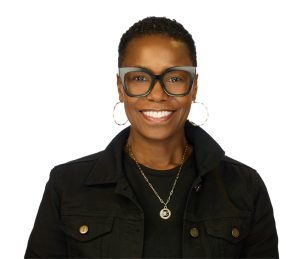
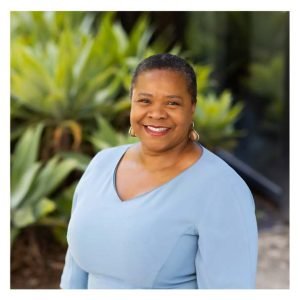
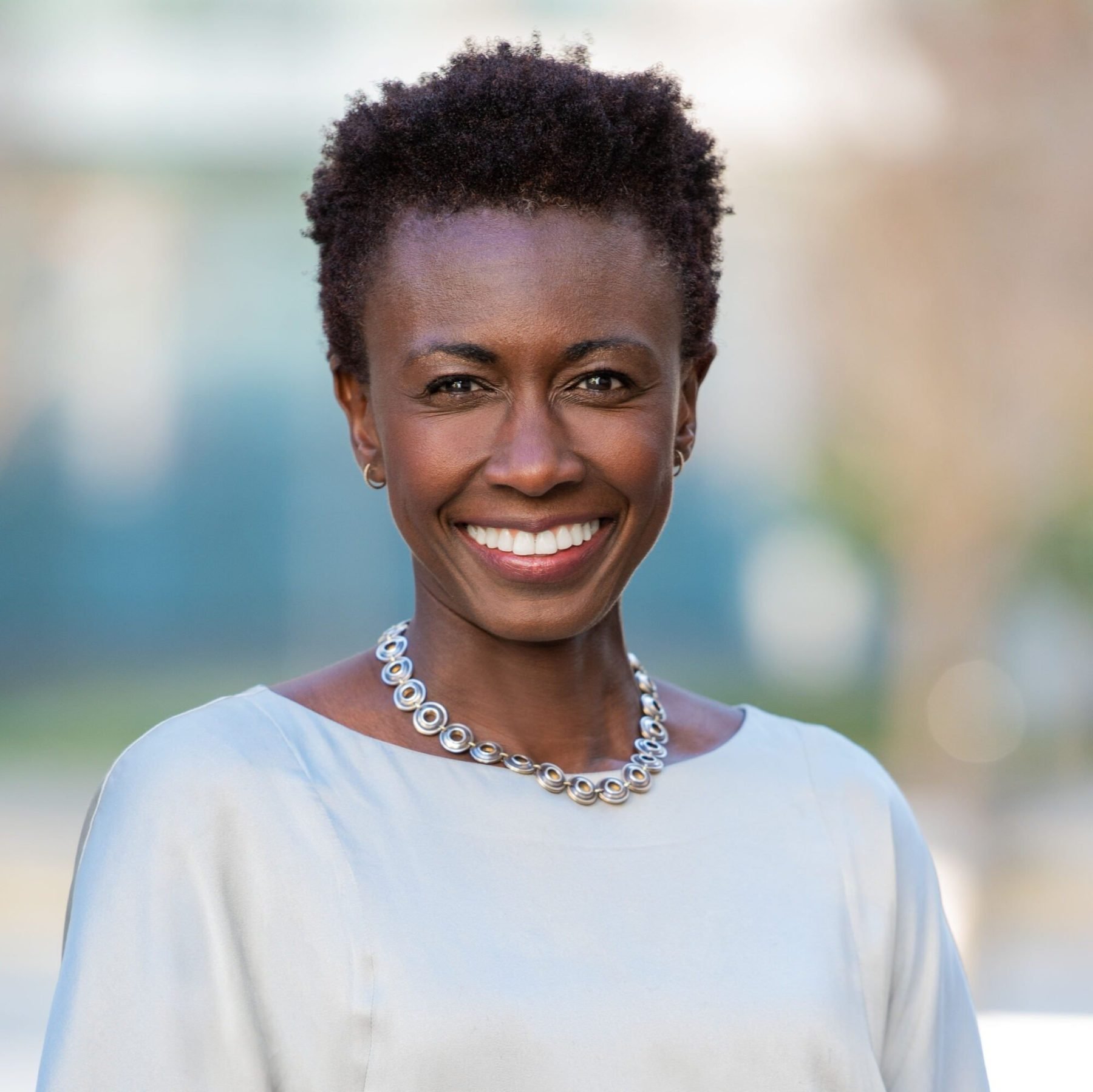
Afia Asamoah, JD, MPP
Co-Founder, General Counsel,
Corporate Secretary, Head of Strategic Alliances,
Waymark, Inc.

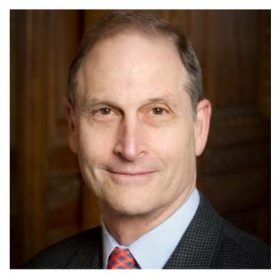
Host: Douglas Riddle
Curriculum Director, The Carol Emmott Foundation

Guest: Afia Asamoah, JD, MPP
Co-Founder, General Counsel,
Corporate Secretary, Head of Strategic Alliances,
Waymark, Inc.
In this episode of The Treasure Hunt, Doug Riddle welcomes Afia Asamoah, a dynamic leader in healthcare innovation, policy, and equity. Afia shares her inspiring journey from growing up in a family with strong service values to pursuing a career in healthcare, not as a physician, but by shaping systems that advance access and equity.
Her experiences, from grassroots public health work in Ghana to regulatory policy roles in Washington and executive leadership in technology-enabled care, reveal her commitment to breaking barriers for underserved communities.
The conversation highlights Afia’s work at Waymark, a company she co-founded, dedicated to improving access and outcomes for Medicaid beneficiaries amid changing policy and political landscapes. She explains how Waymark’s community-based model leverages technology and local expertise to address health-related social needs, prevent avoidable ER visits, and drive meaningful change.
Afia offers insights on maintaining focus and motivation in demanding roles, emphasizing the value of celebrating progress, trusting her support network, being present, and staying grounded in gratitude and purpose.
Listen Now
Available On


Connect with:
Afia Asamoah

Douglas Riddle
Transcript
Dough Riddle: (0:03)
Afia Asamoah recently joined the board of Rise Up Together, a global nonprofit working to advance gender equity in health, education, and economic opportunity by partnering with local leaders and organizations around the world. This is the most recent avenue Afia has taken to improve health. She is also a board member at Stanford Children's Health, the Public Health Institute, and The Carol Emmott Foundation.
Her day job is co-founder, general counsel, and head of people for Waymark. But she has also served as head of legal at Google Health, worked as a senior associate at a major law firm, and clerked in the Southern District of New York. I'm so pleased to welcome Afia Asamoah to The Treasure Hunt. Afia, your undergraduate study was in psychology and pre-med. What got you interested in health and healthcare?
Afia Asamoah (00:54)
Well, it is a pleasure to have this conversation with you, Doug. Thank you so much for having me on The Treasure Hunt. To answer your question, I'll start with my dad, a doctor. My maternal grandfather was a pharmacist. I grew up in a family that just had a service ethos, right? Like we were expected to figure out ways to give back and serve others, and make the communities in which we operated better.
From my exposure to my dad and my grandfather, I assumed I’d go into medicine and had this intent to be a doctor practicing specifically in under-resourced communities, and I felt that was the path. That was the path I should choose to give back and serve folks around me. My perspective shifted a bit, though, in college.
I had the opportunity to go back with about five other undergrads, and we were led by a woman with a public health degree. We were partnered with a community, a village in Ghana. And the mandate was to partner with the nurse staffing the local clinic and the elementary school in that community, and to think about ways we could give back from a public health perspective. There was a local regional hospital, and we had the opportunity to shadow doctors there and find ways in which we could be helpful.
My observation of myself having both of those experiences was that when I was shadowing the amazingly talented doctors doing the work in the surgical ward, I was also confronted with the constraints of working within that system, especially in an under-resourced setting. And I paired that with the public health work we were able to do in the village in which we were staying, where we partnered with the nurse in the clinic and ran vaccination campaigns and had amazing opportunities to partner with elementary school students and think about ways in which you could do public health messaging and one to additional communities and schools nearby to do that work.
It highlighted to me that there was so much opportunity to think about how you design health systems to make them more equitable, to get upstream of the problem. I left just thinking that I want to work on questions about how to build systems that work for everyone.
How do we make sure that where you live and how much money you make do not dictate the type of care you get? And so, with that frame, I decided that I was 100% committed to healthcare, but maybe being a doctor was not the way I would provide the service. And so a series of experiences got me very interested in how technology can improve access to care, specifically for underrepresented populations. As you mentioned, I began my career in a law firm.
That law firm was in the food and drug practice group, and I had the opportunity to work with and support medical device and biotech companies. I got very interested in how they think about developing products because they are the ones innovating and providing access to products that improve care. I had the opportunity, in a policy role, to join the Obama administration as a special assistant to the commissioner at that time. And again, that was just a fantastic opportunity to think about how you pull regulatory levers to spur innovation.
My thesis was spur innovation that serves all people, particularly underserved people. And then when I went to Google, I became incredibly interested in how you could use technology to push care beyond the clinic walls and meet people where they are. And with all of that background, four years ago, as you noticed, I partnered with two physicians and co-founded an organization that's the culmination of that.
Like, how do you use technology to transform care delivery for patients with Medicaid, which is a great proxy for me, at least in the US health system, for underserved populations? So I would, I guess, end by saying, for me, healthcare touches all people. It's directly tied to economic justice.
If you don't have the foundation of healthcare, how are you doing the things you need to do to kind of contribute in ways that everyone wants to? To their families, to their communities, et cetera. I feel deeply that social circumstances shouldn't dictate the type of care that you receive. So that's what got me interested in healthcare, and it keeps me committed to the work.
Doug Riddle (05:52)
Wow. I love the journey that you just took us on.
It’s your own widening perspective, how the horizons in your own thinking expanded, which really led to new ideas in terms of career, vocation, and the kinds of work you do, which is quite varied. You've continued to expand your understanding of the ways to exercise influence to make things better through all of these changes, haven't you?
Afia Asamoah (06:23)
I have, and I guess there's power in working in healthcare because it's just purpose-driven and mission-driven work. And so for me, my career has been guided by this: can I be helpful in terms of moving the ball forward in healthcare? If I'm doing that, I feel like I am being both impactful and purpose-driven, and I will love the work. There's just clarity. There's clarity in that. And the point is that healthcare touches everything.
There are so many ways in which you can impact the healthcare system to, in my framing, make it more accessible for all people and more equitable. And so there's fun in that as well, right? Because your career can show up in all these different environments and different industries, but still moving forward and having an impact on healthcare in a way that I think is really needed.
Doug Riddle (07:21)
That speaks to me. The highest virtue in my catalog of values is usefulness, and I really love what you were saying in terms of how we make the judgments about what paths we'll take. Now I'm curious about your leadership. Not all lawyers are successful in moving from giving advice to leading others. What have you learned from growing from a technical expert to an organizational leader in different roles?
Afia Asamoah (07:27)
Well, I appreciate the compliment embedded in the question, Doug. So thank you for that. I would say, and I think maybe, I don't know. I've talked to a lot of women, and I think people go through this transition as well. Early in my career, my belief was that my impact could be greatest as a subject-matter expert. I should just be excellent. I should be an excellent healthcare regulatory lawyer.
And I thought that was the way to get influence and have an impact. You should be indispensable. You should know your stuff cold, do the little things well, and be someone folks can depend on. My learning is yes, you need to do all those things, but that's just the foundation, frankly, in terms of being influential and having impact.
And so what I've learned is there's a whole slew of other things that are incredibly helpful and important, right? You need to exercise good judgment. I think you need to be curious about others. Ask really good questions. Be a great listener, kind of have a guiding star, be a person of integrity, and always try to make the right decision.
It’s hard to do because the world is so complex and so ambiguous. With those things as your guiding star, I think you're more likely to be influential and impactful. So my sense is that it's the things I just listed that actually get things done. And influence isn't really being the smartest person in the room. It's the ability to build relationships, lock arms with folks to collaborate, and get things done.
And that has just been a hopeful frame for me as I transitioned from the young lawyer who really knows her stuff around healthcare regulatory law and being an organizational leader. I want my impact to be working in organizations that have an impact on the communities around healthcare issues, particularly around healthcare issues for underserved and underrepresented populations.
I guess the last thing I'll say is that my learning is just a different skill set, frankly, than being a technical expert. You really have to lean into emotional intelligence. It's relational, both in terms of listening and understanding what motivates folks, how you can connect with folks, and equally important, be self-aware in terms of how you show up. Also, how you can be most influential and consider the kind of rooms you're in and the conversations that you're in.
I found that curiosity has been my best friend. I think you have to be curious about the business in which you are operating. I think you have to be curious about what motivates people. You have to be curious about problems outside your domain because you're a problem solver, not a technical expert. And the transition isn't necessarily easy, but I think I found that if you can help people do your best work, that's your orientation. That's where the impact happens.
Doug Riddle (11:03)
I appreciate that. I think that's useful. One of the things you're illustrating very clearly to me is the shift we've seen over the last 30, 40 years in many places in the metaphorical framework for what leadership is; the image of a leader.
Afia Asamoah (11:20)
Yes.
Doug Riddle (11:25)
I think that we were raised with what has influenced us, and maybe affected the way we think about technical expertise, too. Somebody was leading the charge, which means they're out in front; everybody's supposed to follow them. So leadership and followership were big categories in leader development before. But I'm hearing what you're saying is that leadership is really about gathering the people to go to a place that improves everything for everyone. And that's very different.
Afia Asamoah (11:37)
Yes, I think so.
Doug Riddle (11:55)
It’s a metaphor, the kind of gathering. And I know these have been associated, and I don't want to push this too hard, but they often get associated with gender differences in terms of these metaphors, too. And I think there's something to that. What do you think?
Afia Asamoah (12:07)
I think everyone should lean into their own strengths. I've come across a lot; I'm oriented that way. I think I care very much about relationships. I think the world is too complex and problems are too hard to go it alone. I want to enjoy the work I'm doing. I enjoy it more if people enjoy working with me, and I enjoy working with them.
I agree with you. I think society is a bit of a chicken-and-egg. I think society has associated a lot of the topics I'm discussing with women. I think if you are wired like I am and you happen to be a woman, you should lean into those skills because I agree with you 100%. I think, in a way that's very positive, I think we're expanding the idea of what leadership looks like in a way that's more inclusive, allowing more perspectives and voices to be around the table.
So I lean into that. I think that's fantastic. I agree with you. I think we should underscore and encourage more folks, men and women frankly, to kind of lean into these skills. Because I just think it's the most effective way to be impactful and kind of solve really hard problems.
Doug Riddle (13:23)
Beautifully. I know you're a limited partner in SIA Ventures, Jumpstart Nova, and How Women Invest. You've been involved with the last group for about five years, as I understand it. Tell us about what inspires you about that work and why it's so important.
Afia Asamoah (13:42)
So as you mentioned, I've been, of all the three you mentioned, I've been longest tenured with How Women Invest. The work has always inspired me because it's about getting investment and resources to people with good ideas. Like period, that's what we're trying to do. And the statistics, at least around funding entrepreneurship, show that women founders receive less than 2% venture capital funding.
To me, it's just nonsense that that's the case. It's not only unfair, but it's just nonsensical, because we're leaving brilliant ideas, brilliant solutions on the table, because people are not showing up in a form that we're used to seeing and expect to see, with respect to entrepreneurship and co-founders. So what drew me to How Women Invest is that it just allows people to be seen.
That's been in addition to healthcare being my kind of guiding star, healthcare specifically in terms of just making more equitable care for all people, particularly underserved and underrepresented people. I've also wanted my work to highlight folks who are not typically seen or heard, to kind of validate voices you don't always hear around the table. And my work with How Women Invest matches that and allows me to live that out.
It's also mirrored my own personal journey in a way. Throughout my career, I really tried to work hard to create spaces where folks with different lived experiences and diverse perspectives contribute to this vision. It could be bringing more people onto my team who have different lived experiences. It could be asking the question to make sure that those perspectives are whole or are heard. It's inviting: instead of waiting to be told, it’s inviting people to share feedback that might be helpful to this solution.
My experience has been that when you do that, the solutions are just better. It's just that you get better results, especially when you're tackling really hard problems, which I think healthcare is. You want all of the best thinking around the table to lead to the best solution. And so in my lived experience, the impact is real when you do that.
I've said this before, but I just believe that social circumstances dictate your opportunities. I believe in deep living healthcare; I also believe in entrepreneurship. That's part of the reason why I participate in the venture funds that you just mentioned. I like supporting How Women Invest because it ensures that folks with great ideas, oftentimes with lived experience, super close to the problems that we're trying to solve, get the resources and support to be part of the solution. I just believe that's how you drive meaningful change, and that's what I want to support.
Doug Riddle (16:57)
Excellent.
We're at a moment in time, which is your language. I like that, when we've seen Congress reduce funding for Medicaid in particular. It is just a moment in time, but it's an important one. Your company, Waymark, was created to bring the benefits of tech-enabled healthcare services to Medicaid beneficiaries, at least as one big piece of that.
How is this situation affecting your work? I'm really interested in the kinds of steps you're taking to adapt to this, as we say, moment in time, and this change, which is clearly significant for your clients as well as your organization.
Afia Asamoah (17:39)
Yes, there has been so much external attention and noise around Medicaid that it's been hard to do the work, because you're navigating that with all this external noise, and it hasn't been positive noise. It's like we're pulling one trillion dollars out of the system over the next 10 years. We're asking folks to validate and meet work requirements to maintain eligibility, all the things that are just kind of making it harder for people to access healthcare. So that's just the reality. I would say from my perspective, our mission has not changed despite all of the external issues.
The company itself was founded four years ago as a public benefit company, and we were founded to improve access and quality of care to patients with Medicaid benefits. So that is not changing. We're continuing to do that work.
That mission guides everything we do. It guides how we show up for each other internally in the company. More importantly, it guides how we show up for our patients and partners, our healthcare system, and FQHC partners in the communities in which we're actually doing the work. So, regardless of what's going on in Washington, as team members who care deeply about the work and are currently doing it, we want to keep an eye on that ball.
At the same time, though, like we can't, we don't put our heads in the sand, right? And you can't ignore what's happening in Washington. The complexity is definitely increasing from our patient perspective. You are still eligible for the benefit, but it's gonna be a little bit harder for you to ensure that you maintain access to that benefit.
But the reason we built the company the way we did, and we built it as a tech-enabled community-based model, is that it is important to continue being in community with folks. You want to meet people where they are. And so we're actually really well positioned to do that. We have community health workers and care navigators who are hired from the communities we work in, who know the resources and where people go to connect with all the resources needed to maintain health, in addition to connecting people to primary care providers. They need to be connected with food banks and housing resources, and all of the other things that drive all the health-related social needs that drive poor health outcomes as well.
So in that sense, when it comes to efficiency and outcomes, they kind of matter more than ever, because that's what we're hearing from Washington, and that is the reality of what our health plans and health systems are facing as well. Like when resources are constrained, it becomes more relevant to be in community and be able to show that you're driving outcomes that we are driving, which is keeping people out of the hospital, and they don't need to be there, and improving their care goals and metrics as well.
Our model is that we've developed technology that will predict nine out of 10 times whether a Medicaid patient is going to use the ER for what I call a nonsense reason, right? Like you have unmanaged asthma because you live in poor housing. You have unmanaged hypertension or high blood pressure. All of these kinds of conditions can be managed. When they're not managed, we end up doing it in the ER instead of managing upstream of the problem.
I think the last thing I will say is what we're hearing from the market: it's both patients, healthcare systems and clinics, and health payers, and it's just validating the work we're doing. Health plans and health providers are looking for solutions that let you meet people earlier in their healthcare journey and help prevent avoidable inpatient utilization and keep people healthier.
So we can identify those folks who are likely to use the ER for avoidable visits. And then we use our community-based teams to kind of wrap around them with primary care providers to get upstream of that problem. Plans and systems are saying in this current environment, we need solutions like that more than ever.
And so they need proven outcomes; they need technology built specifically for the patients that they are serving. That's what we do. And then they need people who can help navigate them through an increasingly complex administrative and healthcare system. And so we are adapting by recognizing that, but probably more importantly, just kind of continuing to keep our eye on the ball and showing up for people in a really wholehearted, heart-centered way. Because in addition to doing the work, people are scared, and it's an uncertain time.
Doug Riddle (22:59)
I suspect that it's certainly made the word access, which is one of your featured foci, have a much expanded definition of what the limits to access are and what you need to do in response to that. Is that the case?
Afia Asamoah (23:04)
Yes. Correct. That is the case. It is a question of where you are looking for people to access, right? And our thesis is, in the US, we've designed a healthcare system where ERs need to take all comers. But that's the worst place for us to be optimizing access. We should be updating access to primary care providers and pharmacy care so you can get the drugs and medications you need to better understand your chronic conditions. It should be understood what motivates people to take action in terms of healthcare behaviors that they need to take action on to stay healthy.
So yes, access is like this catch-all, but I think we should be really specific in terms of what we mean by access, and we want to make sure that we're providing access to the most impactful, supportive environments for folks, as opposed to kind of catching them really at the end of the line where it's both more expensive to the healthcare system, because taking care of basic conditions in the ER doesn't make any sense. And you're generating poor health outcomes for folks. It's like a lose-lose.
Doug Riddle (24:34)
Well, I appreciate that. I think that it's really important what you're saying and the kind of move I think many people when they hear the word access come at it from an individual perspective as though access were an individual's problem as opposed to a system's problem or even more importantly, kind of a whole problem of the social ecology because people's asthma is affected by the fact that their housing is in the line of industrial air pollution. All of these things come together, and I appreciate the kind of integrative and comprehensive approach that you and Waymark take to these. I think they're critical.
That leads me, though, to a really important personal question too. How do you maintain focus when you have so many things demanding your attention? My goodness, woman!
Afia Asamoah (25:16)
Yes. That is, well, that's really funny. Well, you know, I'll answer it in maybe like four parts. It's a very serious question, so I'm going to answer it in that spirit. Four things come to mind, so I'll share those. So the first thing is that we're just doing hard work. Like, I never want to move so fast that I don't take the moment to kind of celebrate the wins.
So I don't know, maybe I'll finish by saying, Doug, I don't think there's one right way to do this. Everyone has to kind of figure out their thing. But for me, it comes down to celebrating progress, trusting my people, being present in the moment, and being grounded in what I've identified.
That also shows up in terms of like, my prayer and kind of like just meditation and gratitude time. So I do that. Not as often as I’d like, I try to get out one or two times a week and do that. Every day, I spend a few minutes in my Bible app, and I believe in the Lord, and that has helped ground me as well. And so I do that without fail. It just kind of centers those two things, like center me, and it's just a constant reminder of gratitude as a practice that's really important to me, and I lovingly practice it. And it's also just a reminder, in terms of how I want to show up in the world and to others.
And then probably the fourth is more personal. For me, everyone needs to find the time that allows them to ground themselves. For me, it's periodically going for a run without headphones.
And so I think I've gotten comfortable with that by realizing that if I've chosen to spend my time and do something, then that's the most important thing I should be doing. You do all the pre-work, right? It's prioritized and makes sure you're working on the most important things. So that helps a lot for me, like just being present when I've chosen to spend my time doing something.
So the first is I don't move so fast so I don't take the time. I do take the time to celebrate the wins. The second is that I am very fortunate in this. I lovingly cultivate my tribe. The folks who are around me who believe in the work, allow me to do the work, and support me in doing the work. I've learned through my career that you cannot do it all. Like you're setting yourself up for success, if that's your bar. Perfection cannot be your bar.
So, I do that in small ways. Like we built in our company culture, right? We do this regularly: a day-in-the-life of care delivery, where one of our amazing team members speaks to the impact they've had with a patient or a family. And I think it's just so incredibly important because there are definitely moments where I feel the slog of the work. Like that's just honest, just all right, it's low. But remembering even just impacting one patient, one family, is transformative for that patient and the family. And I don't want to undervalue that.
Work generally is hard. Healthcare work is really hard. Healthcare work for underserved and underrepresented folks is super, super hard, especially in the Medicaid space, where you have less margin to actually really do the work. But the pro of that is that you can move the needle so dramatically and so beautifully if you do the work. I think you need to find a way to maintain motivation. I do. I maintain motivation if I'm only focused on the next thing without acknowledging what we've accomplished.
Doug Riddle (30:42)
Lovely. Well, Afia Asamoah, it's been a delight having you here in the studio, and I'm looking forward to sharing this conversation with the rest of our community. Thank you so much for being with us.
Afia Asamoah (30:55)
Thank you, Doug. This was a lot of fun. I really appreciate you inviting me.